Matrix - Definition and Examples - Biology Online Dictionary (original) (raw)
Matrix
n., plural: matrices or matrixes
[ˈmeɪtɹɪks]
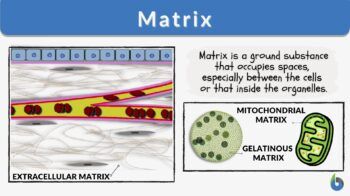
Definition: the ground medium or substance occupying spaces, such as in tissues, aggregates of cells, or inside the mitochondrion
Table of Contents
Toggle
Bodies of living organisms are organized structures. These are organized in a hierarchy of organ systems, organs, tissues, and cells. The most basic unit is a cell. But have you ever wondered how cells are kept together? There must be some medium that holds these cells together? What is it?
Moreover, all the cell organelles of eukaryotic cells like the nucleus, Golgi apparatus, mitochondria, chloroplasts (in plants), etc., also have some well-defined internal structures of their own. How are the internal structures like DNA, thylakoids (in chloroplasts), cristae (in mitochondria), chromatin (in the nucleus) organized and kept in place?
What is it that keeps everything organized and in place? Additionally, connective tissues like bones and cartilages also possess a medium instead of cytoplasm. What is that? The answer to all these questions and queries raised above is “MATRIX”.
Biology definition:
Matrix is the ground, non-living, medium or substance of the tissue that occupies the vacant spaces between the cells. It is particularly referred to as the extracellular matrix. The matrix may also refer to that found inside the organelle, particularly the mitochondrial matrix. Etymology: from Latin “mātrīx”, meaning “dam” or “womb”, from “māter”, meaning “mother”.
Matrix is the singular form whereas the term “matrices” is its plural form. In biological structures, examples of matrices are as follows:
- Extracellular matrix
- Organellar matrix
The extracellular matrix is the matrix that fills the spaces between cells in a living organism’s body. When we say “cell matrix”, it is the extracellular matrix that we are usually referring to; cell matrix- the “matrix between cells”.
The term matrix in biology is also usually used to refer to the jelly-like structure in connective tissues like cartilage and bone tissue. The matrix in connective tissue helps in the proper functioning of these tissues like aiding protective roles of bones and smooth joint surfaces via cartilage. When questioned what is matrix in anatomy, one can explain the example of bone and cartilage matrix.
The organellar matrix (nuclear matrix, mitochondrial matrix, plastidial matrix, chloroplast matrix, Golgi matrix) is the matrix that holds the internal structures of these organelles in place. It is the substance in which various cells or cell organelles are embedded, organized, and kept together. So, when asked to define a matrix in Biology, one can explain that it is the ground substance or medium in which cells or cell components are embedded.
In medicine, matrix is defined as the intercellular substance of any biological tissue, whether it be solid like bone or cartilage or liquid, such as blood.
Now that we know the definition of the matrix in biology and medical science let us now know their respective functions.
The Function of Matrix
The various functions and roles of matrices in biology are listed below. But first, let’s have a look at the illustration below to understand the natures of the various matrices.
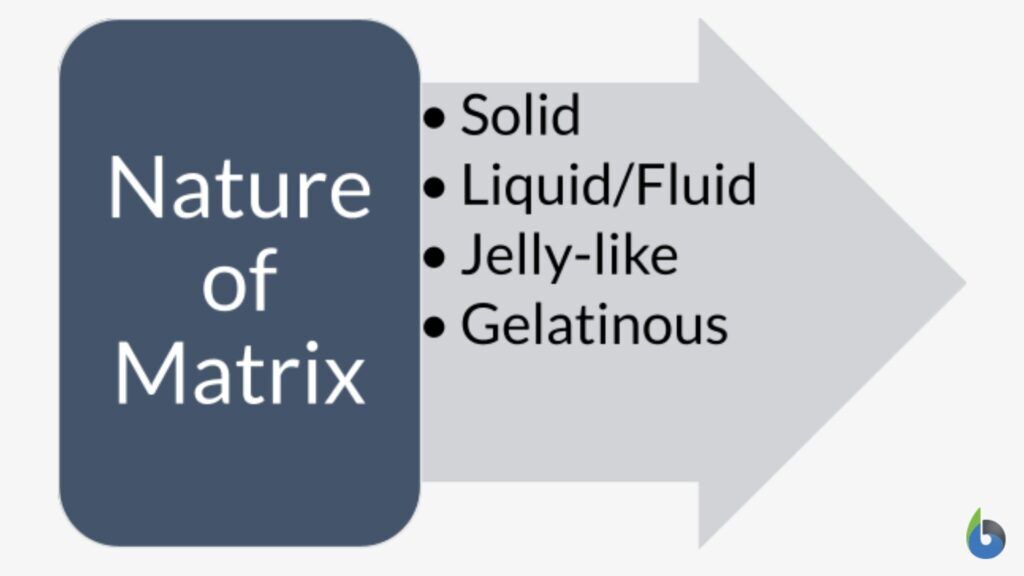
Figure 1: The nature of the matrix varies based on the purpose and role in different organisms and body parts. Image Source: Akanksha Saxena of Biology Online.
- Solid matrix: Extracellular matrix that’s outside the cells and holds them together is a solid matrix. It can also be called the “intercellular matrix” as it lies in between the cells. It is secreted by the cells and fills up the vacant spaces, thereby providing protection to the cells.
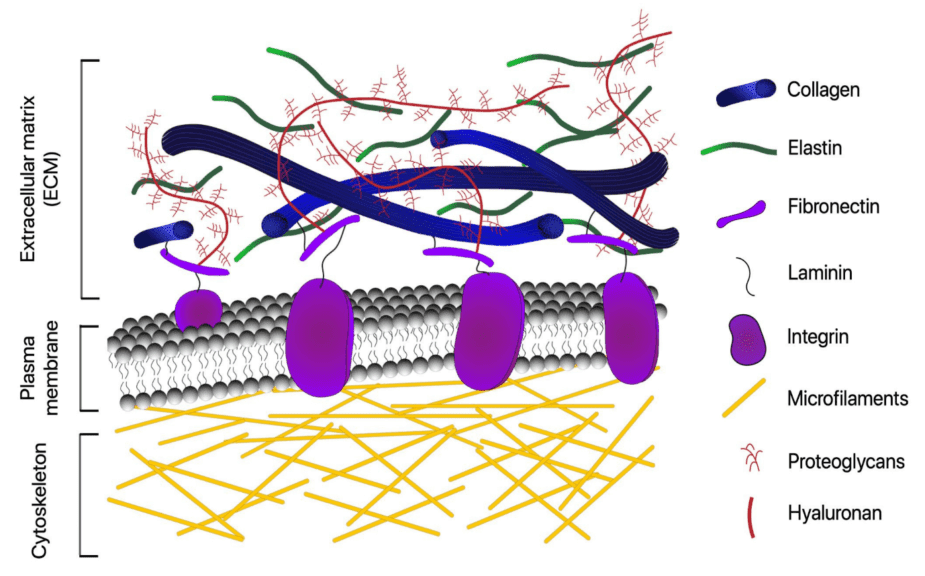
Figure 2: Notice the ECM (extracellular matrix) on the outside of the cell. Image Source: Poole, J. J. A., & Mostaço-Guidolin, L. B. (2021). - Liquid/Fluid matrix: The matrix of blood is a fluid matrix. It is also called “plasma”. It’s nearly 90-92% water and some 6-8% proteins like fibrinogens, globulins, albumins, etc. This fluid matrix aids in almost all the important activities from bringing nutrients, hormones, etc to the body parts that need them to the removal of metabolic wastes.
- Jelly-like matrix: Connective tissue matrix of bones and cartilages is jelly-like in nature. It helps the bone in protecting the vital organs of the body. It also aids cartilage in forming smooth joints. Bone matrix is mineralized and stores many important growth factors, such as IGFs (insulin-like growth factors), TGFs (transforming growth factor), etc.
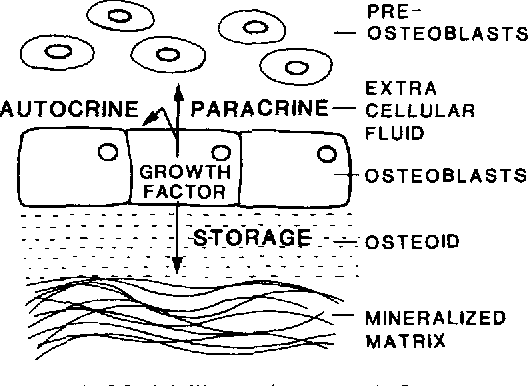
Figure 3: The mineralized bone matrix is jelly-like in nature and acts as a reservoir for many important growth factors. Image Source: Mohan, S., & Baylink, D.J. (1991) - Gelatinous matrix: Many multicellular organisms like Volvox spp. have a gelatinous matrix in which both their germ cells as well as somatic cells are embedded.
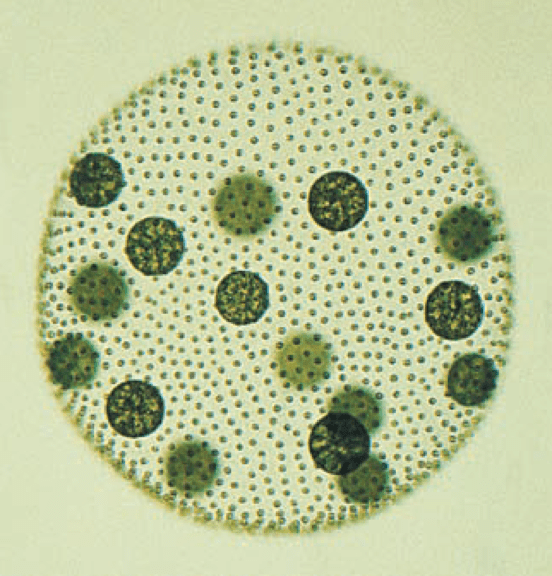
Figure 4: Gelatinous matrix of multicellular Volvox species is embedded with both somatic and germ cells. Volvox is a green alga (Kingdom- Plantae). Image Credit: David Kirk.- Cooper G. M.(2000).
Matrix Examples
There are several examples of matrices in the biological world. First, have a look at the illustration below to understand the classification.
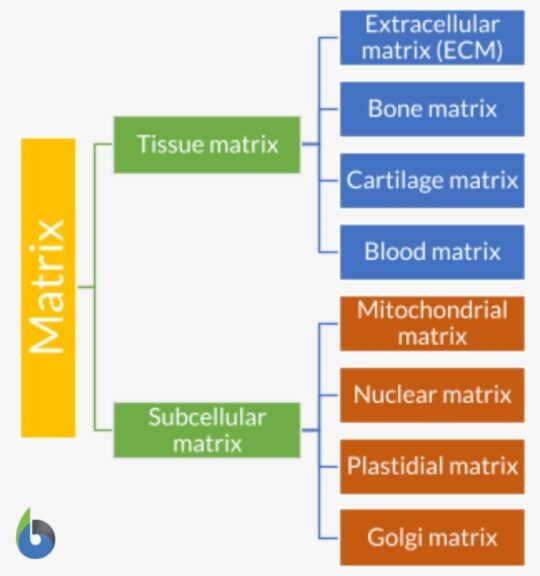
Figure 5: Different types of matrices in the body of living organisms. Image Source: Akanksha Saxena of Biology Online.
Tissue matrices
All the eukaryotic cells have an organization in the form of tissues. The material between cells in tissues is called a tissue matrix. Depending on the type of the cells, different types of tissue matrices are there. Let’s look at them one by one.
Extracellular matrix (ECM)
- All cells secrete special glycoproteins (GPs) that make up the ECM.
- Collagen, which forms the strongest fibers outside biological cells, is the most abundant GP in most animal cells.
- Proteoglycans form a very dense, interwoven network in which GPs are embedded.
- Many times, we observe formation of large proteoglycan complexes. This is an assembly of 100s of proteoglycans, attached noncovalently to a single long polysaccharide molecule.
- Fibronectin: A type of ECM glycoprotein that helps in attachment of cells to the ECM.
- All cells have cell surface receptor proteins called “_integrins_”. These are on the cell membrane.
- ECM glycoproteins like fibronectin bind to integrins.
- Integrins have 2 sides: 1 side towards the ECM that binds to ECM glycoproteins and the other side that’s towards the cytoplasm and binds to the microfilaments of the cytoskeleton. Hence, integrins are capable of transmitting signals between the ECM and the cytoskeleton. This aids in balancing and transducing changes occurring outside and inside the cell.
- Roles:
- ECM can influence the gene activity in the nucleus
- ECM plays a role in mechanical signaling. (Cascade via ECM glycoproteins, polysaccharides, integrins, and microfilaments of the cytoskeleton)
- ECM plays a role in coordinating the cell behavior within the tissue.
Bone matrix
Since bone tissue is very hard in nature, its matrix is solid and helps in the provision of rigidity in its nature. The organic matrix component is composed of collagen and the inorganic matrix component is composed of minerals. Since collagen is flexible in nature, this helps avert fracture incidences. Contrastingly, the inorganic mineral components help in the provision of the mineralization step that hardens the matrix.
Cartilage matrix
The cartilage matrix is “pliable” or “jelly-like” in nature. This is because of the presence of “Aggregating GAG Chondroitin Sulphate Salt” or “Aggrecan”. This salt imparts flexibility and pliability to the cartilage matrix. Chondroitin salt is sulfate-rich that helps the cartilage to resist compression and thus helps in aiding bending and preventing breakage.
Figure 6: Aggrecan or the chondroitin sulfate helps in providing flexibility to the cartilage matrix. The cartilage matrix has the ability to soak a lot of water because of the properties of aggrecan. Image Source: University of Leeds.
Subcellular matrices
Within a cell, there are several different organelles. They also have a matrix, such as mitochondrial matrix, nuclear matrix, and plastidial matrix.
Mitochondrial matrix
The mitochondrial matrix is the space enclosed within the inner membrane (IM) of the mitochondria. The production of the NADH in the Krebs cycle happens in the mitochondrial matrix. Also, the ATP synthase that’s located on the inner membrane of the mitochondria produces the ATP on the matrix side (in the matrix). A lot of metabolites pass from intermembrane space to the matrix and vice versa. Out of the total mitochondrial proteins, two-third belong to the matrix of mitochondria.
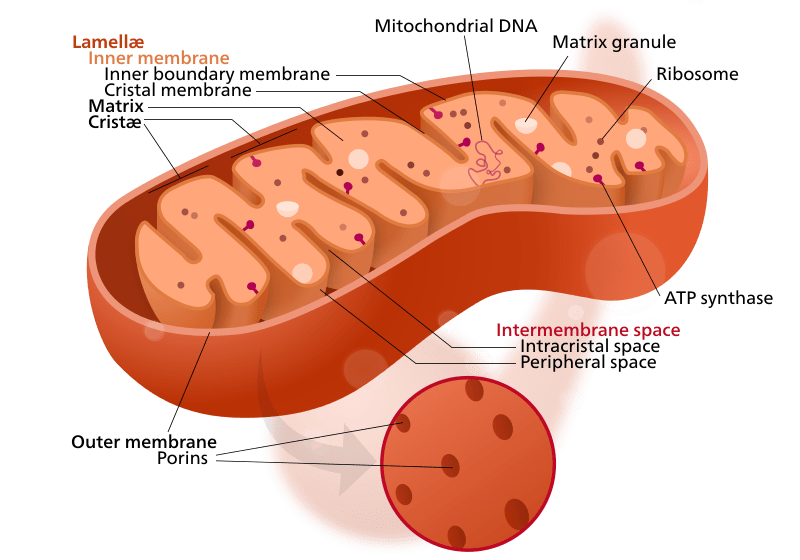
Figure 7: Mitochondria has a mitochondrial matrix that contains matrix granules, numerous enzymes with pivotal roles in reactions of oxidative metabolism, several copies of mitochondrial DNA, tRNA, ATP synthase projecting inside, and ribosomes. Source: Kelvinsong, CC-licensed.

Nuclear matrix
It is the network of nuclear fibers like there are cytoskeleton elements inside the cell. It serves an important function of deciphering the genetic information inside the cell.
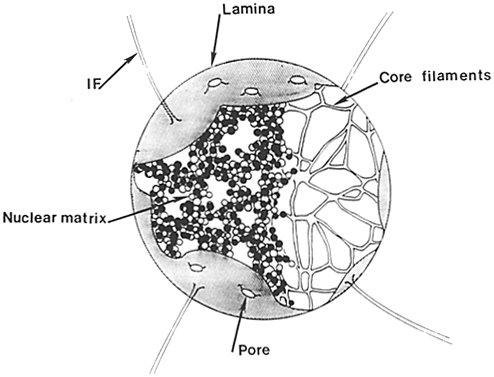
Figure 8: Model of nuclear matrix composition and structure. Image Source: Jeffrey A Nickerson.

Golgi matrix
For the proper functioning of the Golgi apparatus, there’s a network of proteins that assembles and forms the golgi matrix. The family of proteins has been named as “_golgins_”. Also, at the time of mitosis, the Golgi apparatus has to break down into vesicles. This happens with the help of phosphorylation of multiple Golgi matrix proteins.
Matrix (medium)
The term matrix is often used in place of a medium, meaning a medium in which you can grow living organisms like bacteria, fungi, etc.
Try to answer the quiz below to check what you have learned so far about matrix.
References
- Cooper G. M.(2000) The Cell- A Molecular Approach. 2nd Edition
- Mohan, S., & Baylink, D.J. (1991). Bone growth factors. Clinical orthopedics and related research, 263, 30-48.
- Poole, J. J. A., & Mostaço-Guidolin, L. B. (2021). Optical Microscopy and the Extracellular Matrix Structure: A Review. Cells, 10(7), 1760. doi:10.3390/cells10071760
- He, D. C., Nickerson, J. A., & Penman, S. (1990). Core filaments of the nuclear matrix. The Journal of cell biology, 110(3), 569–580. https://doi.org/10.1083/jcb.110.3.569
©BiologyOnline.com. Content provided and moderated by Biology Online Editors.