Everything you need to know about lions (original) (raw)
Why are lions important?
Lions are a top predator, meaning they have an important role in regulating the populations and behaviour of herbivorous species such as zebra and wildebeest. If too numerous the grasslands and forests would become overgrazed and unproductive. Therefore, lions have a key role in ensuring the preservation of their ecosystem, benefitting both wildlife and people.
Lions are also culturally significant to many people, often symbolising courage, and strength. The global population of lions is estimated to have decreased by 8% between 2018 and 2023.

~22,000-25,000* in Africa; ~670* in India (subadult and adult lions); declining. Last assessed 2025
* According to the International Union for the Conservation of Nature (IUCN)
Forest, savannah, shrubland, grassland, desert
Sub-Saharan east Africa and the Gir forest in India
Female lions can weigh between 122kg and 180kg whereas the males can weigh between 150kg and 260kg. Males can grow up to 2.5m in length
Human-carnivore conflict and retaliatory killings (shooting, spearing, snaring, poisoning); habitat loss; prey depletion, trophy hunting, captivity
Adopt a lion
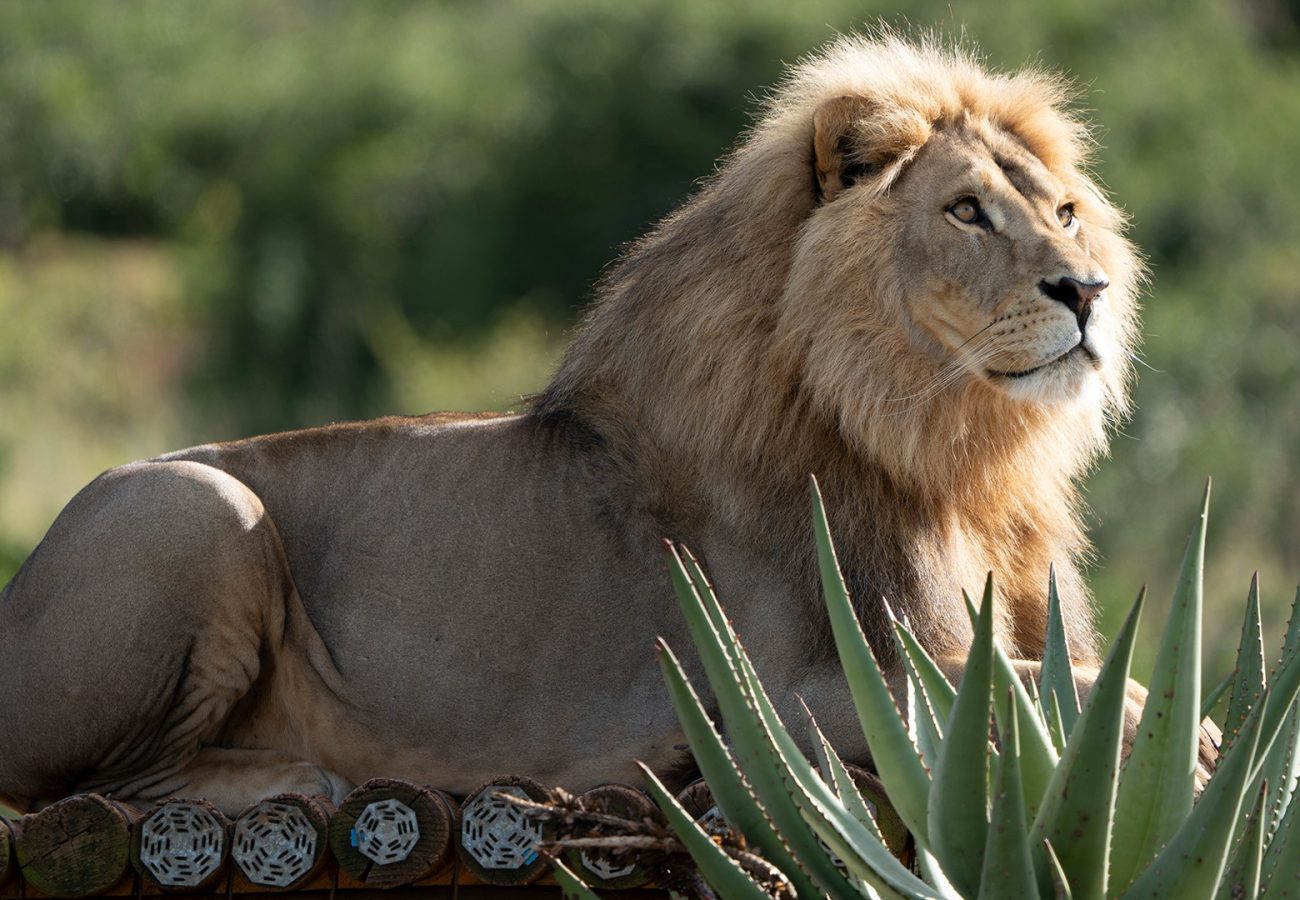
Adopt a lion with Born Free today, to help us monitor and protect wild lions in Meru National Park, and provide support and care for rescued lions who live at our Shamwari Private Game Reserve.
How to recognise a lion
Lions, have extremely powerful muscular bodies and excellent senses. They are the second largest felid (cat), behind the tiger. Adult males are larger than females, and only the males exhibit a mane.
The colour of their fur can vary significantly, from light grey, yellowish-red to a dark brown. Newborn cubs are often born with dark spots which fade as they mature. Both males and females have a dark hairy tuft at the end of their tail.
Where do lions live?
Amazingly, lions get all the water they need from eating their prey, meaning they can live in a wide range of habitats across Africa, from South Africa to Sudan and from Kenya to Nigeria. In fact, the only areas they can’t be found are the tropical rainforests of central Africa or the extremely dry interior of the Sahara Desert.
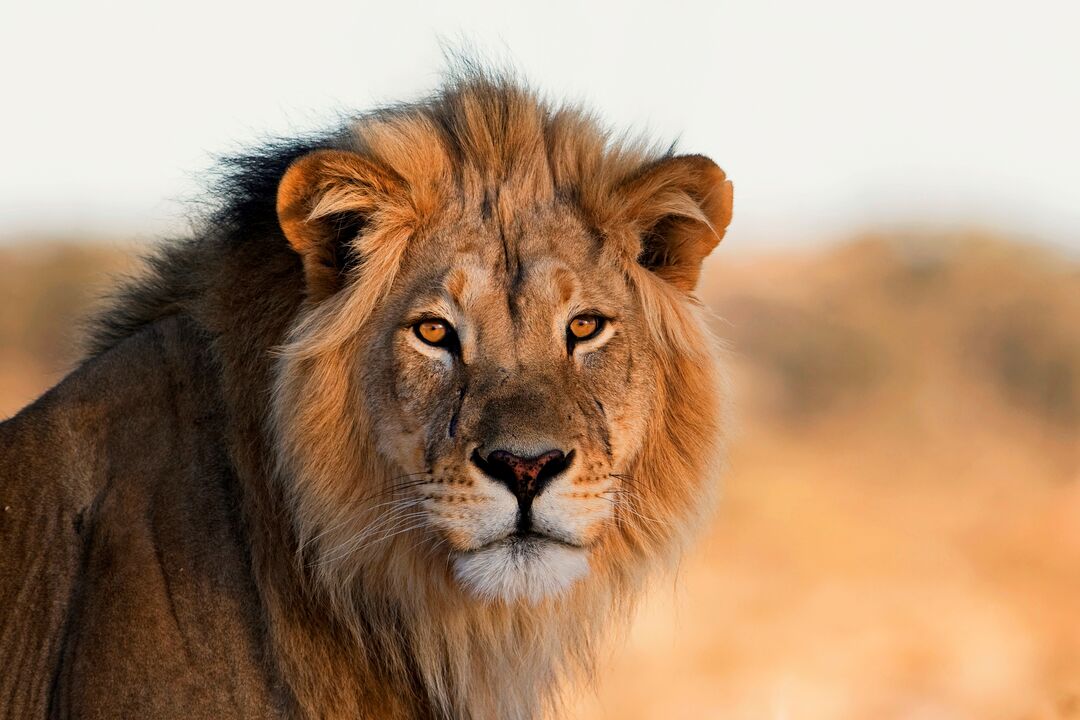
A magnificent wild lion © iStock
Lion behaviour
Lions are the only big cats that live and hunt in family groups, or prides, with the females doing most of the hunting and the males responsible for protecting the pride’s territory.
Prides vary greatly in size, but can include up to three male lions, around a dozen female lions, and their young. Typically, the lionesses in the pride will be related to one another, with the female cubs staying with the group for life. Young males leave the pride, often in small coalitions, and live a wandering existence until they may establish a pride of their own by taking over another group headed by another male, in which case they almost always kill the prides’ cubs.
Lions communicate with other members of their pride, or assert their claim over a territory, by roaring. Both males and females can roar, and they possess large vocal cords, which allows their roar to travel for miles over the savannah.
Mating occurs throughout the year, with females giving birth to a litter of between one and four lion cubs after a 110-day pregnancy.
Lions will hunt almost any animal they can, from small rodents, up to rhino. However, the bulk of their diet comprises medium to large hooved mammals including buffalo, antelope, wildebeest, impala, warthog and zebra. Lions also scavenge, and will steal the kills of other predator species, such as spotted hyenas.
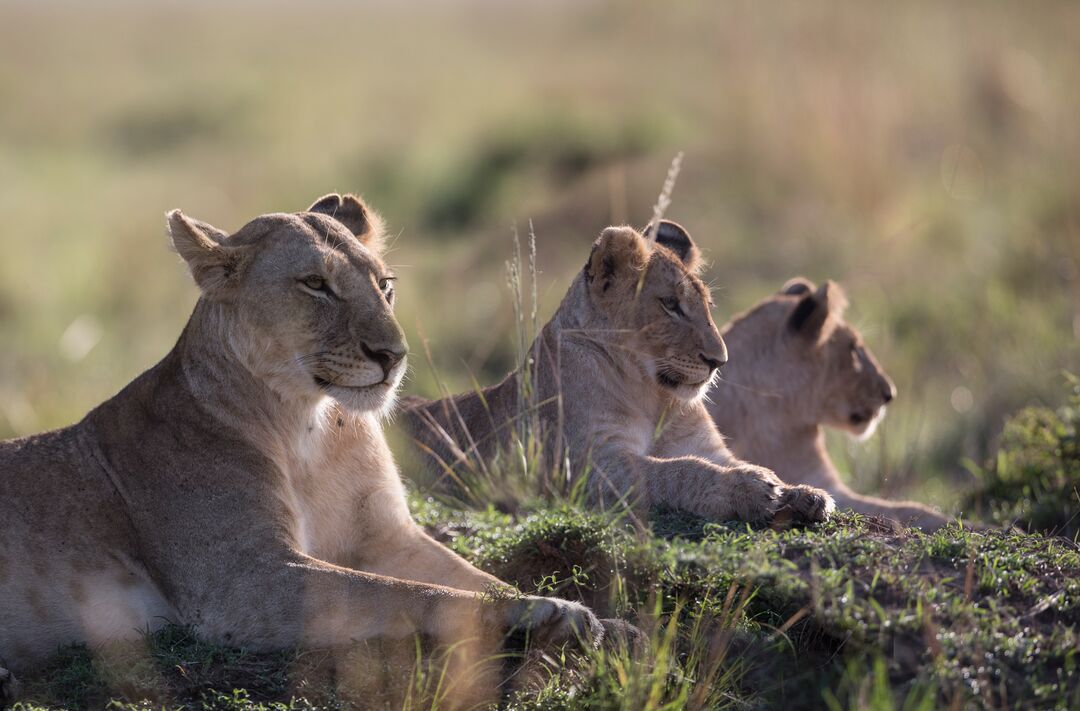
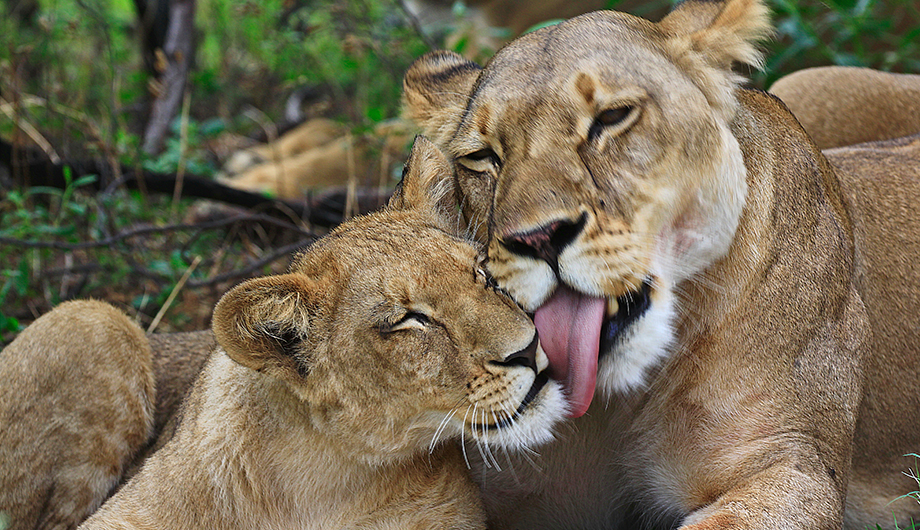
Young lions lying together © George Logan
Lion populations are at risk from habitat loss, degradation, and fragmentation. As human populations expand, a greater area of lion habitat is converted into agricultural land, or land for settlements and industrial development.
One of most significant threats to lions is the issue of conflict between local people and lions. Lions may kill livestock, especially in areas where their prey has become less available. This reduction in prey is often caused by the bushmeat trade.
Livestock are central to pastoralists’ livelihoods, and the economic, social, and psychological impact of this loss is significant, so as a result, they may retaliate and kill lions, by poison, spears, guns or snares.
In some countries, hunting lions for sport is sadly still legal. Born Free has an ethical objection to the killing of any animal for pleasure. We also strongly disagree with the claims made by some that ‘science’ suggests trophy hunting provides significant net benefits for conservation or rural communities. On the contrary, there is a great deal of debate and differing opinion on this issue within the scientific community.
Many lions are captively bred for the cruel practice of canned hunting, where the lion (or other wild animal) is “hunted” in a confined area from which they cannot escape. These individuals are often hand-reared and used as props for photos with tourists as cubs, before being transferred to canned hunting facilities when they become too big to handle, to be shot by paying trophy hunters, and their bones and other body parts sold into local and international trade.
It is a cruel practice that is sadly flourishing in certain countries. In South Africa there are an estimated 8,000 captive-bred lions set to suffer this fate.
Lions are naturally wide ranging and suffer in captivity. The space provided, social interactions, diet, climate, and proximity of humans to lions in zoos are a far cry from the lives these species have evolved to lead in the wild and the damaging effects on individual captive animals can be huge. Many lions are bred in captivity for use in zoos and circuses or sold as pets. Lions in captivity are also exploited as living props for photos and selfies.
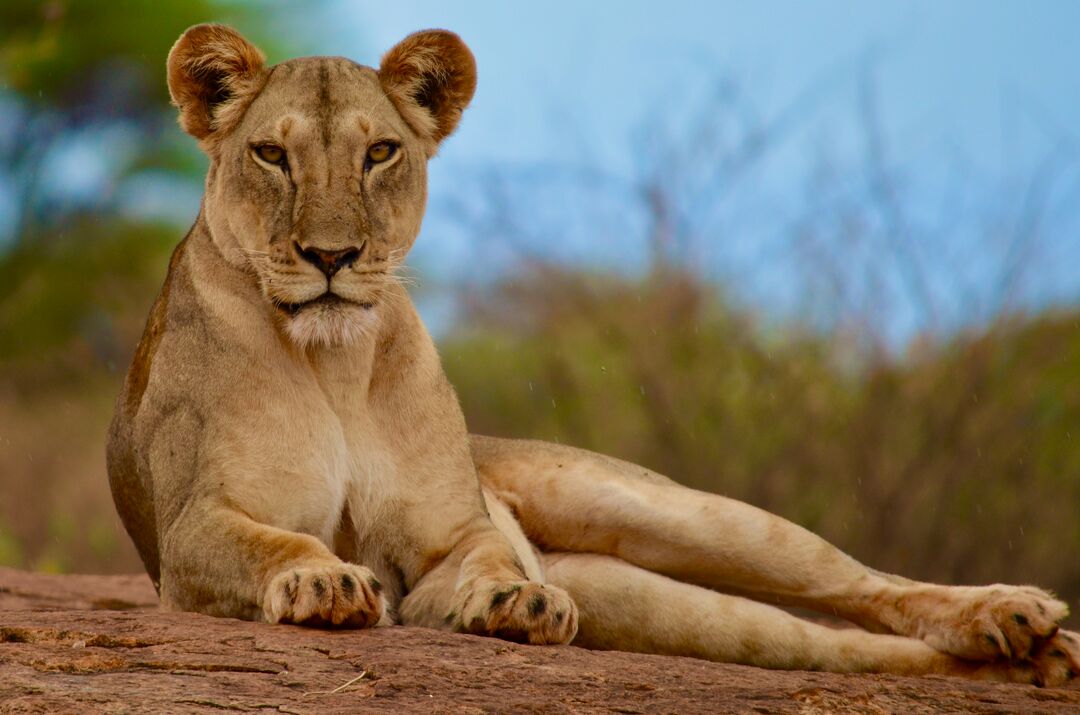
We seek ways for lions and people to coexist and share their landscape in harmony, and focus on reducing human-predator conflict. Our aim is to help increase wild lion populations, and to reduce the negative impact of humans on wild lions and their environment across the Amboseli and Meru ecosystems.
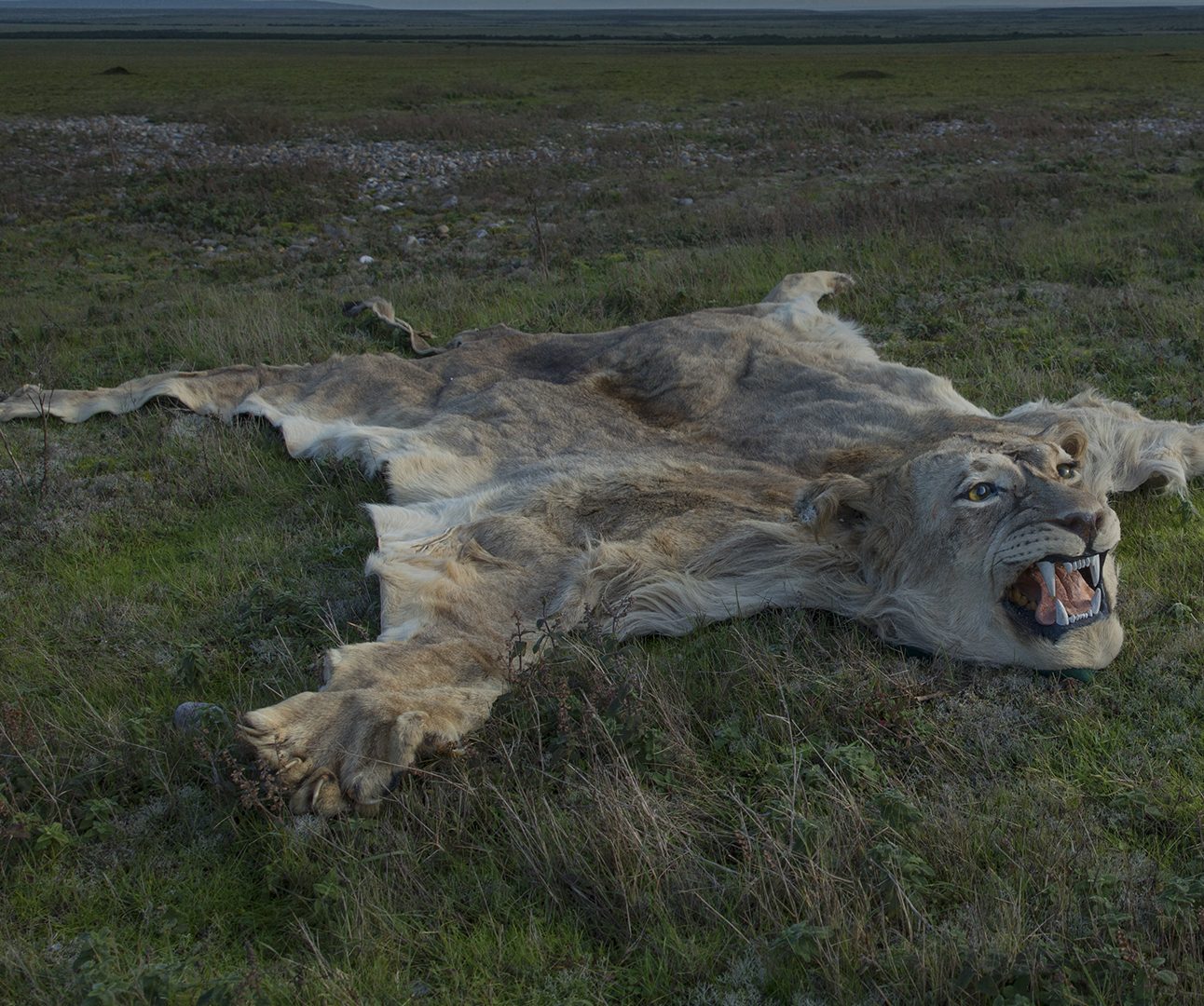
Born Free is opposed to the killing of any animal for sport or pleasure. We work with policymakers to strengthen rules governing trophy and sport hunting, and with enforcement agencies to ensure regulations are adhered to. We campaign to change public attitudes towards trophy hunting.
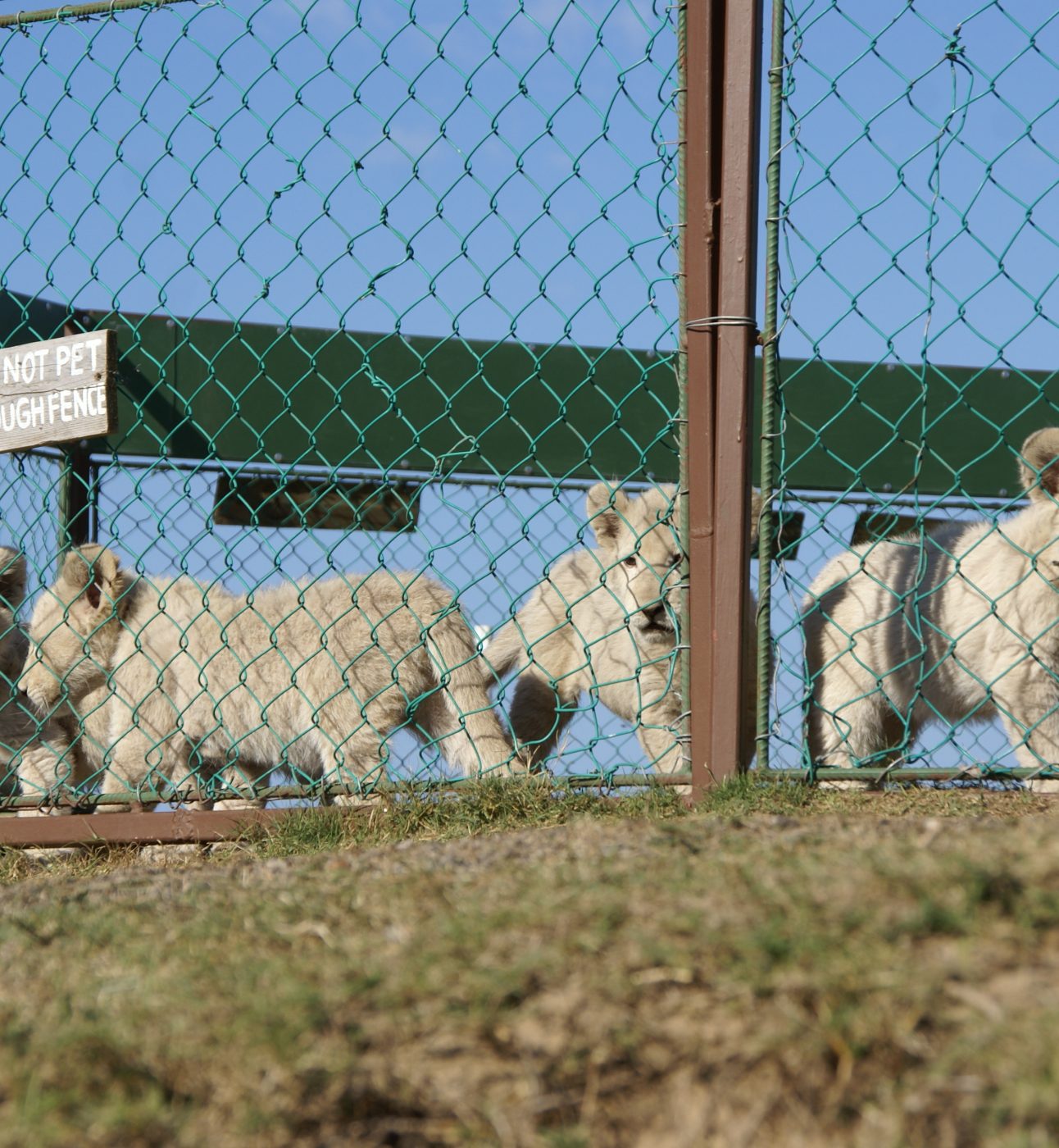
We are absolutely opposed to the cruel practice of canned hunting (the hunting of wild animals in a confined area from which they cannot escape), and campaign to end the captive breeding of lions and other predators for canned hunting and other forms of commercial exploitation.
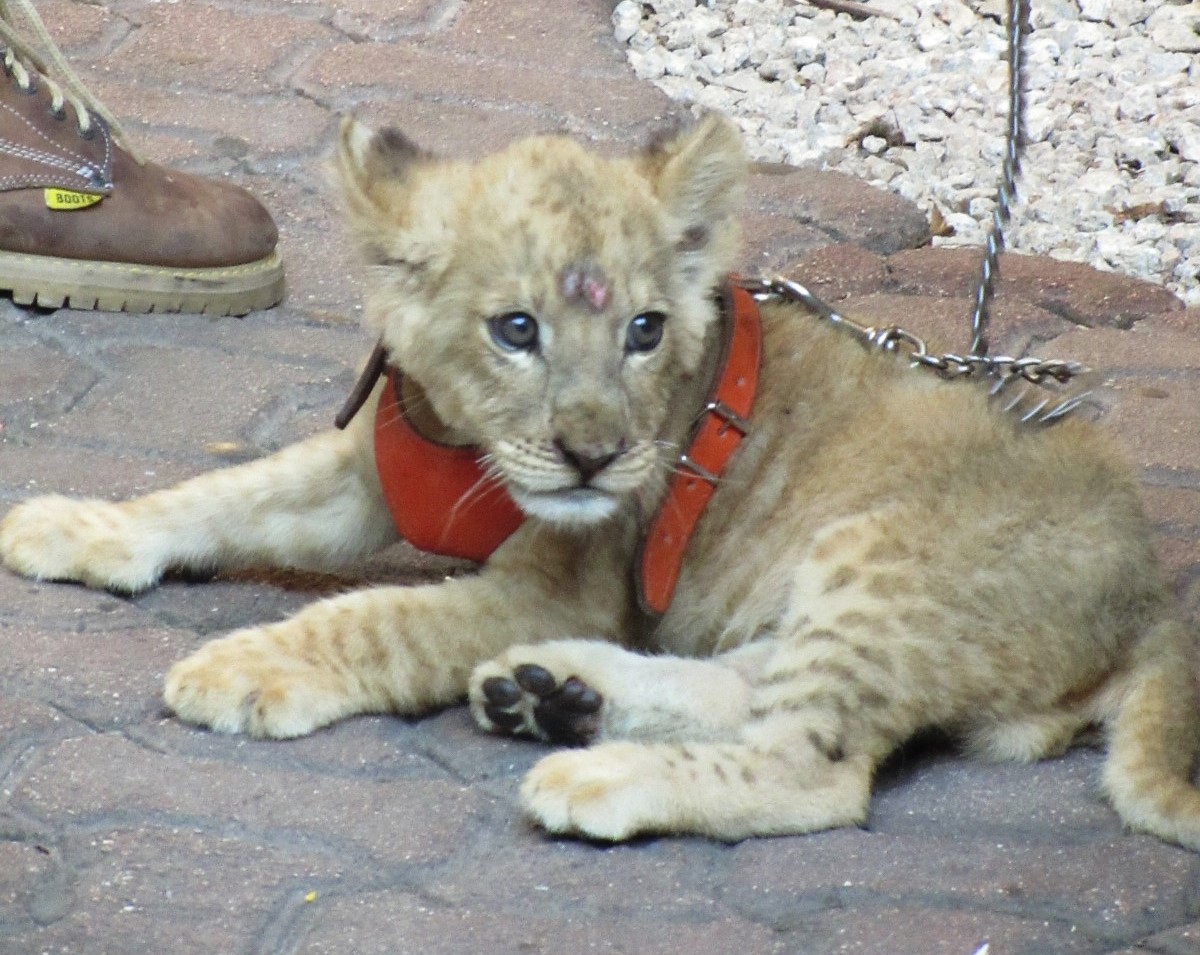
Every year, young lions and lion cubs are brutally shot, trapped, poisoned and mutilated, or kept in appalling conditions to be traded by criminal networks. Tackling the illegal trade requires an international response and Born Free and its affiliates have been exposing the impacts of wildlife trafficking for many years.
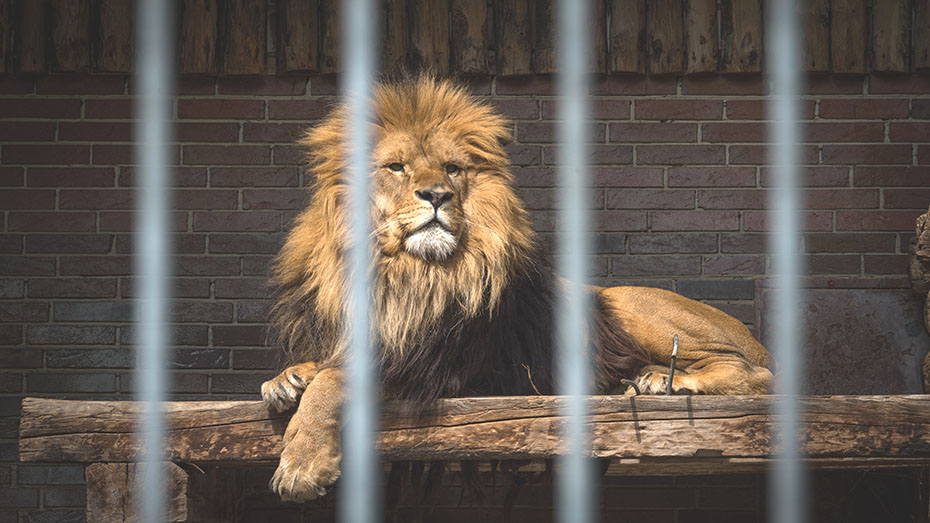
Born Free rescues lions from captive conditions where they have been confined, exploited or abused. We provide the lions with the best possible lifetime care at our sanctuaries, where lions freed from captivity or illegal trade are housed in large, natural enclosures, free to express their natural behaviour.
We aim to increase awareness of lions and the issues they face, both through work in the UK and in countries where lions live in the wild. Born Free conservation clubs run in three countries while our Lions for Life video can help communities understand the importance of lions in the ecosystem.