Cats in Chinese Art (original) (raw)
Who doesn’t love cats? Check out these cute and cuddly house cats, ferocious lions, and majestic tigers, created by Chinese artists.
The Humble House Cat
In ancient China, the rich and poor both kept cats, although for different reasons. They were beloved companions for the nobility and a practical means of pest control for the ordinary folk. In fact, Chinese farmers worshipped a cat deity, Li Shou. She was a fertility goddess who protected crops from rats and drove away evil spirits.
Cats were especially popular during the Song dynasty and found their way into Chinese idioms, poetry, and paintings of this time. And yes, they also spoilt their cats with treats and toys and cat trees!
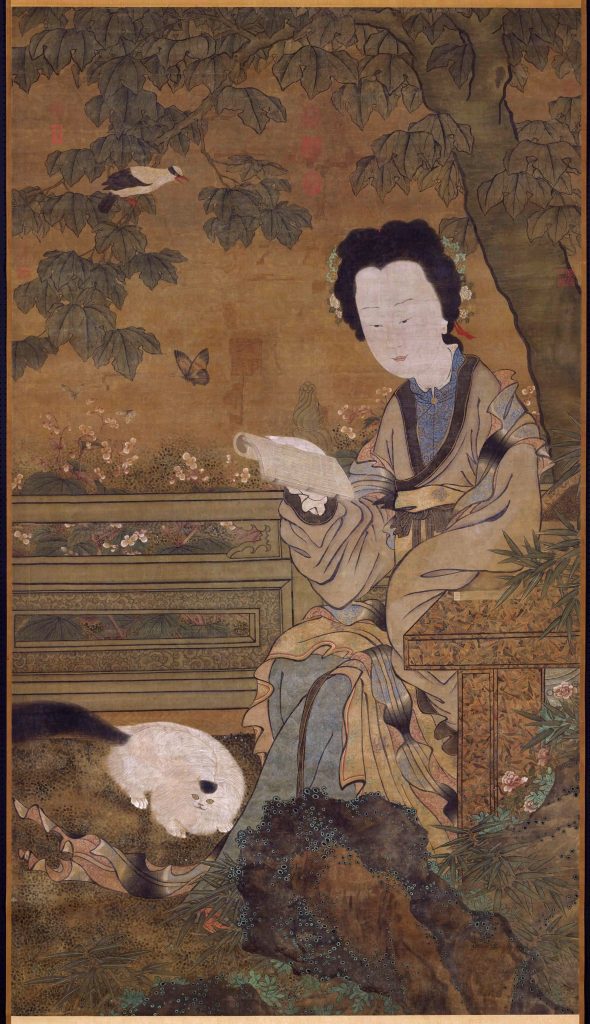
Zhou Wenjiu, Woman with Cat, between the 10th century and the 11th century, National Palace Museum, Taipei, Taiwan. Wikimedia Commons (public domain).
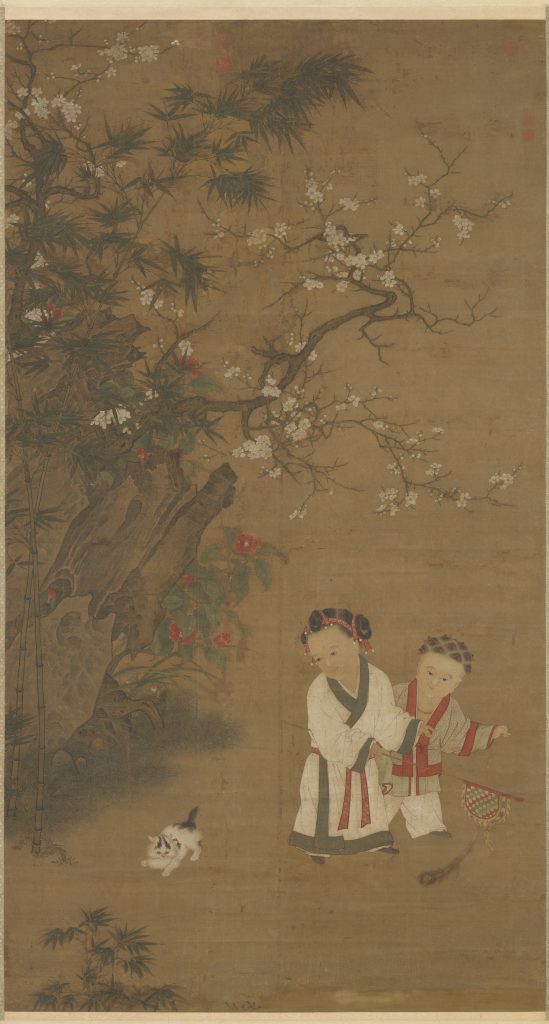
Su Hanchen, Children Playing on a Winter Day, 12th century, National Palace Museum, Taipei, Taiwan. Wikimedia Commons (public domain).
The Myth of Li Shou
Apart from being a fertility goddess, Li Shou is also a part of a creation myth. In Chinese mythology, the gods initially put cats in charge of the world after they created it and Li Shou was the leader of the cats. The gods gave cats the ability to talk so that they could better rule the other creatures. But the cats had other ideas. They lazed about in the sun, enjoying catnip and chasing mice.
Twice the gods chastised Li Shou and her cats to be more responsible. In the end, Li Shou suggested to the gods that humans seemed to be more interested in running things and that cats would rather just enjoy the world. The gods agreed and this is how humans gained the power of speech and took over the world. Although, ask any cat person and they will still tell you that cats are the real masters. Just take a look at these paintings of cats by Chinese modern artist Xu Beihong. Don’t they look like they are the boss?
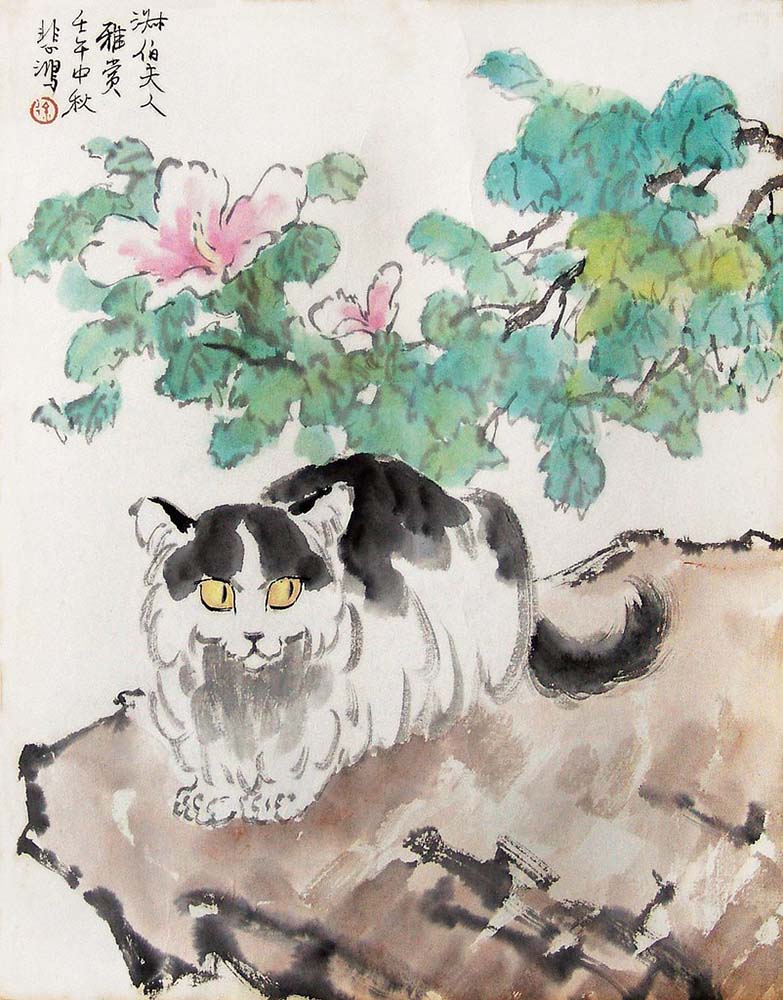
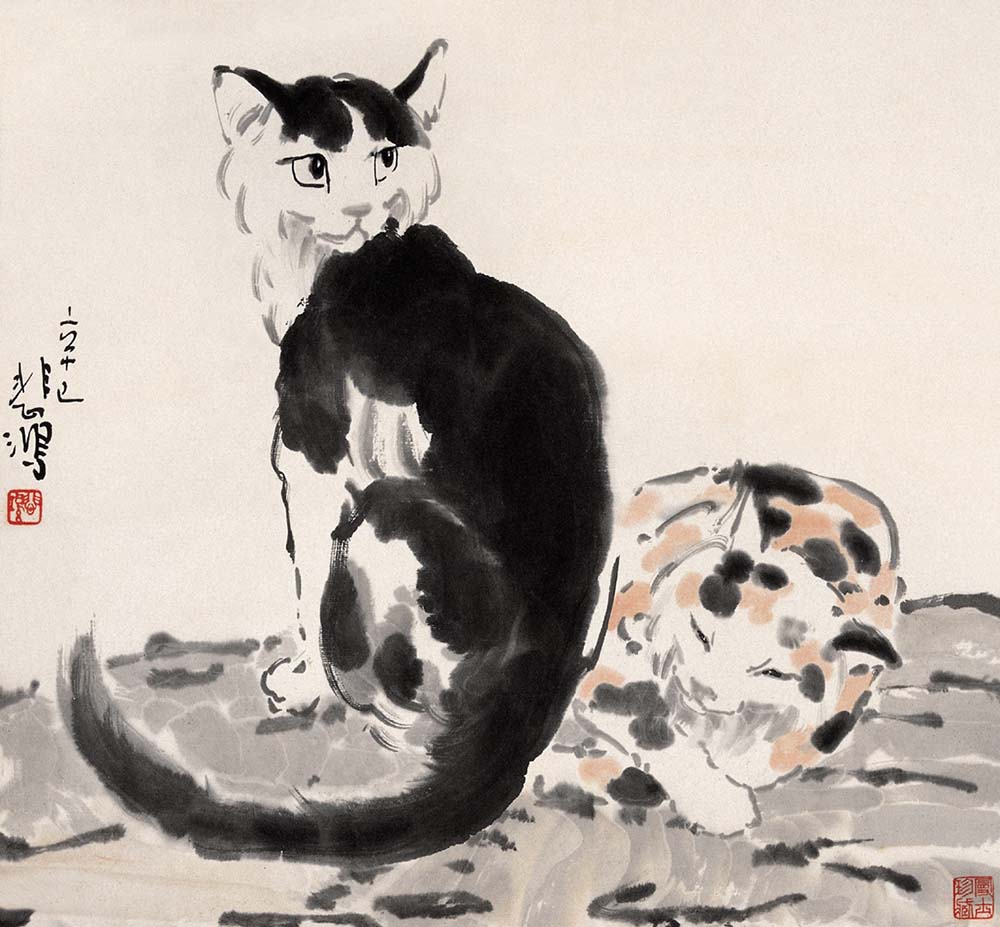
Xu Beihong, Cat, 1941, private collection. China Online Museum.
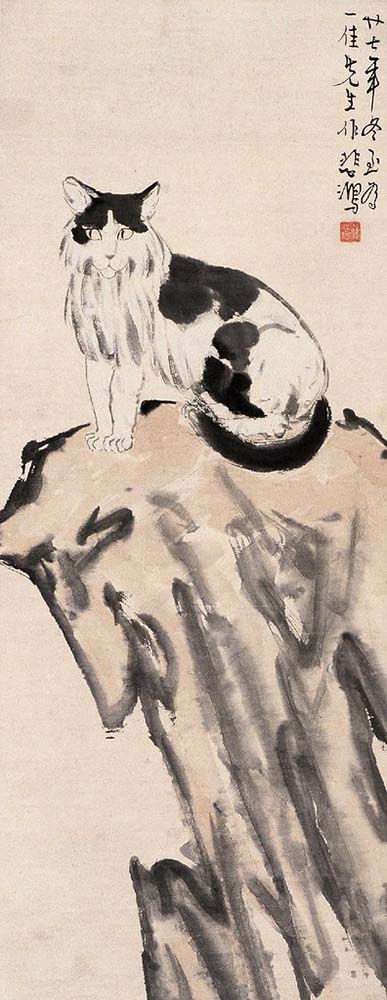
Xu Beihong, Cat, 1941, private collection. China Online Museum.
Ink Cat
In Chinese mythology, the gods initially put cats in charge of the world after they created it and Li Shou was the leader of the cats.
Ink Cat
The gods gave cats the ability to talk so that they could better rule the other creatures. But the cats had other ideas…
Ink Cat
They lazed about in the sun, enjoying catnip and chasing mice.
The Foo Dogs
In spite of their name, Foo Dogs are actually lions. Lions are not native to China. They were introduced to China through the trade of pelts and as live animal gifts to the kings. Most artisans had never seen a lion in person. That is why the Foo Dogs are quite stylized and look similar to Chinese depictions of dragons. The name might stem from the fact that they were misidentified to be Chow Chow or Pekingese dogs as they also look somewhat similar to these Chinese breeds. The Foo Dogs are also called Imperial Guardian Lions or Foo Lion Dogs.
This tradition of the Guardian Lions developed out of the spread of Buddhism in China. Their form became standardized to their current state during the Ming and Qing rule. Typically, the lions are in pairs, one male and one female, standing guard in front of entrances. They are usually sculptures made of wood or stone. The male lion holds a ball under one of its feet and protects against physical threats. The female lion holds a playing cub under her foot. She wards off spiritual misfortunes (like strife within a family).
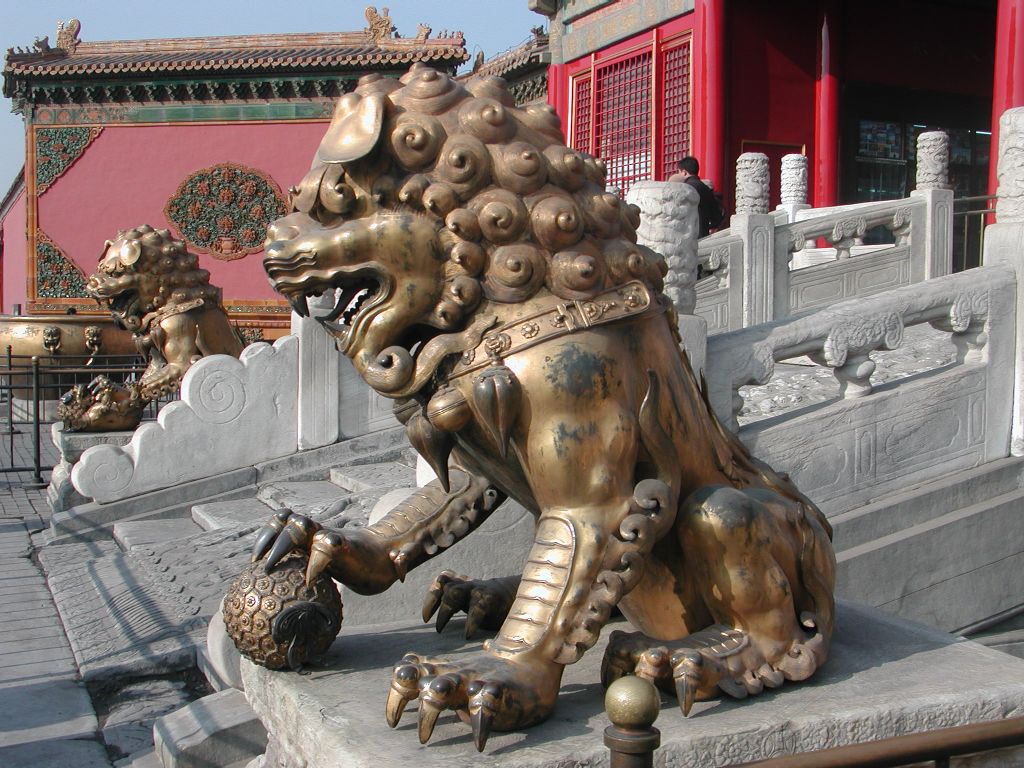
Forbidden City Imperial Guardian Lions, Qing Dynasty (1636–1912), Forbidden City, Beijing, China. Photograph by Allen Timothy Chang via Wikimedia Commons (CC BY-SA 3.0).

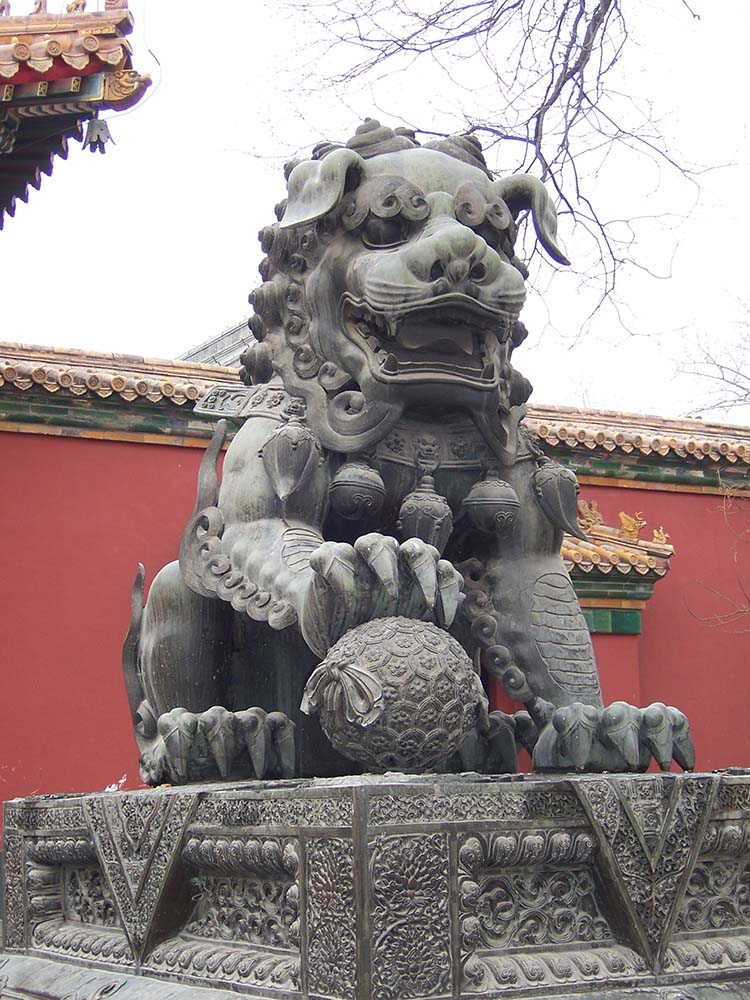
Male Foo Dog Holding a Ball, Qing Dynasty (1636–1912), Yonghe Temple, Beijing, China. Photograph by McKay Savage via Wikimedia Commons (CC BY 2.0).

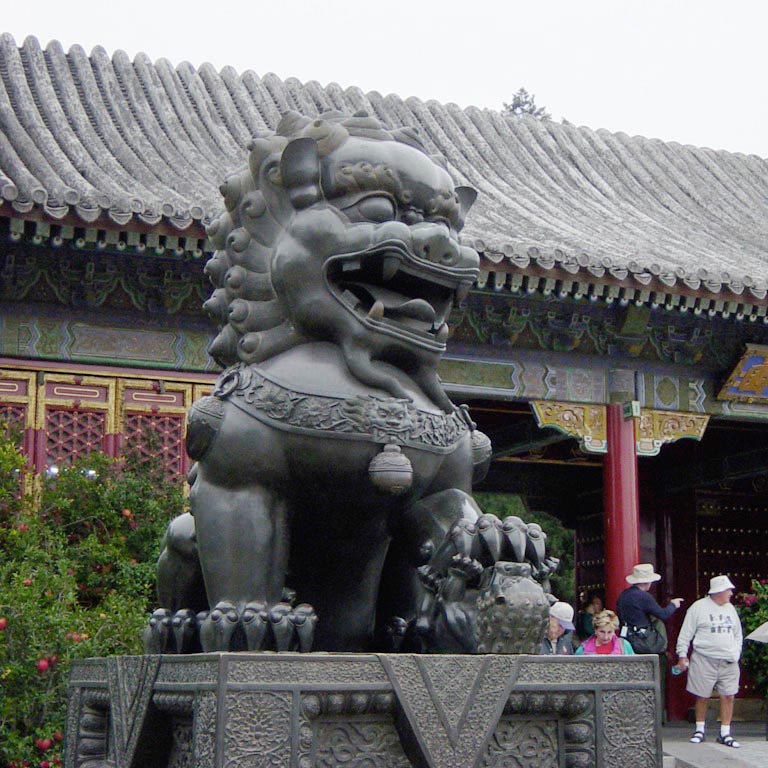
Female Foo Dog Holding a Lion Cub, Qing Dynasty (1636–1912), Summer Palace, Beijing, China. Photograph by Leonard G. via Wikimedia Commons (CC SA 1.0).

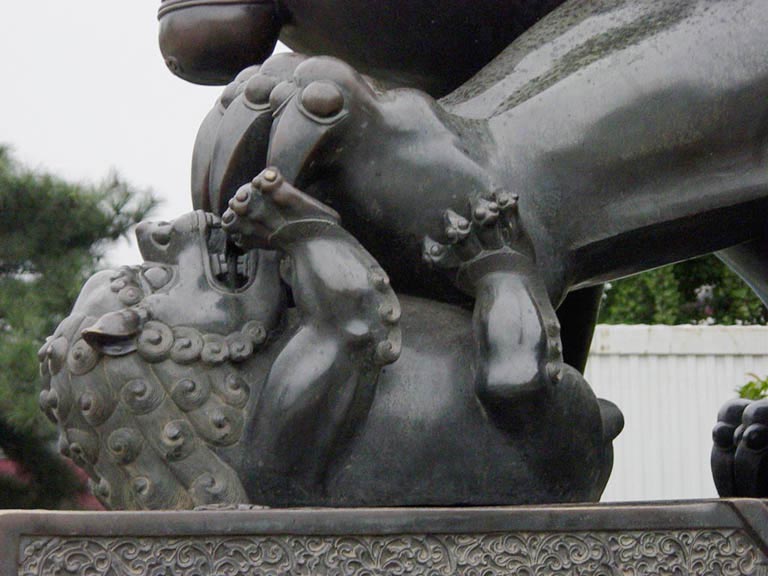
Cub, Qing Dynasty (1636–1912), Summer Palace, Beijing, China. Photograph by Leonard G. via Wikimedia Commons (CC SA 1.0). Detail.

Forbidden City Imperial Guardian Lions
This tradition of the Guardian Lions developed out of the spread of Buddhism in China. The name might stem from the fact that they were misidentified to be Chow Chow or Pekingese dogs as they also look somewhat similar to these Chinese breeds.
Male Foo Dog
In spite of their name, Foo Dogs are actually lions. Lions are not native to China. They were introduced to China through the trade of pelts and as live animal gifts to the kings. Most artisans had never seen a lion in person.
Female Foo Dog
Foo Dogs are quite stylized and look similar to Chinese depictions of dragons.
Cub Detail
Detail of a cub from Summer Palace in Beijing.
The Majestic Tiger
Tigers have long been an important animal in Chinese culture. They were thought to represent “yin” in Taoism and were associated with the wind and the Western direction. Buddhism brought in additional symbolism of royalty, courage, strength, and sacrifice. The tiger is also the third animal in the Chinese zodiac and considered to be the ruler of all land animals.
Tiger portraits were usually composed in two ways – uphill and downhill. Uphill tiger paintings showcased the animal’s majesty. The tiger would have a relaxed posture and there would be lots of foliage, which created a mood of calm beauty.
Downhill paintings highlighted the beast’s ferocious strength. These were set among sharp rocks and cliffs. The tiger would be either crouching, ready-to-pounce, or mid-leap grabbing at prey. One can almost hear it roar in these paintings.
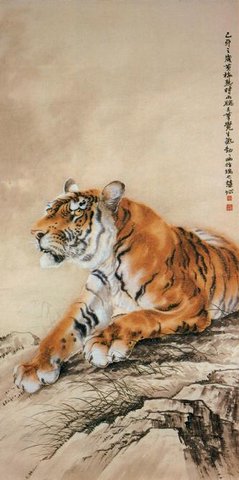
Hu Zaobin, Uphill Tiger, between 1908 and 1942, National Palace Museum, Taipei, Taiwan. Wikimedia Commons (public domain).
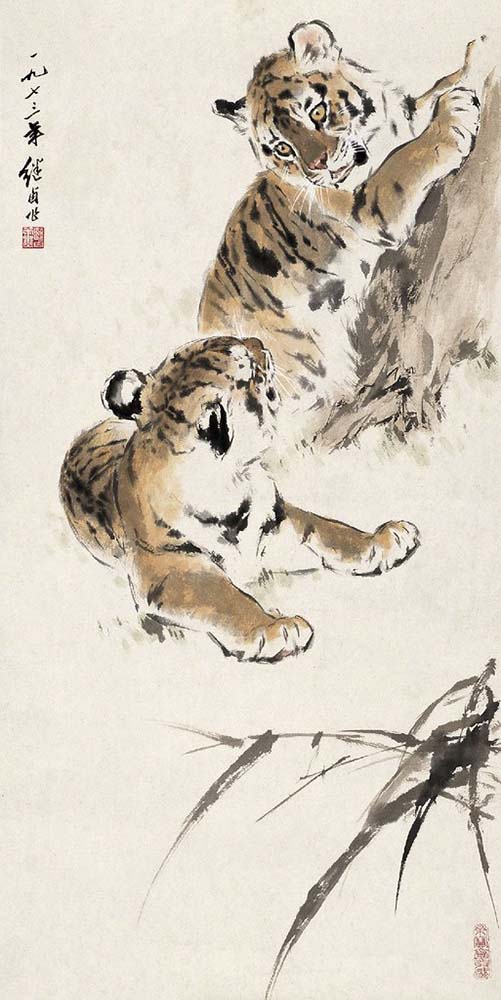
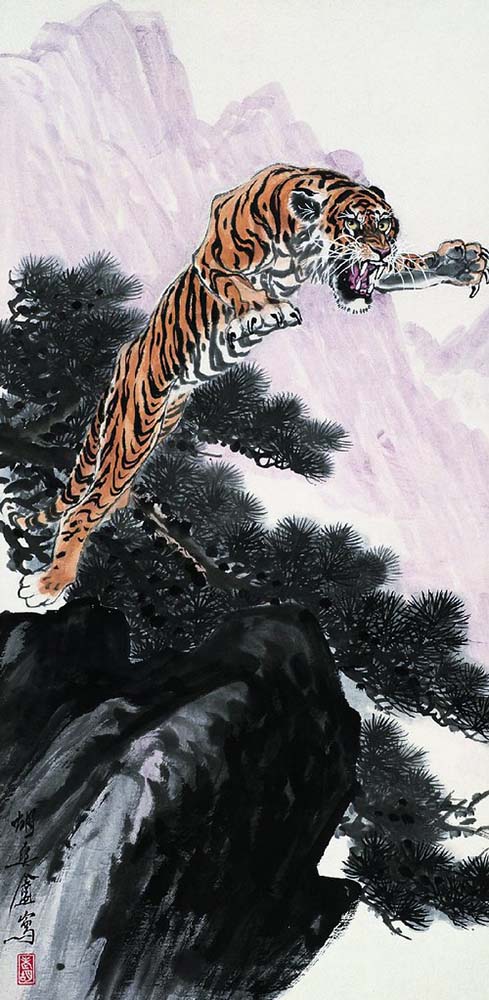
Hu Shuang’an, Downhill Tiger, between 1916 and 1988. China Online Museum.
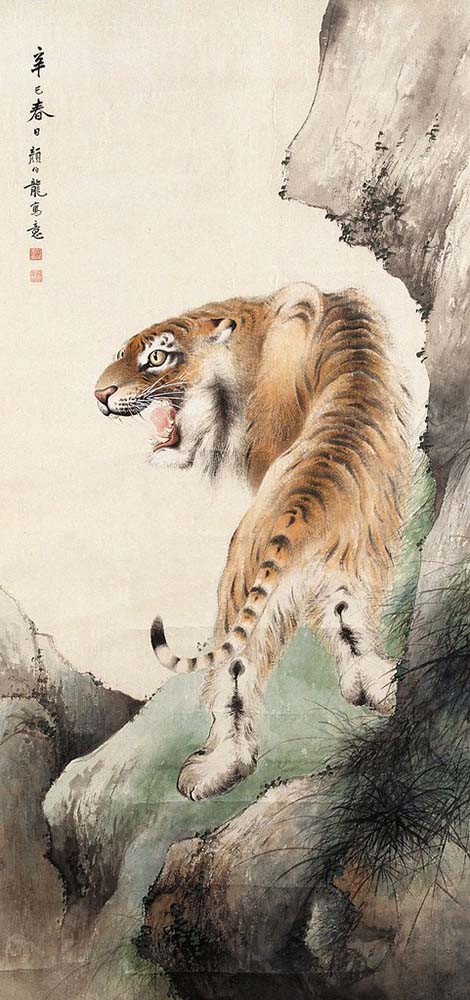
Yan Bolong, Roaring Tiger, between 1898 and 1954. China Online Museum.
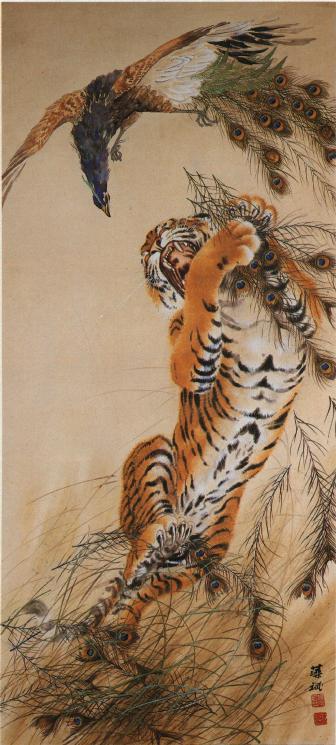
Hu Zaobin, Victory or Defeat, Macau Museum of Art, Sé, Macau, China.
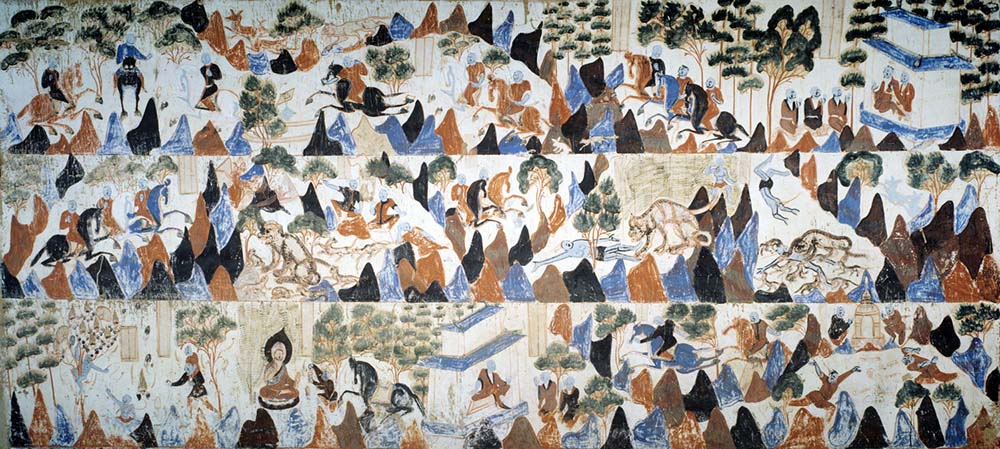
Prince Mahasattva Jataka Tale Mural, Mogao Cave 428, Northern Zhou, 557–581 CE, Dunhuang, China. Dunhuang Academy.
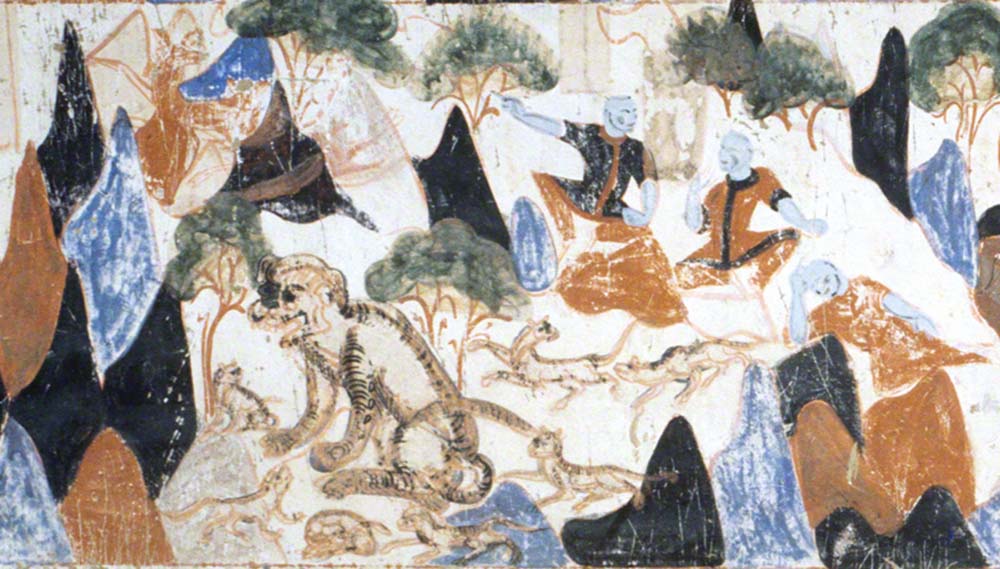
Prince Mahasattva Jataka Tale Mural, Mogao Cave 428, Northern Zhou, 557–581 CE, Dunhuang, China. Dunhuang Academy. Detail.
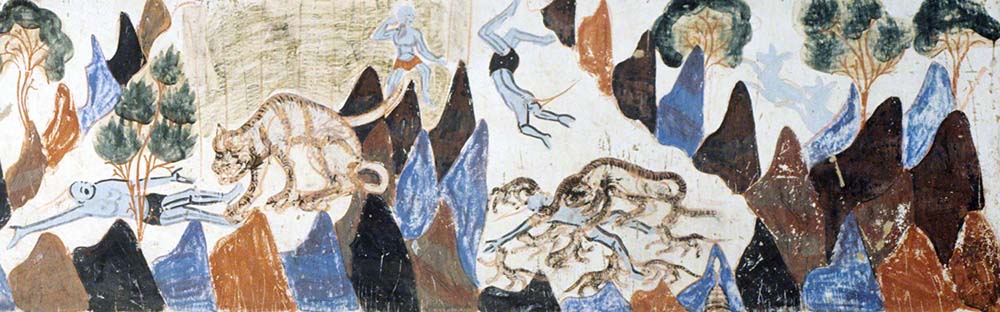
Prince Mahasattva Jataka Tale Mural, Mogao Cave 428, Northern Zhou, 557–581 CE, Dunhuang, China. Dunhuang Academy. Detail.
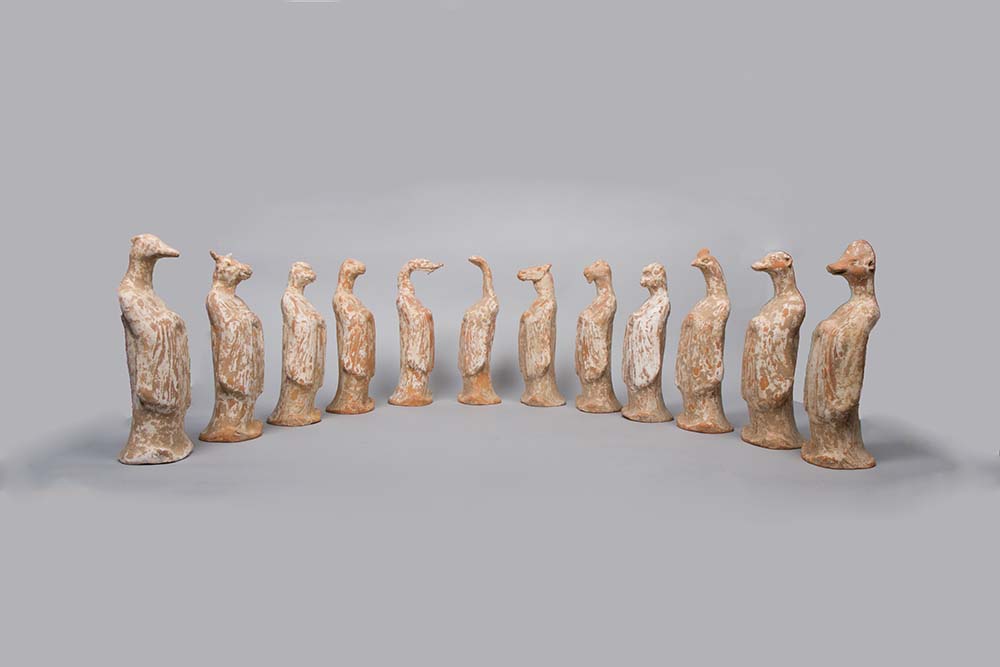
Set of Twelve Zodiac Animals, 8th century, The Met Fifth Avenue, New York, NY, USA. Museum’s website.
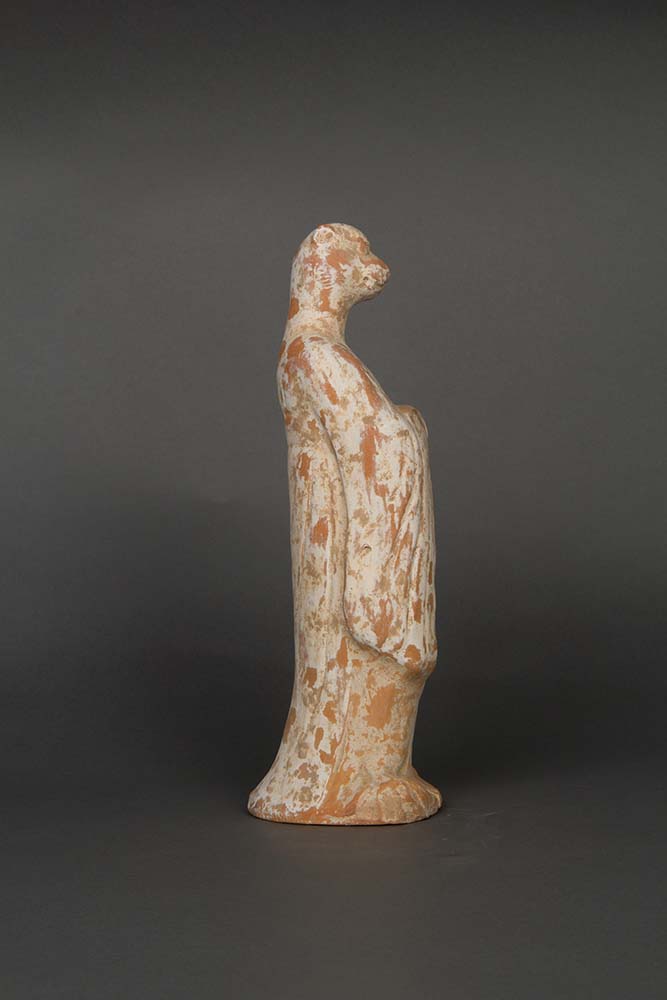
Zodiac Tiger, 8th century, The Met Fifth Avenue, New York, NY, USA. Museum’s website.
Uphill Tiger
Tiger portraits were usually composed in two ways – uphill and downhill. Uphill tiger paintings showcased the animal’s majesty. The tiger would have a relaxed posture and there would be lots of foliage which created a mood of calm beauty.
Tiger Cubs
Uphill painting of tiger cubs playing.
Leaping Tiger
Downhill paintings highlighted the cat’s ferocious strength.
Roaring Tiger
These were set among sharp rocks and cliffs. One can almost hear it roar in these paintings.
Victory or Defeat
The tiger would be either crouching, ready-to-pounce, or mid-leap grabbing at prey.
Buddhist Jataka Tale Mural
Tigers have long been an important in Chinese culture.
Starving Tigress
They were thought to represent “yin” in Taoism and were associated with the wind and the Western direction.
Prince Mahasattvas Sacrifice
Buddhism brought in additional symbolism of royalty, courage, strength, and sacrifice.
Set of Twelve Zodiac Animals
The tiger is the third animal in the Chinese zodiac and considered to be the ruler of all land animals.
Zodiac Tiger
The tiger is the third animal in the Chinese zodiac and considered to be the ruler of all land animals.