How to Train Your Dragon continues a depressing live-action remake trend – and it needs to change (original) (raw)
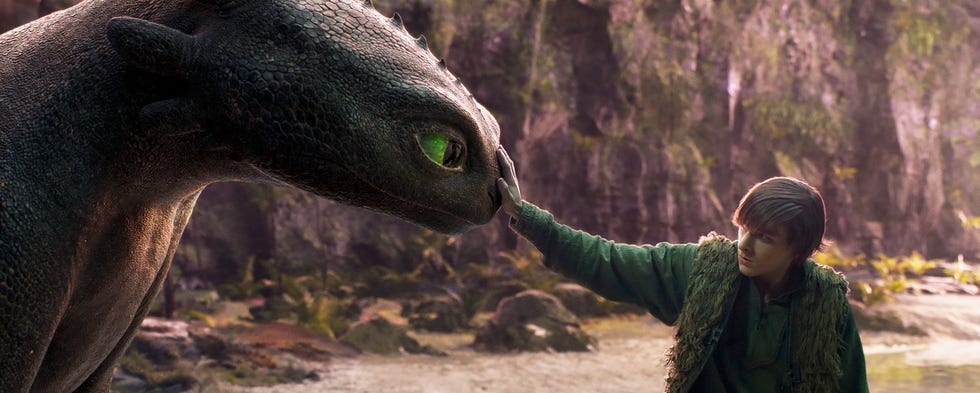
You can whittle all the praise for Universal's live-action remake of How to Train Your Dragon down to a single phrase: 'It's just like the original.'
While Hollywood once fixated on the "requel" or "legacy sequel" – movies that nominally presented new stories and new characters, but relied on the past as an anchor and a sales hook – it's since dropped the pretence of originality wholesale.
Now, it's the same story again, only with real actors and "realistic" CG animation. We've officially entered uncharted territory of audience nostalgia.
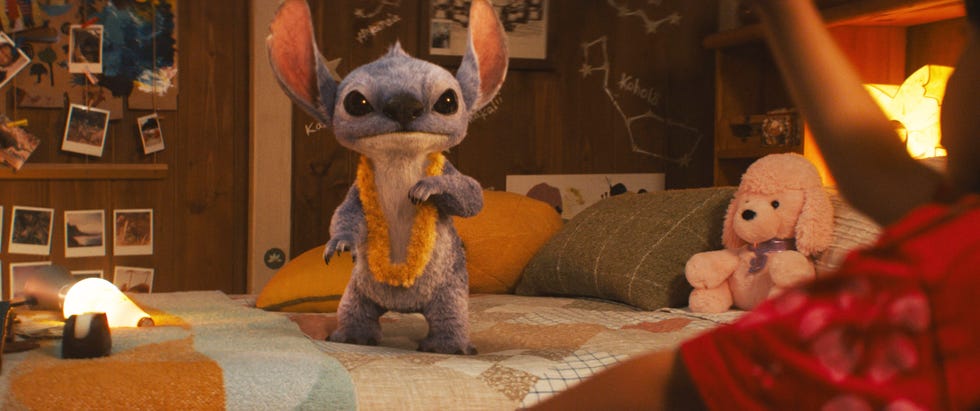
And it does seem to be exactly what audiences are craving. Disney's live-action Lilo & Stitch, whose trailers reassured fans that all their favourite scenes would be replicated line-by-line, shot-for-shot, has soared to over $600m at the box office, in what's been a tricky financial year for the studio. (Both its Marvel movies, plus its looser adaptation of Snow White, struggled to make a profit.)
How to Train Your Dragon is predicted to replicate Lilo & Stitch's success. Its director Dean DeBlois, who co-directed the 2010 original alongside Chris Sanders (the duo, ironically, also made the animated Lilo & Stitch together) and returns now to solo direct the remake, has stressed in interviews that certain scenes are "almost shot for shot".
Maybe there's no way to say this without sounding judgemental of general audiences, but why would anyone want this when the original already exists and is available to watch at any time?
What to Read Next
Universal
The beauty of film is that it's an inexhaustible resource. You can turn to a favourite again and again and again and again, sinking into its rhythms like a warm bath. You can revisit them periodically, like an old friend, to see how their meanings change as you grow older. There's none of that pleasure in watching a facsimile of that same story, only with a blander palette, a blander sense of design and, inevitably, less joy.
And this, the near-shot-for-shot live-action remake, is an entirely new strategy. It has no real comparison.
When a game studio releases a remaster of an old title, updating its graphics to keep up with current technology, it's not treated as an entirely new piece of work. When Gus Van Sant released a near shot-for-shot remake of Psycho in 1998, it was roundly deemed a failure and a waste of both critics' and audience's time. When a theatre company revives Macbeth or Henrik Ibsen's A Doll's House, the onus is always on how new voices can interpret the text in new ways.
The closest comparison, perhaps, was when the old European painters would have their apprentices copy their masterworks. But these were lesser products created largely for the purpose of training.
Similarly, it's rare for someone to sincerely argue that the live-action remake is better than its source. And for those who do argue for the superiority of live-action, on the basis that it's more "realistic": why is that word even desirable for a movie about blue-furred aliens or dragons?
Disney
Almost every remake, on some level, is cynically powered by brand familiarity. Even Van Sant said the same of his Psycho, telling Entertainment Weekly in 1998 (via Slash Film): "Why does a studio ever remake a film? Because they have this little thing they've forgotten about that they could put in the marketplace and make money from."
But there used to at least be a kind of logic to how Disney remade, say, Cinderella or Pete's Dragon. A familiar name on the poster helped coax those with limited funds and/or opportunities to visit their local cinema, who wanted some kind of certainty with their choice of movie, while the work itself would offer a respectable director their own take on the story.
Cinderella (2015) and Pete's Dragon (2016) both preserve their predecessor's core trademarks – the blue dress and the glass slippers, or the friendly green beast with a prominent underbite – but the former is very much a Kenneth Branagh movie, infused with a lush, literary romanticism, while the latter is very much a David Lowery movie, grand and folkloric by design, but intimate in its emotions.
The former is, ultimately, a new take on a classic fairytale, while the latter is a new attempt at a lesser-known (and, let's be honest, not particularly good) entry in Disney's back catalogue of live-action spliced with traditional hand-drawn animation. These movies, whatever you make of them, at least created some degree of space for original thought.
The same can't be said for Lilo & Stitch or How to Train Your Dragon. Both include actors repeating the same performance; Sanders voices Stitch once again, Gerard Butler plays Stoick the Vast once again. Both privilege the idea of one-to-one translation – specific shots, sequences, lines of dialogue, and costumes – over interpretation. How to Train Your Dragon is by the same director, and prides itself on this fact.

Universal
The issue for studios, you ultimately have to assume, is that the more changes you make, the more you risk angering audiences who are attached to their favourite looking and moving in a certain way. And there really is nothing more risk-averse than these recent remakes, where the primary directive isn't even to satisfy people but to merely placate them, where the few changes made only exist to sand down all potential edges.
Lilo & Stitch excised any critique of Hawaii's exploitative tourism industry and any and all scenes of aliens in drag. How to Train Your Dragon, interestingly, snips a line in which our hero Hiccup, when first approaching his future dragon best friend Toothless, says he's going to cut out the creature's heart and bring it to his father.
The thought of any of these studios even doing something akin to Cruella or Maleficent anymore – original stories, yes, but still centred around well-known villains – seems almost improbable. All of Disney's reported upcoming live-action remakes, among them Moana, Hercules and Bambi, appear to be direct transplants of the animation.
With the industry under existential threat from AI, while studios persistently grind down the creative independence and economic stability of artists, it's only right to be suspicious of any attempt to deprioritise the art of creativity and imagination.
Really, it's about time we treat 'it's just like the original' as a criticism again.
How to Train Your Dragon is out now in UK cinemas and is released in US cinemas on 13 June. Lilo & Stitch is out now in cinemas.
Digital Spy's first print magazine is here! Buy British Comedy Legends in newsagents or online, now priced at just £3.99.
You Might Like...

Best PS5 console deals
Credit: PlayStation

Where to buy Alison Hammond's outfits
Credit: Mark Bourdillon
