Top 5 Best Cheap Solar Panels (2026 Cost & Efficiency Guide) (original) (raw)
What Are the Best Cheap Solar Panels for Your Home?
Solar technology is improving each year, which has helped to drive down the cost of going solar. However, there is a still a decent range in price between the cheapest solar panels and the most expensive options.
Whether you’re a homeowner who’s trying to work within a fixed budget or you’re a frugal shopper who appreciates a great value, low-cost solar panels may very well be the best option for your home.
Below, we’ve listed the best affordable solar panels that are on the market today. Continue reading for more details about each of these, as well as what you should know before purchasing one.
- Hanwha Q Cells Q.PEAK DUO BLK-G10 Series: Best Overall (Read more)
- LONGi Hi-Mo 4: Best Value (Read more)
- Jinko Solar Eagle Continental: Best Budget Brand (Read more)
- Canadian Solar HiKu: Most Affordable (Read more)
- Silfab Prime SIL-370-HC: Outstanding Warranty Coverage (Read more)
What Should You Look for When Choosing Cheap Solar Panels?
Of course, the first thing you’ll likely want to look for when purchasing affordable solar panels is the cost per watt, which is the single factor that dictates your total installation cost. However, buying the best affordable panels that still meet your energy demands and provide long-term savings isn’t as simple as buying the panel with the lowest per-watt cost. This could lead to being stuck with panels that underperform and end up saving you far less, on average.
Below, we’ll discuss the most important factors we recommend considering, as these can affect savings over time.
- Cost per watt: The average cost per watt is crucial because it tells you around how much you’ll pay for your system. The higher the cost per watt, the less appealing the panel is as an affordable option. However, higher costs can sometimes be justified by other things, like higher efficiency ratings or better overall performance and longevity.
- Efficiency rating: The efficiency rating of your panels tells you how much of the available sunlight your panels can convert to electricity for your home. The higher the efficiency, the more you’ll save on your utility bills in the long run. That means a panel with a higher cost per watt but a higher efficiency rating could end up being cheaper over time.
- Performance or output warranty: The efficiency warranty of your panel is another important consideration because it guarantees your panels will perform as intended for years after you install them. The longer the warranty term, the longer your panels will continue saving you on energy bills. Again, a panel with a higher cost per watt but a longer warranty term could end up being cheaper over time.
- Degradation rate: The degradation rate defined within the output warranty tells you how quickly your panels will lose efficiency. The faster they lose their ability to generate solar energy, the less they’ll potentially save you over time. Ultimately, paying more for a slower rate of efficiency loss—even if it means using a different solar financing option—could end up saving you money in the long run.
- Equipment warranty: Finally, your equipment warranty is what protects you from manufacturer defects and other issues with your panels, which can lead to a loss of power and, therefore, lower savings from your solar project. Longer equipment warranties are great for maintaining peace of mind and maximizing system lifespan, but also lowering your energy bills for longer overall.
Watch Below: One of the main tradeoffs when trying to find a cheap solar panel system is the expected lifespan. So while these will save you money upfront, you may still see a lower ROI if they don’t last as long as a more expensive panel would.
Compare the Top-Rated Cheap Solar Panels
In our opinion, the best panel options—if you’re looking for a mix of upfront affordability and longevity for long-term savings—are the Q.PEAK DUO BLK-G10 Series from Q Cells and the Hi-Mo 4 panels from LONGi. Both brands are known for their affordability and unwillingness to compromise on efficiency and durability just to keep costs down.
The BLK-G10 panels from Q Cells provide a great blend of high efficiency, lengthy warranty coverage and durability, making them our top pick overall if you’re looking for a cheap solar power system. The Hi-Mo 4 panels from LONGi also pack a ton of value into an affordable package, so they’ll help keep upfront prices down but still offer good efficiency ratings and protection packages.
The table below includes a quick side-by-side look at these two panels to help you decide which one might be better for your solar project. We’ll also include our top model picks from the other manufacturers that made our list.
| Efficiency Rating | Power Output | Temperature Coefficient (per degree C over 25) | Power Tolerance | First-year Degradation | Subsequent-year Degradation | Efficiency After 25 Years | Total Warranty Term | |
|---|---|---|---|---|---|---|---|---|
| Q Cells BLK-G10 | 20.6% | 350W–370W | -0.34% | 0/+5% | 2% | 0.5% | 85.5% | 25 years |
| LONGi Hi-Mo 4 | Up to 20.9% | 445W–455W | -0.34% | 0/+5% | 2% | 0.55% | 84.8% | 30 years |
| Jinko Solar Eagle Continental | Up to 19.38% | 390W | -0.36% | 0/+3% | 2.5% | 0.6% | 83.1% | 25 years |
| Canadian Solar HiKu | Up to 20.3% | 350W–375W | -0.35% | 0/+10% | 2% | 0.55% | 84.8% | 25 years |
| Silfab Prime SIL-370-HC | Up to 20.2% | 370W | -0.36% | 0/+10% | 2.9% | 0.5% | 82.6% | 25 years |
Compare the Top-Rated Cheap Solar Panel Manufacturers
Buying affordable solar panels seems like a simple endeavor, but choosing the panel that simply has the lowest cost per watt doesn’t necessarily mean you’ll get the panels that are best suited for your home and energy needs. It’s also important to consider the efficiency rating of your panels, the performance warranty term and guaranteed ratings and more. Ultimately, a panel could be more expensive per watt but save you more in the long run, ultimately making it a cheaper option.
If you’re looking to buy cheap solar panels, we recommend looking at options from Q Cells and LONGi, in particular. These are both tier-one panel manufacturers that offer low prices, solid warranty coverage and above-average efficiency ratings for their products.
The table below provides a quick comparison of these manufacturers based on our methodology to illustrate why they’re the best options for low-cost solar panels, in our opinion. We’ll also include panels from other top providers as well.
| Efficiency Score (Out of 25) | Durability Score (Out of 20) | Warranty Score (Out of 20) | Price Point Score (Out of 20) | Temperature Coefficient (Out of 10) | Sustainability Score (Out of 2.5) | Appearance Score (Out of 2.5) | Our Overall Rating (Out of 100) | |
|---|---|---|---|---|---|---|---|---|
| Q Cells | 23.0 | 17.0 | 16.0 | 16.0 | 7.0 | 1.9 | 2.5 | 83.4 |
| LONGi | 25.0 | 11.5 | 11.0 | 20.0 | 10.0 | 1.25 | 1.25 | 80.0 |
| Jinko Solar | 22.5 | 7.5 | 11.0 | 20.0 | 10.0 | 0.625 | 0 | 71.6 |
| Canadian Solar | 20.5 | 7.5 | 16.0 | 10.0 | 7.0 | 1.9 | 1.5 | 64.4 |
| Silfab | 20.5 | 12.0 | 16.0 | 10.0 | 7.0 | 1.9 | 2.5 | 69.9 |
Cheap vs Affordable Solar Panels
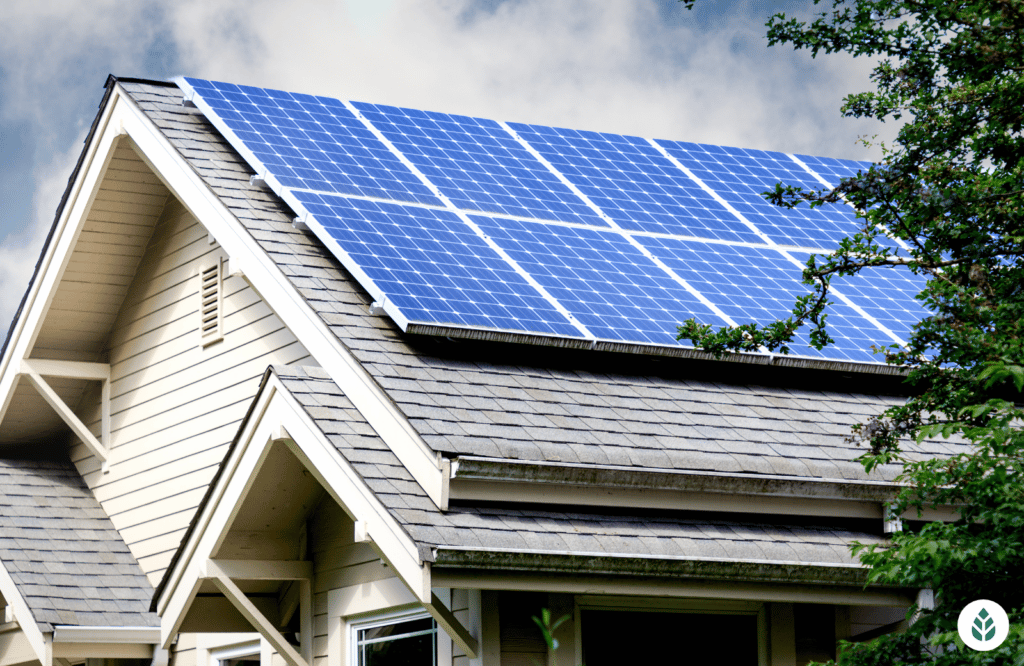
There’s a key distinction between cheap solar panels and the most affordable solar panels. Cheap considers only the price tag. Affordability involves factors beyond initial price, such as price per watt (aka bang for your buck), efficiency of the panel and warranty.
A cheap solar panel isn’t worth anything if it breaks without a warranty to replace it. The cost of a solar panel is set by the manufacturer and involves a variety of factors, from cost of production to expected lifetime. Let’s break down the factors that go into solar panel costs.
Solar Panel Efficiency
The greater a panel’s efficiency, the more energy each solar cell’s power output will be. Efficiency matters, as a homeowner will have to buy far fewer panels to meet their energy needs with higher-efficiency panels. The most solar efficient panels usually cost more to manufacture, raising their price point and total installed cost.
Solar Panel Power
The power, or wattage, of a solar panel reflects how many watts (W) of energy the panel is capable of generating when producing at maximum capacity. Most modern residential solar panels have power factors between 300 and 350W.
As is true with high-efficiency panels, a customer needs to purchase fewer panels overall if they have a higher power output. While they’ll typically have a greater upfront cost, high-output panels will provide better value over time.
Solar Panel Warranty
A warranty is simple to understand, yet no less important to consider. Bearing in mind that the average lifetime of a solar panel system is about 25 years, warranties are essential in ensuring reliable energy output. Though solar panels are very durable, a lot can happen over 25 years.
Falling tree branches can crack a panel, rooftop critters can chew up wiring and untreated water damage can corrode a system. Some of the cheapest panels will come with the worst warranties, and costs can add up quickly if a solar power system runs into trouble.
Solar Panel Quality
Similar to solar panel efficiency and power, the cost of a solar panel has much to do with its quality. The cheapest solar panels on the market will be of the poorest quality, making them far more prone to breaks, issues and quick aging. The higher the quality of the parts in a solar panel, the more expensive it becomes. However, this is just another time when “cheap” panels are far from the most affordable solar panels in the long run.
Bottom Line: What’s the Best Cheap Solar Panel for You?
If you’re looking for affordable solar panels to install on your home, we recommend the BLK-G10 panels from Q Cells. They have excellent warranty coverage and energy efficiency ratings to help guarantee long-term savings, and they come in at below-average prices per watt, which also lets you keep upfront prices as low as possible.
Regardless of which option you feel is best for your home, we recommend getting solar quotes from multiple installers in your area. Different solar contractors charge different prices for the same panels based on product markup, labor warranties included and more. You can use the tool below to get quotes from a few providers in your area to compare and find the one that suits your budget and your energy demands best.
Methodology: How We Reviewed Cheap Solar Panels
As we mentioned above, we don’t recommend just blindly choosing the panels with the lowest cost per watt because that could lead to lower energy savings in the long run. We’ll discuss our rating criteria below so that you can see what factors, in addition to price, are most important for getting the best deal on your renewable energy system.
- Price Point (20%): Naturally, the cost per watt is a crucial thing to look at when comparing the best cheap solar panels. Options with lower costs will undoubtedly help you keep your upfront costs down, which is the primary goal when prioritizing affordability. We first ranked panel options by cost per watt and then adjusted based on the following criteria.
- Efficiency (25%): The efficiency rating is almost as important as the cost per watt because your energy savings decrease as your efficiency goes down. A simple way to think of this is that a panel that costs half the industry average per watt isn’t worth much if the efficiency is a quarter of most other panels. Efficiency rating should be balanced with cost per watt to ensure your panels actually save you more over time.
- Durability (20%): Panels with a high efficiency that degrade in efficiency more rapidly might save you more upfront, but your average monthly savings will decrease as your panels age. Paying more for a panel with a slower rate of efficiency loss often makes financial sense, as it could end up saving you more—and costing you less—over time. We look at the first year degradation, subsequent year degradation and performance in extreme weather conditions to determine a panel’s overall durability.
- Warranty coverage (20%): No matter how cheap your solar panels are, you’ll likely spend 10,000to10,000 to 10,000to20,000 or more on your solar array. Converting to clean energy is an expensive endeavor, which is why getting panels with long-lasting warranties is worth paying more for. You not only want panels that are affordable and can perform right after installation but also continue saving you money over time. As such, we rank companies with lengthier warranty protection higher.
- Temperature coefficient (10%): Panels with a lower temperature coefficient will perform better in hotter climates. We consider the efficiency loss based on temperature, as this plays into overall efficiency as it relates to panel cost.
- Sustainability (2.5%): Since EcoWatch is a website focused on environmental friendliness, we consider the sustainability of each panel brand and manufacturer as a whole. Panels that are made from recycled materials and manufacturers that have a positive reputation and a recycling process for PV equipment at the end of its life get ranked higher.
- Appearance (2.5%): Homeowners generally prefer all black panels that don’t have grid lines visible. We rank companies a bit higher based on the percentage of their products that meet these criteria.