What is Encryption? (original) (raw)
Updated June 5, 2023
Introduction to Encryption
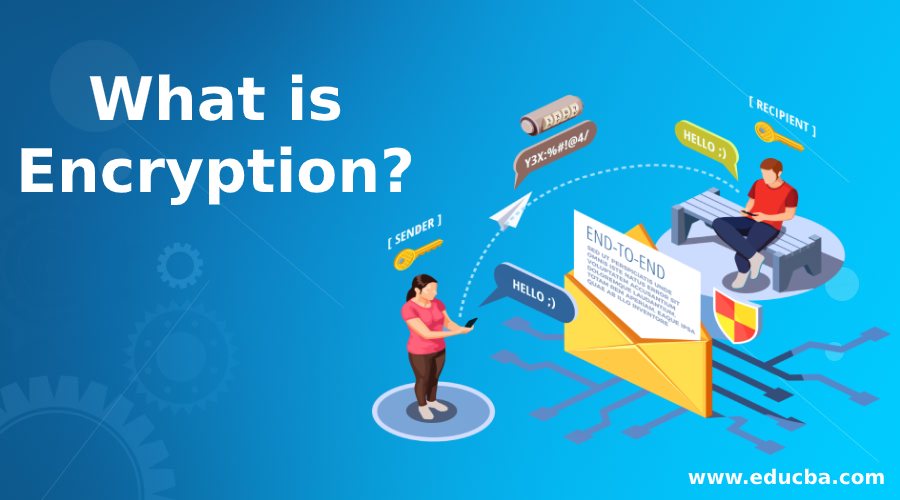
Encryption is converting plain text into ciphertext, i.e., converting the text from readable to non-readable to secure the conversation between two parties or from an unauthorized person. A secret key is used to encrypt the plain text securely; various techniques and algorithms have been developed to encrypt the encryption. For example, substitution techniques, transposition techniques, MD5 algorithm, SHA algorithm, IDEA algorithm, etc.
How does encryption Work?
The encryption of data involves three steps. First, you take some data as input that you want to Encrypt alongside a key (Password or passphrase). Second, once you have both, you will send both as input to an encryption algorithm.
The algorithm will then change the data given in the input using the Encryption key, and it will send the output. You can then send the output to the second party using any medium you like, or you can keep the Encrypted data for your future use. When the receiver gets the data, it will send the decryption key and the Encrypted data to a decryption algorithm to decode it.
Benefits of Encryption
This is one of the backbones of data security; the following are some significant benefits:
1. Encryption Ensures Integrity of Data
Encryption of data not only prevents anyone from reading the data but also provides a significant benefit – it ensures that a hacker cannot alter the data to commit fraud once it is applied. If anyone changes the Encrypted data, the receiver will easily detect fraud using hashing such as MD5 Checksum.
2. Providing security at all Times
There are other tools to password-protect a folder or local storage data that you can choose, but It is the only true way to secure data. This is possible because, without proper data decryption, no one can use it.
3. Beneficial in Protecting Data across Devices
Developers can write encryption and decryption software for any platform, ensuring encrypted data remains platform-independent and can be used across devices.
4. Encryption Provides Privacy
Data Encryption is helpful for companies or the military, and normal computer users can also use it to safely store sensitive information such as Bank Account details, medical records, etc. Without proper encryption, anyone accessing the device can see and copy it.
Types
While there are so many methods to Encrypt data, such as AES and RSA, we can categorize encryption into two types: Symmetric and Asymmetric.
- Symmetric: In symmetric encryption, data encryption and decryption utilize the same key. Therefore, we must be cautious when transferring a key of this type. Usually, you send the key through a separate channel.
- Asymmetric: Asymmetric Encryption is when both parties use two keys, one for encryption and another for data decryption. In this, one key is called Private Key, and the second key is called Public Key. You can easily share the Public key, which encrypts data. But on the other hand, the private key is used for decryption and is not shared with anyone.
Uses
Given below are the uses:
- Data Protection for Storage: It can protect the data stored for a long time. Even in the event of storage theft or a breach, the data will remain unreadable without the corresponding encryption key.
- Data Migration: Transferring data via a network ensures that no one in the network can read it.
- Accessing Data Across Multiple Devices: Cloud storage providers encrypt the data stored, enabling secure access from any supported device.
- Ensuring Compliance: Many organizations, governments, and companies deem encryption essential to secure their data and protect the confidentiality of user or customer information. This also prevents employees from having unauthorized access to user data.
Why do we need it?
This creates a solid foundation for data security. Thanks to it, emails, internet chats, and cloud storage has become safe for public and corporate use. Besides user data, It has played a massive role in keeping national security issues safe. Considering these, it is no wonder that Android phones now Encrypt user data by default, and search engines such as Google rank websites with SSL Encryption higher in Search Results.
Career
As more and more people rely on the Internet for their jobs and data, cybersecurity threats have increased so much in the last few years. In times like this, professionals with data security skills are in high demand.
Someone that designs Encryption algorithms, ciphers, and other security measures is called a Cryptographer. A Cryptographer should not only have good knowledge of it, but he should also be good at programming languages and internet and PC architecture. After spending time and skills in it, you can become a Cryptographer and make a good career keeping data safe from the wrong hands.
Conclusion
It is one of the most essential elements for creating a safe internet for a user and securing data storage. As companies and users become increasingly aware of data privacy, Encryption professionals’ value, i.e., Cryptographers, has increased tremendously.
Recommended Articles
This has been a guide to What is Encryption? Here we discussed the concepts, benefits, types, and uses. You can also go through our other suggested articles to learn more –