What is Generative Machine Learning? (original) (raw)
Last Updated : 15 May, 2024
Generative Machine Learning is an interesting subset of artificial intelligence, where models are trained to generate new data samples similar to the original training data. In this article, we'll explore the fundamentals of generative machine learning, compare it with discriminative models, delve into its applications, and conclude with insights into its significance in the AI landscape.
**What is Generative Machine Learning?
Generative machine learning involves the development of models that learn the underlying distribution of the training data. These models are capable of generating new data samples, which have similar characteristics to the original dataset. Fundamentally, generative models aim to understand the core of the data in order to generate unique and diverse outputs.

Generative
The basic components of generative learning involve appreciation probability distributions, which are used to carry out the process of generating a sample data set. As GANs, VAEs and MCMCs are among the most popular methods that are employed in generative learning.
Discriminative
**Generative vs Discriminative Models
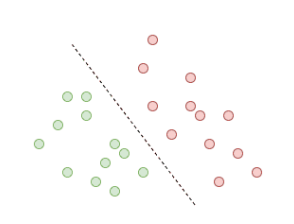
One of the main things that differentiates machine learning models from each other is whether they are generative or discriminative ones. Classifying variables use the boundary to separate different classes or categories in the data. For instance, a classifier for discriminating between cats and dogs would learn to do so depending on their features (such as size and color).
Contrastingly, the generative models adopt the approach of learning the underlying distribution of the data, not just the class boundaries. In this way, generative models are able to create new data points consistent with the training data which is very helpful in application to data augmentation, image synthesis and artificial intelligence.
| Aspect | Generative Models | Discriminative Models |
|---|---|---|
| **Objective | Learn the entire data distribution | Learn the decision boundary between classes |
| **Output | Generate new data similar to training data | Classify input data into predefined categories |
| **Training Data | Requires labeled and unlabeled data | Requires labeled data only |
| **Use Cases | Image synthesis, data augmentation, language generation | Image classification, sentiment analysis, object detection |
| **Complexity | Generally more complex to train and use | Simpler and easier to train |
| **Applications | Natural language generation, image generation | Classification tasks, regression tasks |
| **Examples | Generative Adversarial Networks (GANs), VAEs | Support Vector Machines (SVMs), Logistic Regression |
| **Focus | Learn data generation process | Learn decision-making process |
**Applications of Generative Machine Learning
- **Natural Language Generation (NLG): Instances like GPT-3 can process human-like written text when prompted, thereby leading to possible applications in chatbots, content generation or language translation.
- **Image Synthesis: Using Generative Adversarial Networks (GANs) is possible to create the pictures which can be used in not only arts and design, but also computer graphics.
- **Data Augmentation: Generative models are capable of generating new data points and adding it to the training datasets to improve their ability to tolerate anomalies and generalize what they have learnt.
- **Anomaly Detection: Generative models can be trained to determine that data follows a normal distribution pattern and look for any abnormalities that vary out from this distribution in a significant way.
- **Drug Discovery: Generative models can be applied to new molecular structures so that the experts in drug discovery can try unseen chemicals compounds rapidly and widely.
Conclusion
Generative learning is a particularly adequate branch that sustains the data-generation process by using already gathered data as a base. Generative models indeed utilize plethora of capabilities- ranged from generating realistic images and human-like text among others- demonstrate persistent strife for outstanding capabilities in and beyond the field of artificial intelligence.
FQAs on Generative Machine Learning
**Q. What is the main advantage of generative models over discriminative models?
Generative models get advantage in the fact that they create a resemblance between the train data and the new data points but do not classify data by any specific categories. Discriminative models, on the other hand, focuses only on categorizing an already existing data. This is where these generative models have an edge, where they can be used well for tasks such as data augmentation, image synthesis, or natural languages generation.
**Q. What are some common generative models used in machine learning?
Generative Adversarial Networks (GANs), variational Autoencoders (VAEs), and Markov Chain Monte Carlo (MCMC) methods are among the most pupular generative models used in machine learning.
**Q. How are generative models evaluated for their performance?
Utilization of generative models for performance assessment involves different measures that include log-likelihood, reconstruction error, perceptual similarity and sample quality. Log-likelihood indicates how well the model describes the training data distribution, while reconstruction error shows how many mistakes are case in reconstructing the samples compared to the original data. The closer to reality that the generated samples are the higher the chance that the perceptual similarity metrics will evaluate the visual or semantic similarity between the samples and the real data.