Difference Between Glucose And Fructose (original) (raw)
Last Updated : 23 Jul, 2025
Glucose and Fructose are both carbohydrates and simple monosaccharide sugars that are required by the human body for its regular metabolic activities. Both glucose and fructose are commonly found in fruits, vegetables, and other foods. Glucose is created by breaking down disaccharides or polysaccharides, which are larger sugar molecules. And, fructose is found in its simplest form in fruits and vegetables like beets, corn, and potatoes. Before proceeding further, let's learn briefly about Monosaccharides and Disaccharides.
Monosaccharide: The basic form of sugar is called a monosaccharide., Thisis the sugar that provides energy to the human body for performing various activities. Examples of monosaccharides are Glucose and Fructose.
**Disaccharides: Molecules formed by the joining of two or more monosaccharides are called disaccharides or double sugars. Examples of disaccharides are Sucrose, Maltose, and Lactose.
**What is Glucose?
Glucose is a simple sugar (carbohydrate) that is the most abundant monosaccharide this is also known as Dextrose. It is the primary source of energy for all living organisms. It is produced during the process of photosynthesis in plants and stored in plants in the form of Starch and in animals in the form of Glycogen. Glucose is also found in the bloodstream of Humans, where it is referred to as blood sugar, and is regulated by the Hormone Insulin.
Glucose is also called Grape Sugar and is the main source of energy for Human Beings. Now, let's learn about the preparation and uses of Glucose in this article.
Preparation of Glucose
Glucose is produced by various methods and some of them are discussed below,
- **From Sucrose (Cane Sugar): If we boil sucrose in an alcoholic solution with dilute HCl and H2SO4, the result of the reaction is equal part Glucose and equal part Fructose and the following reaction is,
**C 12 H 22 O 11 (Sucrose)+ H 2 O → C 6 H 12 O 6 (Glucose)+ C 6 H 12 O 6 (Fructose)
- **From Starch: The hydrolysis of starch with diluted H2SO4 at 393 K under high-pressure results in the formation of Glucose and the following reaction is,
****(C** 6 H 10 O 4 )n (Starch or cellulose) + nH 2 O + H + → nC 6 H 12 O 6 (Glucose)
Uses of Glucose
Various uses of Glucose are,
- Glucose provides energy to the human body for all its metabolic activities.
- Glucose is given to the patient who is extremely ill and is unable to digest food on its own.
- Glucose is used in the treatment of low blood sugar.
- Glucose is used as the monomer for various polymer reactions.
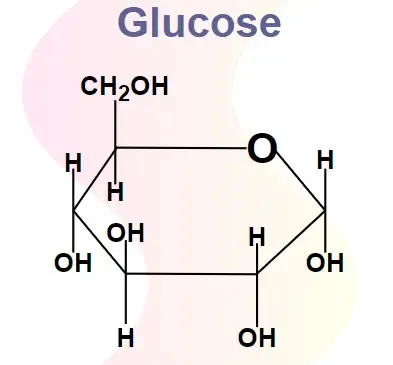
Structure of Glucose
The structure of the Glucose is shown in the image below,
What is Fructose?
Fructose is also called fruit sugar and is commonly found in fruits and vegetables. Fructose belongs to a group called ketose. Sucrose has a fructose molecule joined with a glucose molecule with the help of a glycosidic bond. Fructose is primarily metabolized in the liver. It is also used for energy production but at a slower rate than glucose. Fructose is commonly used as a sweetener in many processed foods and drinks, such as soda and candy, due to its sweet taste and low cost.
Uses of Fructose
Various uses of Fructose are mentioned below:
- Fructose is used as the flavouring agent.
- Fructose is the main ingredient for various Juices and Energy drinks.
- Fructose is also used in the manufacturing of candies, cookies, etc.
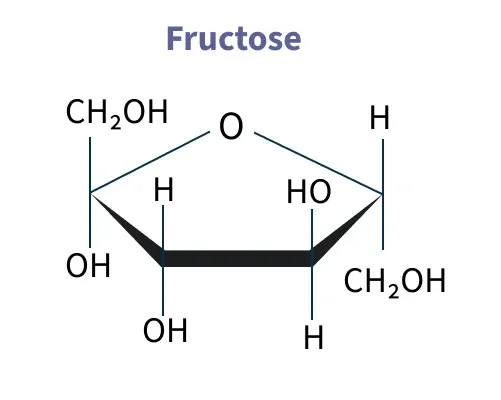
Structure of Fructose
The structure of the Fructose is added in the image below,
**Differences Between Glucose and Fructose
Various differences between Glucose and Fructose can be understood with the help of the table added below:
| | Glucose | Fructose | | | ----------------- | ---------------------------------------------------------------------------------------------- | -------------------------------------------------------------------------------------------------------------- | | Structure | 6 Carbon ring | 5 Carbon Ring | | Sources | Found in many carbohydrate foods, including starches, grains, and vegetables. | Found in many fruits, honey, and some vegetables | | Function Group | Glucose belongs to Aldohexes as it has an Aldehyde functional group. | Fructose belongs to Ketohexose as it has a Ketone functional group | | Metabolism | Metabolized by most cells in the body | Metabolized primarily in the liver | | Insulin Response | Stimulates insulin secretion | Does not stimulate insulin secretion | | Sweetness | Not as sweet as fructose | Sweeter than glucose | | Energy Production | Rapidly metabolized for energy production | Metabolized more slowly for energy production | | Industrial Uses | Used in the production of many food products, as well as in the production of ethanol for fuel | Commonly used as a sweetener in the food industry, and also used in the production of high-fructose corn syrup | | Health Effects | Excessive consumption may lead to elevated blood sugar levels and insulin resistance | Excessive consumption has been linked to an increased risk of obesity, diabetes, and metabolic syndrome | | Sources | It is found in starch and table sugar. | It is found in fruits, vegetables, and sugar cane. |
**⁛ Glucose and Fructose both are simple sugars and they provide energy for various metabolic activities.
**You may also Read,