Eubacteria (original) (raw)
Last Updated : 21 May, 2026
Eubacteria are the most common and widely distributed group of bacteria found in nature. They are known as “true bacteria” and have a well-defined cell wall and simple prokaryotic cell organisation. Eubacteria occur in diverse habitats, including soil, water, air, and within the bodies of plants and animals. They play an important role in maintaining ecological balance. Some are beneficial in processes like decomposition, nitrogen fixation, and food production, while others are pathogenic and cause diseases.
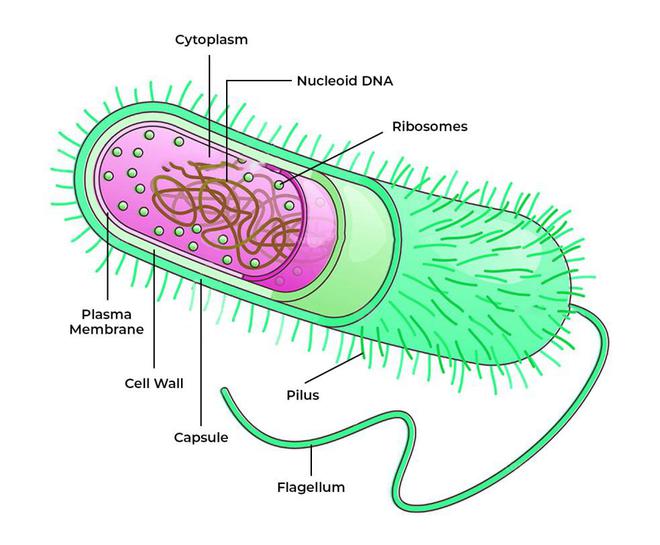
Structure of Eubacteria
- The outermost layer is the cell wall, composed mainly of peptidoglycan.
- Some bacteria possess an additional outer capsule, made of polysaccharides or proteins, which provides protection.
- Many eubacteria have flagella for movement. These are made of flagellin proteins and enable locomotion by rotation.
- Beneath the cell wall lies the plasma membrane, which is a phospholipid bilayer and is selectively permeable.
- The cytoplasm contains enzymes, nutrients, and other cellular components necessary for metabolism.
- Eubacteria lack a true nucleus; their DNA exists as a coiled structure called the nucleoid.
- They may contain plasmids, which are small circular DNA molecules that confer traits like antibiotic resistance.
- Some bacteria show infoldings of the plasma membrane called mesosomes (note: their function is debated and often considered an artefact).
Characteristics of Eubacteria
- Unicellular and prokaryotic.
- Possess a rigid cell wall made of peptidoglycan.
- May have flagella for locomotion.
- Mostly heterotrophic, but some are autotrophic (photosynthetic or chemosynthetic).
- Some possess pili, which help in attachment and conjugation (DNA transfer).
- Size ranges approximately from 0.2 to 5 micrometres (most common range).
- Classified as Gram-positive or Gram-negative based on cell wall structure and staining.
Note: Gram-negative bacteria are not always harmful, and Gram-positive bacteria are not always beneficial.
Habitat of Eubacteria
Eubacteria are ubiquitous, meaning they are found almost everywhere:
- Soil, water, and air
- Inside plants and animals
- Human digestive system (helps in digestion and vitamin production)
Some bacteria can survive extreme conditions, but such organisms are more typically classified under **Archaebacteria.
Types of Eubacteria (Based on Shape)
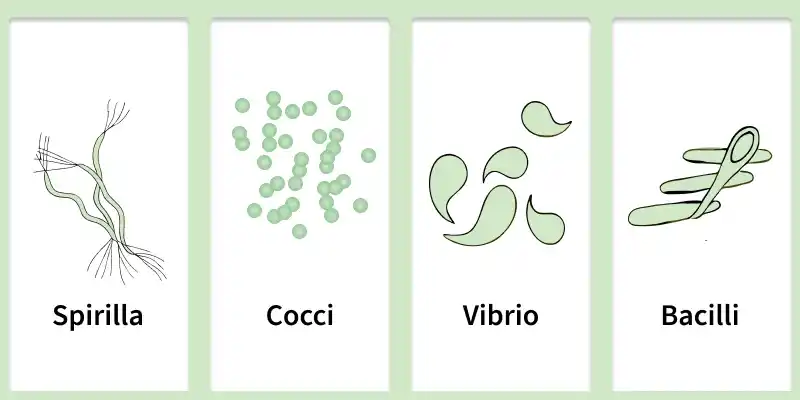
**1. Coccus (Spherical) Spherical-shaped bacteria that occur singly, in pairs, chains, or clusters. **Examples: Staphylococcus, Streptococcus
**2. Bacillus (Rod-shaped) Rod-like bacteria that occur singly or in chains. **Examples: Escherichia coli, Bacillus
**3. Vibrio (Comma-shaped) Curved, comma-shaped bacteria commonly found in aquatic environments. **Examples: Vibrio cholerae, Vibrio vulnificus
**4. Spirillum (Spiral-shaped) Helical and rigid bacteria that move using flagella. **Examples: Spirillum
Classification of Eubacteria
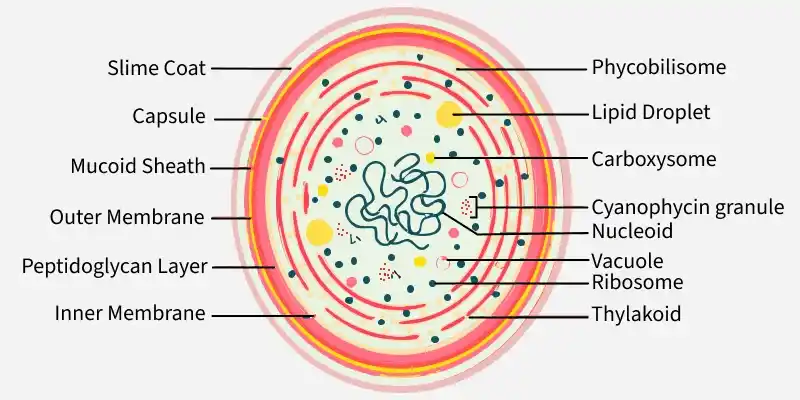
1. Cyanobacteria (Blue-Green Algae)
- Photosynthetic, gram-negative prokaryotes classified under Kingdom Monera.
- Perform oxygenic photosynthesis using chlorophyll similar to higher plants.
- Found mainly in freshwater, some in marine and terrestrial habitats.
- May be unicellular, colonial, or filamentous in organization.
- Possess specialized cells called heterocysts for nitrogen fixation.
- Reproduce asexually by binary fission, fragmentation, or spore formation.
- Play an important role in soil fertility and the nitrogen cycle.
**Examples: _Nostoc, Anabaena
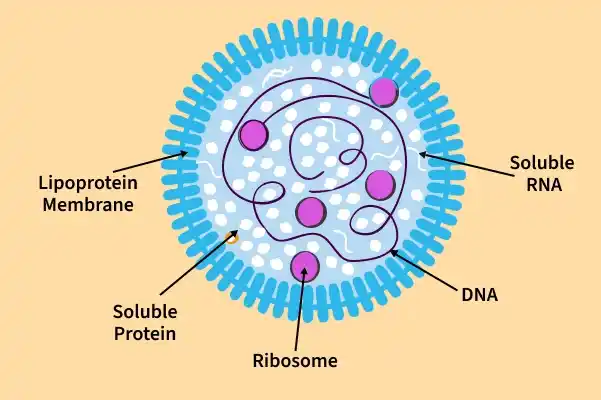
2. Mycoplasma (PPLO – Pleuropneumonia-like Organisms)
- Smallest known living cells (≈0.1–0.3 µm).
- Lack a cell wall, giving them a flexible and pleomorphic shape.
- Easily pass through bacterial filters due to their small size.
- Mostly parasitic; some are saprotrophic.
- Resistant to penicillin and other antibiotics that target cell walls.
- Cause diseases in both plants and animals (e.g., atypical pneumonia in humans).
**Examples: Mycoplasma pneumoniae, Mycoplasma genitalium