NCERT Solutions for Class 11 Biology Chapter 5: Morphology of Flowering Plants (original) (raw)
Last Updated : 29 May, 2023
NCERT Solutions for class 11 Biology Chapter 5 Morphology of Flowering Plants: The chapter on Morphology of Flowering Plants is important for students approaching the home exams. This article introduces NCERT solutions designed to help students explain the concepts of further learning and how to write to get good grades on exams. The solutions are presented in very simple language for ease of understanding.
NCERT CBSE Chapter 5 Solution of Morphology of Flowering Plants of Class 11 Biology explains how flowering plants exhibit enormous variation in shape, size, structure, mode of nutrition, life span, habit, and habitat. It further explains that floral characteristics form the basis of the classification and identification of flowering plants. This can be illustrated through semi-technical descriptions of families. Hence, a flowering plant is described in a definite sequence by using scientific terms. Revise the basic concepts of the Morphology of Flowering Plants for quick revision and class notes.
Q1: What is meant by Modification of Root? What type of modification of root is found in the:
- (a) Banyan tree (b) Turnip (c) Mangrove trees
Answer:
The process of changing the shape and structure of roots and becoming modified to perform functions other than absorption and conduction of water and minerals in some plants is defined as the modification of roots. They are modified for support, storage of food, and respiration.
The type of modification of root is found in:
- a) Banyan tree: The banyan tree has massive pillar-like adventitious roots arising from the aerial part of the stem. These roots grow toward the ground and provide support to the tree. Such, roots are called prop roots.
- b) Turnip: Tap roots found in Turnip get swollen and store food.
- c) Mangrove trees: In mangrove trees, many roots come out of the ground and grow vertically upwards. Such roots are called pneumatophores. They help to get oxygen for respiration.

Q2: Justify the following statements on the basis of external features:
- (i) Underground parts of a plant are not always roots.
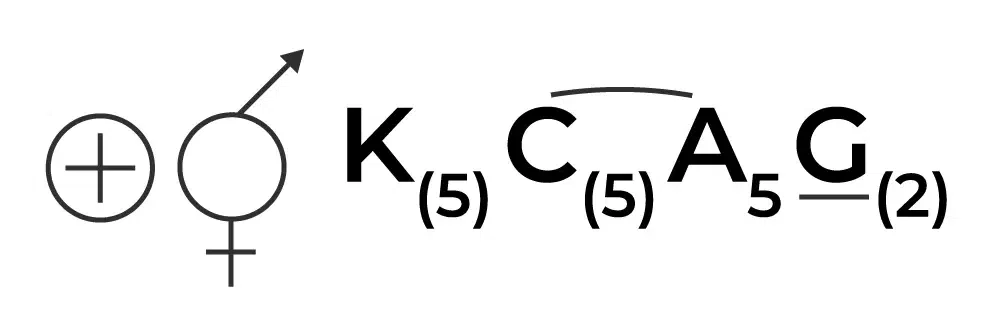
- (ii) Flower is a modified shoot
Answer:
- i) Underground parts of a plant are not always roots. This can be justified on the basis of the following:
- Underground stems present in potatoes, ginger, turmeric, zaminkand, Colocasia are modified to store food in them. They also act as organs of perennation to help them grow in unfavorable conditions.
- Underground stems of some plants such as grass and strawberry, etc., spread to new niches and when older parts die new, plants are formed.
- In peanuts, the flower after fertilization gets pushed inside the soil by growing a flower stalk. The formation of fruits and seeds takes place underground.
- ii) Flower is a modified shoot. The justification is as follows:
- The position of the flower bud & shoot bud is the same in plants. Both are axillary and terminal in position.
- Shoot apical meristem changes into floral meristem.
- The apex produces different kinds of floral appendages laterally at successive nodes instead of leaves.
Q3: How is a Pinnately compound Leaf different from a Palmately compound Leaf?
Answer:
In palmately compound leaves, the leaflets radiate from a single point at the distal end of the petiole whereas, in pinnately compound leaves, a row of leaflets forms on either side of an extension of the petiole called the rachis.

Q4: Explain with suitable examples the different types of phyllotaxy.
Answer:
Phyllotaxy is defined as the arrangement of leaves on a plant stem. There are three different types of phyllotaxy:
- Opposite Phyllotaxy: With an opposite leaf arrangement, two leaves arise from the stem at the same node, on opposite sides of the stem. Examples: guava, Calotropis, Olive leaves, Mint, etc.
- Alternate/Spiral Phyllotaxy: With an alternate (spiral) pattern, each leaf arises at a different node on the stem.
Example: Sunflower, Peepal, Mustard, etc.- Whorled Phyllotaxy: Leaves are whorled if several leaves arise, or appear to arise, from the same node on a stem.
Example: Tulsi, Sergula, Alstonia, etc

Q5: Define the following terms:
- Aestivation
- Placentation
- Actinomorphic
- Zygomorphic
- Superior ovary
- Perigynous flower
- Epipetalous stamen
Answer:
- Aestivation: It is defined as a type of dormancy, which is a survival strategy used to sustain a lack of food and other extreme conditions.
- Placentation: Placentation refers to the formation, type, and structure, or arrangement of the placenta.
- Actinomorphic: Meaning of Actinomorphic is being radially symmetrical and capable of division by any longitudinal plane into essentially symmetrical halves. Example: Tulip flower.
- Zygomorphic: The meaning of Zygomorphic is having floral parts unequal in size or form so that the flower is capable of division into essentially symmetrical halves by only one longitudinal plane passing through the axis.
- Superior Ovary: A superior ovary is an ovary attached to the receptacle above the attachment of other floral parts. It is found in many fleshy fruits such as true berries, drupes, etc.
- Perigynous flower: Flower having a hypanthium attached to the receptacle below the gynoecium and surrounding the ovary; the ovary is superior, and the free parts of the petals, sepals, and stamens are attached to the rim of the hypanthium.
- Epipetalous Stamen: Epipetalous stamens are the stamens that are attached or fused to the petals. They are found in Brinjal.
Q6: Differentiate between
- (a) Racemose and cymose inflorescence
- (b) Fibrous root and adventitious root
- (c) Apocarpous and syncarpous ovary
Answer:
- a) Difference between Racemose & Cymose Inflorescence:
Racemose Inflorescence Cymose Inflorescence The terminal bud keeps growing and forming lateral flowers. The terminal bud forms a terminal flower and then dies out A terminal flower is never formed. Other flowers grow from lateral buds. There is no true terminal flower and the stem usually has a rudimentary end. The terminal flower is usually the first to mature, while the others tend to mature starting from the base of the stem. Examples: Mangifera indica (mango), Azadirachta indica (neem), Delonix regia (Gulmohar), etc. Examples: Drosera, Hamelia, etc.
- b) Difference between Fibrous & Adventitious roots:
Fibrous Root Adventitious Root Fibrous roots grow from the base of the stem Adventitious roots grow from various parts of the plant other than the radical. They are thin and fibrous. They can be thin, thick or variously modified. Example: Wheat. Example: Banyan tree.
- c) Difference between Apocarpous & Syncarpous ovary:
Apocarpous Ovary Syncarpous Ovary The apocarpous ovary consists of free carpels. The syncarpous ovary consists of fused carpels. It forms an aggregate of fruits. It forms a single fruit with one or many seeds. Example: custard apple, strawberry, Magnoliaceae Examples: Coconut, Guava, Mango, etc.
Q7: Draw the labeled diagram of the following:
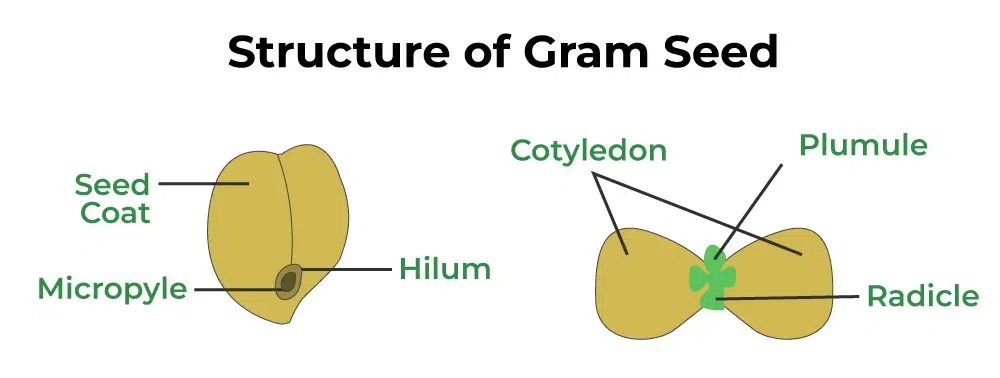
- gram seed
- V.S. of maize seed
Answer:
Diagrams are given below:
1. Structure of Gram Seed
2. V.s. of Maize seed

Q8: Describe modifications of the Stem with suitable Examples.
Answer:
Stems are modified to perform different functions:
- Underground stems of potato, ginger, turmeric, zaminkand, Colocasia are modified to store food in them. They also act as organs of perennation to help them for growth in unfavorable conditions.
- Stem tendrils which develop from axillary buds, are slender and spirally coiled and help plants to climb such as in gourds (cucumber, pumpkins, watermelon) and grapevines.
- Axillary buds of stems may also get modified into woody, straight, and pointed thorns. Thorns are found in many plants such as Citrus, Bougainvillea. They protect plants from browsing animals.
- Some plants of arid regions modify their stems into flattened or fleshy cylindrical structures. They contain chlorophyll and carry out photosynthesis.
- Underground stems of some plants such as grass and strawberry, etc., spread to new niches and when older parts die, new plants are formed.
- In plants like mint and jasmine a slender lateral branch arises from the base of the main axis and after growing aerially for some time arch downwards to touch the ground.
- A lateral branch with short internodes and each node bearing a rosette of leaves and a tuft of roots is found in aquatic plants like Pistia and Eichhornia.
- In banana, pineapples, and Chrysanthemum, the lateral branches originate from the basal and underground portion of the main stem, grow horizontally beneath the soil, and then come out obliquely upward giving rise to leafy shoots.

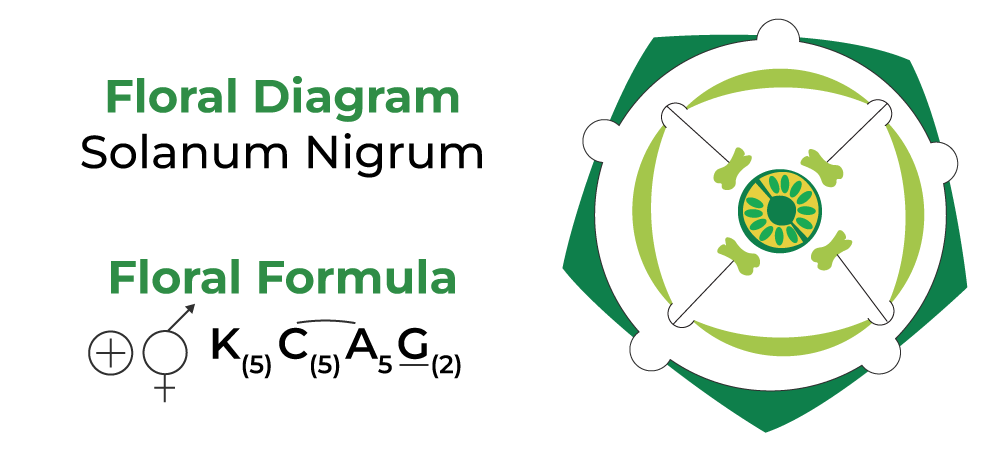
Q9: Take one flower from each of the families Fabaceae and Solanaceae and write its semi-technical description. Also, draw their floral diagram after studying them.
Answer:
Family Fabaceae – Pisum sativum (Pea plant) This family was earlier called Papilionoideae, a subfamily of the family Leguminosae. It is distributed all over the world. The semi-technical description is as follows:
Vegetative Characters
- Trees, shrubs, herbs; root with root nodules.
- Stem: Erect or climber.
- Leaves: Alternate, pinnately compound or simple; leaf base, pulvinate; stipulate; venation reticulate.
Floral characters
- Inflorescence: Racemose
- Flower: Bisexual, zygomorphic
- Calyx: Sepals five, gamosepalous; valvate/imbricate aestivation
- Corolla: Petals five, polypetalous, papilionaceous, consisting of a posterior standard, two lateral wings, two anterior ones forming a keel (enclosing stamens and pistil), vexillary aestivation
- Androecium: Ten, diadelphous, anther dithecous
- Gynoecium: Ovary superior, mono carpellary, unilocular with many ovules, style single
- Fruit: Legume; seed: one to many, non-endospermic
Family Solanaceae - Solanum nigrum (makoi plant)
It is a large family, commonly called the ‘potato family’. It is widely distributed in the tropics, subtropics, and even temperate zones. The semi-Technical description is as follows:
Vegetative Characters
- Plants mostly herbs, shrubs, and rarely small trees
- Stem: herbaceous rarely woody, aerial; erect, cylindrical, branched, solid or hollow, hairy or glabrous, underground stem in potato (Solanum tuberosum)
- Leaves: alternate, simple, rarely pinnately compound, exstipulate; venation reticulate.
Floral Characters
- Inflorescence: Solitary, axillary or cymose as in Solanum
- Flower: Bisexual, actinomorphic
- Calyx: Sepals five, united, persistent, valvate aestivation
- Corolla: Petals five, united; valvate aestivation
- Androecium: Stamens five, epipetalous
- Gynoecium: Bicarpellary obligately placed, syncarpous; ovary superior, bilocular, placenta swollen with many ovules, axile
- Fruits: Berry or capsule
- Seeds: Many, endosperms

Q10: Describe the various types of Placentations found in Flowering Plants.
Answer:
In flowering plants, placentation is the attachment of ovules inside the ovary. Placentation types include:
- Basal: The placenta is found in mono to the multi-carpellary, syncarpous ovary. Usually, a single ovule is attached at the bottom. E.g.: Helianthus, Tridex, Tagetes.
- Parietal: It is found in the bi-carpellary to the multi-carpellary syncarpous ovary. The unilocular ovary becomes bilocular due to the formation of a false septum. E.g.: Cucumber.
- Axile: It is found in the bi-carpellary to the multi-carpellary syncarpous ovary. The carpels fuse to form septa forming a central axis and ovules are arranged on the axis. E.g.: Hibiscus, lemon, tomato, Lilly.
- Free central: It is found in the bi-carpellary to the multi-carpellary syncarpous ovary. Due to the degradation of the false septum, a unilocular condition is formed and ovules are arranged on the central axis. E.g.: Dianthus, Primula (primroses).
- Marginal: It is found in the monocarpellary unilocular ovary, the placenta forms a rigid along the ventral side and ovules are arranged in two vertical rows. E.g.: Pisum sativum (pea).

Q11: What is a Flower? Describe the parts of a typical Angiosperm Flower.
Answer:
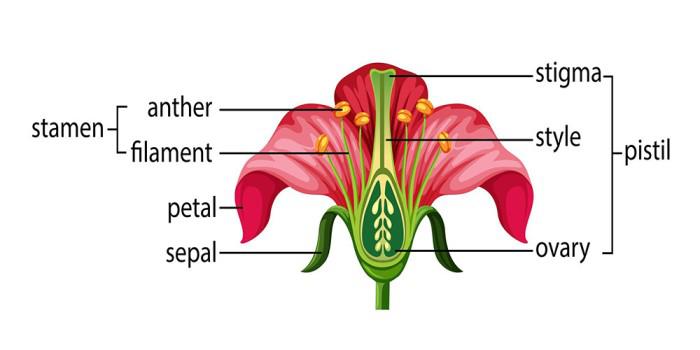
Flower is the specialized part of an angiospermous plant that occurs singly or in clusters, possesses whorls of often colorful petals or sepals, and bears the reproductive structures, such as stamens or pistils, involved in the development of seeds and fruit. Flowers have four basic parts, from the outside in they are:
- Calyx: The calyx is the outermost whorl of the flower and the members are called sepals. Generally, sepals are green, leaf-like and protect the flower in the bud stage. The calyx may be gamosepalous (sepals united) or polysepalous (sepals free)
- Corolla: It is composed of petals. Petals are usually brightly colored to attract insects for pollination. Like calyx, corolla may also be gamopetalous (petals united) or polypetalous (petals free). The shape and color of corolla vary greatly in plants. Corolla may be tubular, bell-shaped, funnel-shaped, or wheel-shaped.
- Androecium: It is composed of stamens. Each stamen which represents the male reproductive organ consists of a stalk or a filament and an anther. Each anther is usually bilobed and each lobe has two chambers, the pollen-sacs. The pollen grains are produced in pollen-sacs
- Gynoecium: It is the female reproductive part of the flower and is made up of one or more carpels. A carpel consists of three parts namely stigma, style, and ovary. The ovary is the enlarged basal part, on which lies the elongated tube, the style. The style connects the ovary to the stigma. The stigma is usually at the tip of the style and is the receptive surface for pollen grains.
Q12: How do the various leaf modifications help plants?
Answer:
Leaves are often modified to perform functions other than photosynthesis.
- They are converted into tendrils for climbing as in peas or into spines for defense as in cacti.
- The fleshy leaves of onion and garlic store food.
- In some plants such as Australian acacia, the leaves are small and short-lived. The petioles in these plants expand, become green and synthesize food.
- Leaves of certain insectivorous plants such as pitcher plants, and venus-fly traps are also modified leaves.

Q13: Define the term inflorescence. Explain the basis for the different types of inflorescence in flowering plants.
Answer:
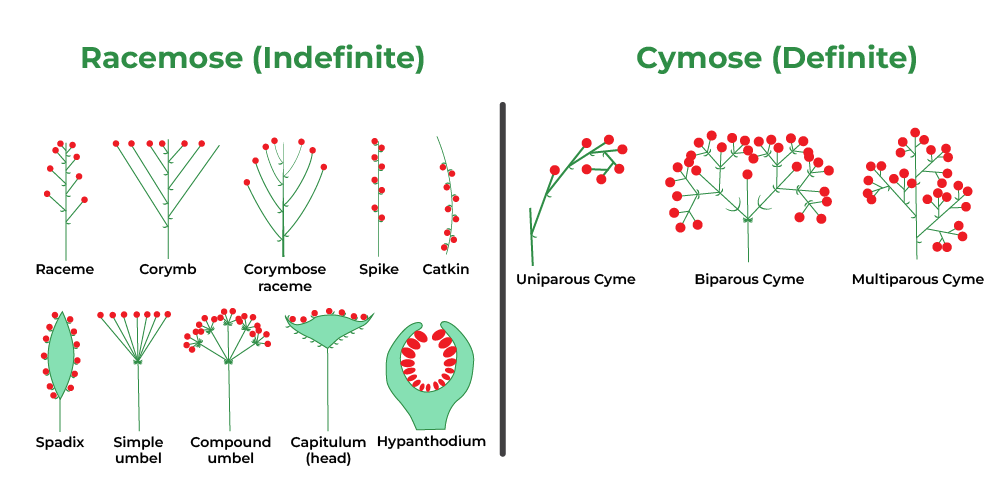
The arrangement of flowers on the floral axis is termed inflorescence.
Depending on whether the apex gets developed into a flower or continues to grow, two major types of inflorescence are defined– racemose and cymose. In the racemose type of inflorescences, the main axis continues to grow, and the flowers are borne laterally in acropetal succession. In the cymose type of inflorescence the main axis terminates in a flower, hence is limited in growth.
Q14: Write the floral formula of an actinomorphic, bisexual, hypogynous flower with five united sepals, five free petals, five free stamens, and two united carpels with superior ovary and axile placentation.
Answer:
The floral formula of an actinomorphic, bisexual, hypogynous flower with five united sepals, five free petals, five free stamens, and two united carpels with superior ovary and axile placentation
Q15: Describe the arrangement of floral members in relation to their insertion on the Thalamus.
Answer:
Based on the position of the calyx, corolla, and androecium in respect of the ovary on the thalamus, the flowers are described as hypogynous, perigynous, and epigynous.
- In the hypogynous flower, the gynoecium occupies the highest position while the other parts are situated below it. The ovary in such flowers is said to be superior, e.g., mustard, china rose, and brinjal.
- If the gynoecium is situated in the center and other parts of the flower are located on the rim of the thalamus almost at the same level, it is called perigynous. The ovary here is said to be half inferior, e.g., plum, rose, peach.
- In epigynous flowers, the margin of the thalamus grows upward enclosing the ovary completely and getting fused with it, the other parts of the flower arise above the ovary. Hence, the ovary is said to be inferior as in flowers of guava and cucumber, and the ray florets of sunflower.