Taxonomic Hierarchy (original) (raw)
Last Updated : 6 May, 2026
The living world shows immense diversity in the form of plants, animals, and microorganisms. To study this wide variety of organisms systematically and scientifically, biological classification is used. Taxonomic hierarchy refers to the orderly arrangement of living organisms into different categories or ranks based on their similarities and differences. It helps in the identification, naming, and understanding of evolutionary relationships among organisms, making the study of biodiversity simple and organised.
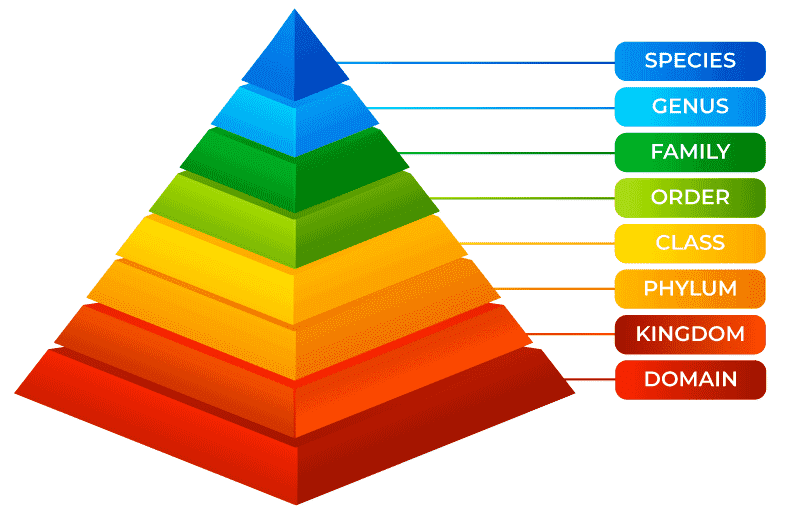
"Scientific classification" comes from the Greek word. "Taxis" means arrangement, and "Nomos" means laws. Scientific classification is part of biology and refers to the methods involved in the characterisation of various species. A taxon is a group of organisms at any level of classification.
**Categories of Taxonomic Hierarchy
1. Domain
- Domain is the highest taxonomic category in classification.
- Archaea are prokaryotes with no peptidoglycan in the cell wall.
- Bacteria are prokaryotes with peptidoglycan in the cell wall.
- Eukarya have a true nucleus and membrane-bound organelles.
2. Kingdom
- It can be subgrouped at different levels.
- There are five areas in which living organic matter is grouped, specifically the animal kingdom, plants, fungi, protists, and the Monera kingdom.
- The Kingdom includes all the species without any categorisation of animals. All the animals include dogs, cats, insects, sponges, etc., but when we go deeper into the classification, we can differentiate the animals on the basis of their similarities and differences.
3. Phylum
- It contains a group of related classes.
- Mammalia, along with reptiles, fish, amphibians, and birds, make up the phylum Chordata.
- There are 10 phylum are present in the Animal Kingdom.
4. Class
- A class designates a division in a phylum made up of one or more orders.
- All mammals, including gorillas, monkeys, humans, and gibbons, are included in the Mammalia class.
- The Animal kingdom has 108 classes, including mammals, Aves, Pisces, and Reptilia.
5. Order
- It is the combination of one or more common families, which is regarded as a higher category.
- Felidae family members participate in the Carnivora order.
- There are about 26 orders for mammal classes such as primates and carnivores.
6. Family
- Families are associations of related genera.
- The vegetative and reproductive characteristics are used to categorise the families.
- The Felidae family includes animals like tigers and lions as examples.
- The carnivorous family includes canines, felines, and bears.
7. Genus
- This is the grouping of several closely related species that share linked features and are thought to have shared ancestors.
- Some genera have only one species and are called monotypic, while others have multiple species and are called polymorphic.
- The genus Panthera is where the leopard and cat Species belong.
8. Species
- This is the lowest level of the taxonomic hierarchy.
- There are about 8.7 million species of different species in the world.
- It refers to a group of organisms that are similar in shape, and reproductive characteristics.
- Species can be further subdivided into subspecies.
Examples of **Taxonomic Hierarchy
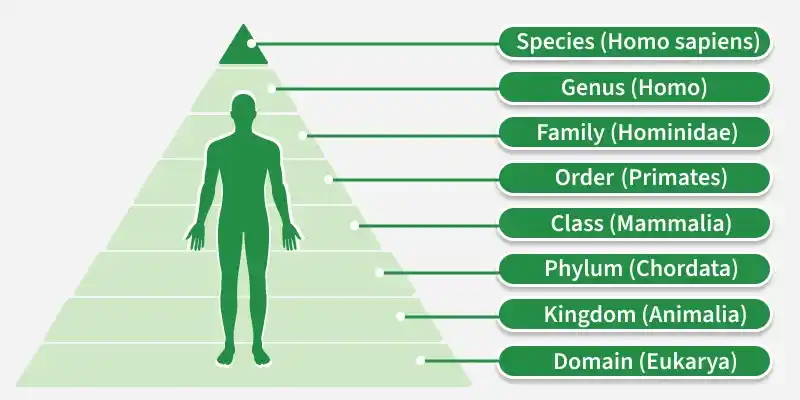
**Animal Taxonomy
Animal taxonomy is the branch of biology that deals with the identification, nomenclature, and classification of animals. It helps in arranging animals into groups based on similarities and differences in their structure, organisation, and evolutionary relationships.
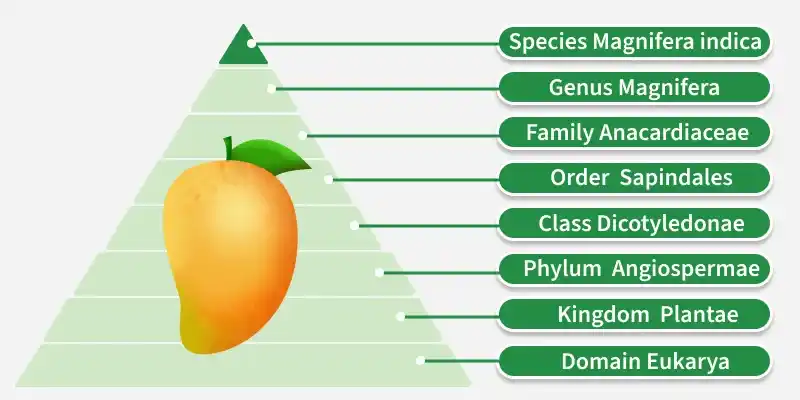
Plant Taxonomy
Plant taxonomy is the branch of biology that deals with the identification, nomenclature, and classification of plants. It helps in arranging plants into groups based on similarities and differences in their morphology, anatomy, reproductive structures, and evolutionary relationships.
Importance of Taxonomic **Hierarchy
- For the convenient study of organisms around us, it is important to classify them.
- For better information about organisms, it is important to know the different varieties of organisms, which can only be understood by classification.
- To know the origin and evolution of organisms, it is important to classify them.
- The exact position of an organism is determined by classification.
- Phylogenetic relation between another group of organisms can be determined by the classification of organisms.
- For the correct identification of organisms, it is very much needed to classify them in the proper classification system.
- Classification of organisms makes it easier for us to study and memorise them.