Steps of Decisionmaking Process (original) (raw)
Steps of Decision-making Process
Last Updated : 30 May, 2026
The decision-making process is a systematic method used to identify problems, evaluate alternatives, and choose the best course of action. .
It involves four interrelated phases:
- Explorative (searching for potential alternatives),
- Speculative (identifying the factors that influence the decision problem),
- Evaluative (analysing and comparing the alternative courses of action),
- Selective (making the final choice of the best course of action).
The ultimate aim of decision-making is to find the option that is believed to fulfil the objective of the decision problem most satisfactorily compared to other alternatives.
7 Effective Steps of Decision-Making
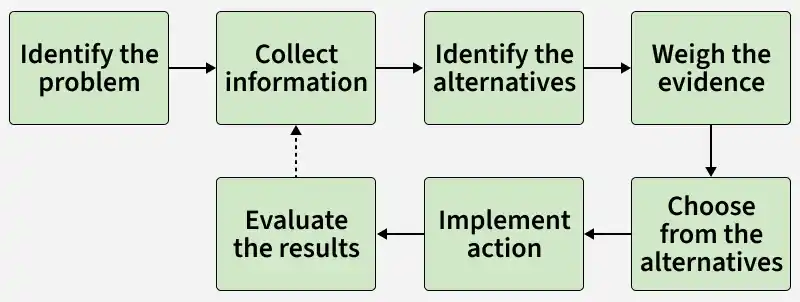
**1. Identifying the Decision: The initial step in decision-making is identifying the precise issue that needs resolution or the query that demands an answer. It's essential to accurately define the decision at hand. Incorrectly identifying the problem or choosing an overly broad issue can derail your decision-making efforts from the get-go. For goals associated with the decision, ensure they are quantifiable and bound by time.
**2. Collecting Relevant Information: Once the decision has been identified, the next phase involves collecting relevant information to that decision. This includes an internal review to understand past successes and failures within your organization that relate to your decision. Additionally, acquiring information from external sources, such as academic research, market analysis, or possibly feedback from consulting services, is crucial. However, be wary of information overload, as it can overwhelm and complicate the decision-making process.
**3. Exploring Possible Alternatives: Armed with the relevant data, it's now time to outline potential solutions to your problem. Typically, there are several avenues to consider for achieving a goal. For instance, if the aim is to boost social media engagement, alternatives could range from investing in paid social ads, tweaking your organic social media tactics, or employing a blend of both strategies.
**4. Evaluating the Alternatives: Having pinpointed several potential solutions, the next step involves assessing the merits and demerits of these alternatives. Review past instances of success within similar contexts, and analyse your organization’s past achievements and setbacks. Evaluate the risks associated with each option against the potential benefits.
**5. Making a Choice: This stage is where the actual decision is made. Ideally, by this point, you've clearly identified the decision to be made, gathered all necessary information, and considered various possible directions. Now, you're equipped to make an informed choice.
**6. Implementing the Decision: With the decision made, it's time to act. Formulate a plan to bring your decision to fruition. Create a detailed project plan based on your decision, assigning specific tasks to members of your team to execute the plan effectively.
**7. Evaluating the Outcome: After a set period, which was determined in the first step, revisit your decision to evaluate its effectiveness. Did it address the problem? Did it achieve the intended goal? If the answer is yes, document the successful strategies for future reference. If not, take this as a learning opportunity to refine your decision-making process for future endeavours.