Groupshift (original) (raw)
Last Updated : 29 May, 2026
Group shift is a phenomenon in social psychology in which the decisions or opinions of a group become more extreme than the initial views of its individual members after group discussion. This shift can move toward greater risk-taking or greater caution, depending on the dominant tendency within the group before discussion. It occurs due to social influence, persuasion, conformity, and the desire of members to gain acceptance and maintain harmony within the group, leading to a more polarized final decision than individual judgments.
Concept of Groupshift
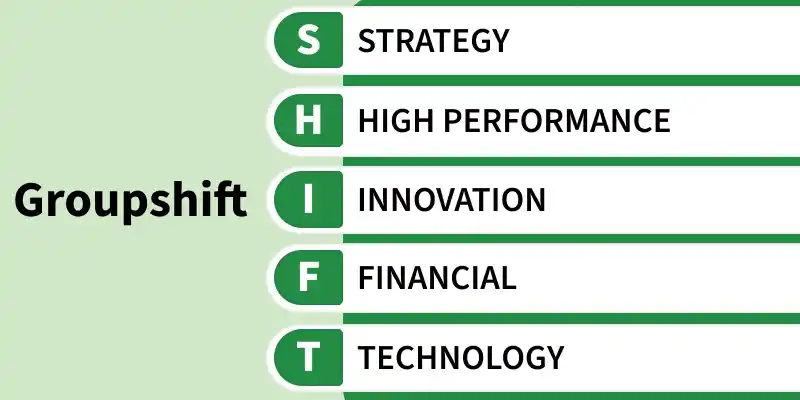
This concept is closely related to groupthink, a situation in which the desire for consensus and cohesion within a group becomes so strong that it suppresses critical thinking, dissenting opinions, and realistic evaluation of alternatives. While group shift refers to the movement toward more extreme decisions, groupthink focuses on poor decision-making caused by excessive conformity and pressure to agree.
Causes of Groupshift
The following are the causes of Groupshift:
**1. Social influence and conformity: Individuals tend to adjust their opinions to match the dominant views of the group in order to be accepted and avoid conflict.
**2. Persuasive arguments: During group discussion, members are exposed to new arguments that support the dominant direction, which often strengthens and intensifies their original views.
**3. Diffusion of responsibility: In a group, responsibility for decisions is shared, making individuals more comfortable supporting extreme or riskier positions than they would alone.
**4. Desire for group acceptance: People often align with the group’s emerging opinion to gain approval, avoid rejection, and maintain harmony within the group.
**5. Increased confidence in group decisions: When multiple members support a particular view, individuals become more confident that the group decision is correct, leading to stronger and more extreme choices.
**6. Leadership influence: A dominant or influential leader can steer group opinion in a particular direction, intensifying the final decision.
Difference between Groupthink and Groupshift
Following are the differences between Groupthink and Groupshift:
| Basis | Groupthink | Groupshift |
|---|---|---|
| Nature of the Phenomenon | It prioritizes consensus over critical thinking. | It involves shifting opinions toward extremes. |
| Decision-Making Outcome | Groupthink often leads to hasty, poor-quality decisions. | Groupshift can result in more extreme decisions. |
| Causes | It is driven by conformity, fear of dissent, and strong leadership. | It is influenced by social influence, conformity, and information exchange. |
| Decision-Making Process | Groupthink is dominated by a single perspective with limited dissent. | Groupshift involves dynamic discussions with diverse perspectives. |
| Direction of Shift | It tends to maintain the status quo. | It always involves a shift in opinions. |
| Role of Leadership | Leadership can discourage dissent and promote conformity. | Leadership can influence the direction of the shift. |
| Outcome Quality | Groupthink is often associated with poor decision quality. | Groupshift outcomes quality that can vary. |