Characteristics and Functions of Data warehouse (original) (raw)
Last Updated : 6 Nov, 2025
A data warehouse is a centralized repository for storing and managing large amounts of data from various sources for analysis and reporting. It is optimized for fast querying and analysis, enabling organizations to make informed decisions by providing a single source of truth for data.
**Note: Data warehousing typically involves transforming and integrating data from multiple sources into a unified organized and consistent format. Data warehouse can be controlled when the user has a shared way of explaining the trends that are introduced as specific subject.
Characteristics of Data warehouse
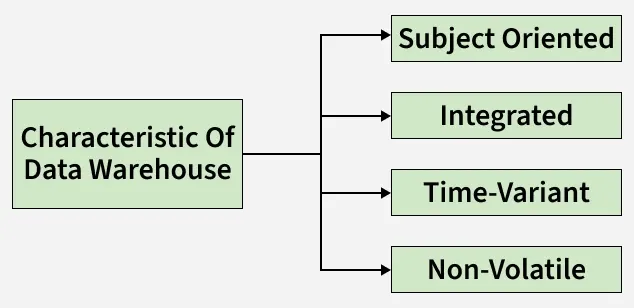
Characteristics of Data warehouse
1. Subject-Oriented
- A data warehouse is subject-oriented, meaning it focuses on specific themes like sales, healthcare, marketing or distribution, rather than day-to-day operations.
- It is designed to collect and organize data related to a particular topic to support analysis and decision-making.
- Unnecessary data is removed, making it easier to get clear and relevant insights for that subject.
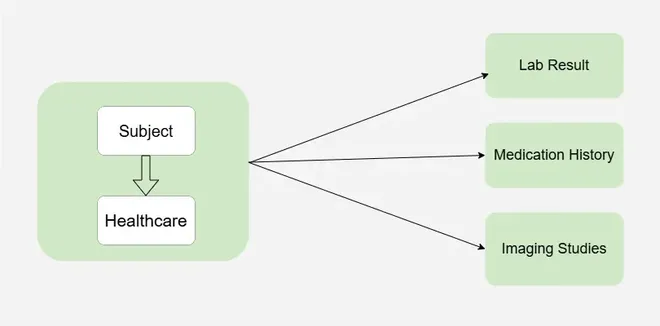
Subject-oriented
2. Integrated
- Integration in a data warehouse means combining data from different sources like mainframes and relational databases into a consistent and reliable format.
- This involves using standard naming conventions, formats and codes so that data can be easily understood and analyzed.
- Integration ensures that all related data is unified, allowing for more accurate and efficient decision-making across different subject areas.
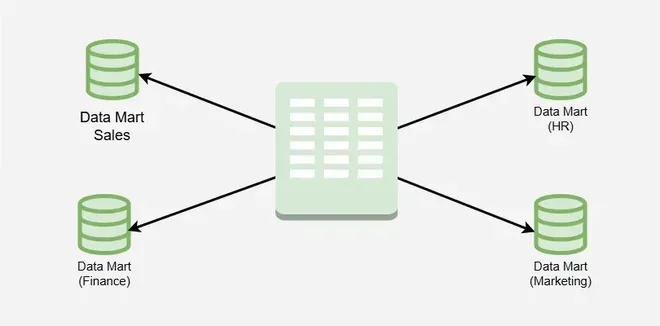
Data warehouse is integrated
3. Time-Variant
- Time-variance means that data in a data warehouse is stored over different time periods-such as weekly, monthly or yearly.
- Unlike operational systems, it keeps historical data for long-term analysis.
- Once data is entered, it is not changed or updated, preserving the state of data at a specific point in time.

Time-Variant
**Note: This allows users to analyze trends and changes over time.
4. Non-Volatile
Non-volatility means that once data is stored in a data warehouse, it is not deleted or updated. Instead, new data is added over time, keeping the historical records intact. The data is read-only and refreshed at specific intervals, making it ideal for analyzing trends and long-term performance. There are mainly two types of data operations in a data warehouse:
- **Data Loading: inserting bulk data from various sources.
- **Data Access: reading and analyzing the stored data.
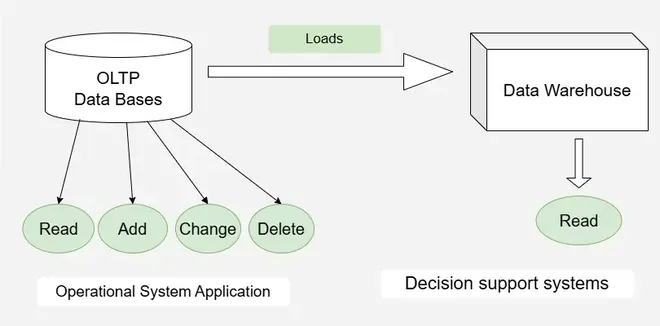
Non-Volatile
**Note: Unlike operational systems, a data warehouse does not require transaction processing, recovery or concurrency control. Operations like insert, update and delete used in day-to-day applications are generally not performed here.
Functions of Data warehouse
It serves as a collection of organized data, managed by different groups to support data retrieval. It tracks high-transaction tables and helps define key data warehousing techniques and functions.
- **Data Consolidation: Combines data from multiple sources into a single, consistent repository.
- **Data Cleaning: Removes errors, duplicates and irrelevant information to ensure data quality.
- **Data Integration: Merges data from various sources into a unified format for accurate analysis.
- **Data Storage: Stores large volumes of historical data for easy and quick access.
- **Data Transformation: Converts and standardizes data to ensure consistency and usability.
- **Data Analysis: Enables deep data exploration and insight generation.
- **Data Reporting: Supports dashboards and reports for stakeholders and departments.
- **Data Mining: Identifies patterns and trends to aid in strategic decisions.
- **Performance Optimization: Ensures fast querying and efficient data access.