Physical Properties of Amines (original) (raw)
Last Updated : 27 Mar, 2026
Amines are the derivatives of ammonia in which one or more hydrogen atoms have been replaced by alkyl groups. Examples are amino acids, biogenic amines, trimethylamine, and aniline.
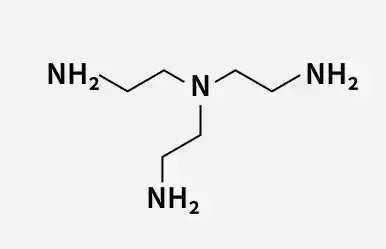
The important physical properties of amines are the following:
- **Physical state and smell: Lower members of the aliphatic amines family, such as methylamine and dimethylamine, are gases at ordinary temperature and smell like ammonia. The higher members with three or more C atoms are mostly liquid and have a fishy smell. Most of the amines have an unpleasant odor. Aromatic amines are toxic. Pure amines are colorless but easily oxidized and colored by impurities.
- **Boiling Points: Amines have higher boiling points than hydrocarbons of comparable molecular mass because amines are polar compounds and, with the exception of tertiary amines, form associate molecules due to intermolecular hydrogen bonding between the nitrogen of one and the hydrogen of another molecule as shown below:
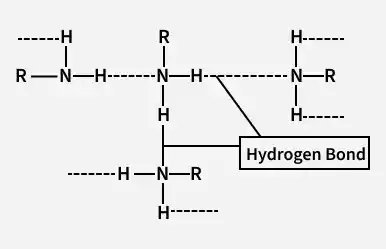
Amines have lower boiling points than those of alcohols or carboxylic acids because the electronegativity of nitrogen is lower than that of oxygen, and hence O-H bonds present in alcohols and carboxylic acids are more polar than N-H bonds in amines. The hydrogen bonds in alcohols and carboxylic acids are stronger and have higher boiling points.
- **Comparison of boiling points for different groups of compounds:
| **Compound | **Molar Mass | **Boiling point (K) |
|---|---|---|
| Methanoic acid | 46 | 374 |
| Ethanol | 46 | 351.5 |
| Ethanamine | 45 | 290 |
| Propane | 44 | 231 |
In isomeric amines, the intermolecular association is more in primary amines than in secondary amines. Tertiary amines do not have intermolecular associations due to the absence of hydrogen atoms available for hydrogen bond formation. Hence, primary and secondary amines have the highest boiling points, whereas tertiary amines have the lowest boiling points.
Thus, the order of boiling points of isomeric amines is
**Primary>Secondary>Tertiary
Example: CH3CH2CH2NH2 (C2H5)2NH C2H5N(CH3)2
Propylamine (Primary) Diethylamine (Secondary) Ethyldimethylamine (Tertiary)
b.p. : 323 K b. p.: 329.3 K b.p.: 310.5 K
- **Solubility: The lower aliphatic amines are soluble in water because they are capable of forming hydrogen bonds with water. However, solubility decreases with increases in the molar mass of amines due to an increase in the size of the hydrophobic alkyl part. The higher amines containing six or more carbon atoms are insoluble because of weaker hydrogen bonds. The solubility of amines in water is less than that of alcohols. For example, butan-1-amine is less soluble than butan-1-ol. The amines are also soluble in less polar solvents like ether, alcohol etc.
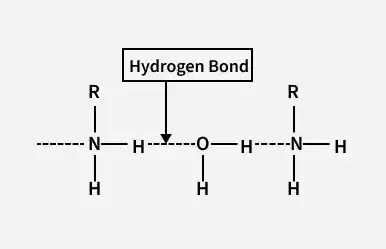
Aromatic amines are insoluble in water because the larger hydrocarbon part tends to retard the formation of hydrogen bonds. It is quite soluble in organic solvents such as ether and alcohols. For example, aniline is insoluble in water.
- **Melting Points: The melting points of aryl amines increase with an increase in the molecular mass of the compound.
- **Toxic Nature: Aryl amines are highly toxic substances, as these compounds can destroy red blood cells and lead to mental instability.