Uses of Aldehydes and Ketones (original) (raw)
Last Updated : 27 Mar, 2026
Aldehydes and Ketones: The carbonyl carbon in an aldehyde is connected to a hydrogen atom, which distinguishes it from ketones. A ketone has two alkyl or aryl groups connected to its carbonyl carbon. The C–H link in aldehydes makes them easily oxidized. So they are strong reducing agents.
Aldehydes are responsible for the pleasant smells of baking cookies.
**Aldehydes and Ketones
Carbonyl compounds include aldehydes and ketones. The general formula for aldehydes is RCHO, whereas the general formula for ketones is RCOR'. The C=O group is found in all carbonyl compounds.
Ketones and aldehydes are employed in the chemical industry as solvents, starting materials, and reagents in the manufacture of other goods. Formaldehyde is known for preserving biological specimens, but it also makes many important polymers, like Bakelite. Ketones dissolve a wide variety of organic compounds and have low toxicity. They also have accessible boiling temperatures for facile distillation.
Many other ketones and aldehydes are utilized in foods, pharmaceuticals, and other items as flavorings and additives. Carvone provides spearmint chewing gum its minty flavor, whereas benzaldehyde is the main component in almond extract.
- **Aldehydes: Aldehydes have one hydrogen atom connected to the carbonyl group, as well as a hydrogen group or a second hydrogen atom, which can be a benzene ring or an alkyl group. For Example, Methanal, ethanal, etc.
Methanal
- **Ketones: The carbonyl in ketones is connected to two hydrocarbon groups. The ones with alkyl groups or benzene rings are these. The carbonyl group is devoid of hydrogen. For Example, Ethanone, propanone, etc.
Propanone


Uses of Aldehydes and Ketones
Because of their chemical characteristics, aldehydes and ketones are used in various industries, including pharmaceutical, food, fragrance, and cosmetics. Uses of aldehydes and ketones can be found in the sections below.
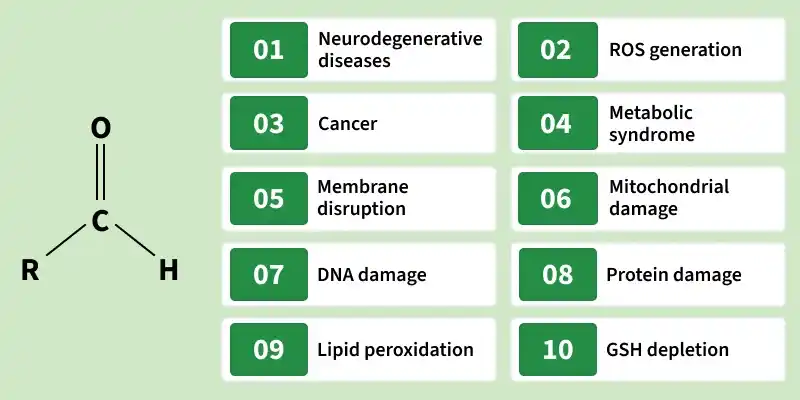
**Uses of Aldehydes
- Bakelite, a phenol-formaldehyde compound used in plastics, coatings, and adhesives, is widely utilized.
- Insecticides, antiseptics, and fungicides all work with aldehydes like glutaraldehyde. It affects bacteria's and fungi's cell membranes and cell walls, preventing them from working properly.
- Many industrial processes, such as the manufacturing of glue, tanning, and polymeric products, use aldehydes as a precursor.
- Photography and drug testing both employ formaldehyde.
- Perfumes and scents, as well as the cosmetic and dye industries, rely heavily on aldehydes.
- Acetaldehyde is a chemical that is used to make acetic acid and its derivatives, such as pyridine.
- Cinnamaldehyde is a flavoring agent that is added to foods to provide them a cinnamon flavor. In vanilla beans, vanillin is the primary flavoring agent.
- Rhodopsin is formed when the retina (an aldehyde) and opsin (a protein) combine to generate rhodopsin, which is involved in vision.
**Uses of Ketones
- Acetone is the most prevalent and basic of all ketones. It is most commonly used as a paint thinner and for removing nail polish.
- Certain types of synthetic fibers and plastics respond well to ketones as a solvent.
- Opiate addiction is treated with ketone methadone. The dopamine hormone is released in excess by opiates. Methadone binds to the brain's dopamine receptor, removing the user's physical need for opiates.
- In humans and other living beings, ketones serve a variety of vital roles. Progesterone, testosterone, cortisone, and aldosterone are all steroid hormones that are ketones.
- Jasmine, honeysuckle, cherry, and strawberry are all perfumes made up of an aromatic ketone called acetophenone.
- Cyclohexanone, a cyclic ketone, is used to make nylon.