Load balancing in Cloud Computing (original) (raw)
Last Updated : 26 Feb, 2026
Cloud load balancing is the method of distributing workloads and computing properties across multiple resources (such as servers, virtual machines, or containers). As internet traffic continues to grow rapidly (historically doubling annually), managing workload demands is critical. Load balancing ensures no single resource is overburdened, improving overall performance, availability, and scalability.
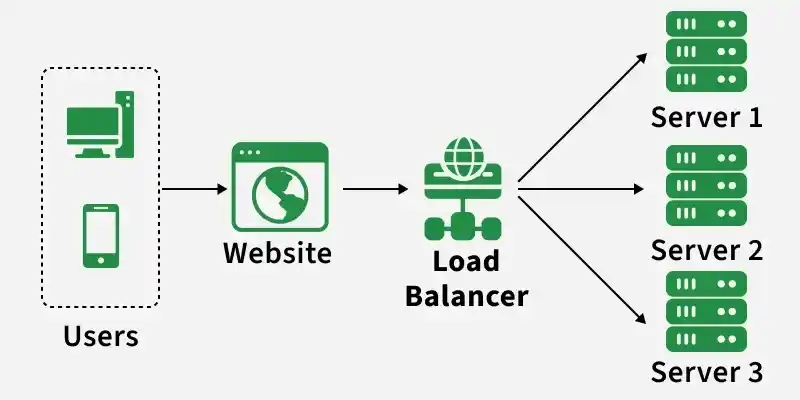
The Server Overload Problem and Solutions
When web traffic spikes, servers can easily become overloaded. There are two primary ways to solve this:
**1. Single-Server Solution (Vertical Scaling/Upgrading): Upgrading the existing server to a higher-performance machine.
- Drawback: Expensive, arduous, and the new server may also eventually overload.
**2. Multiple-Server Solution (Horizontal Scaling/Clustering): Building a scalable service system across a cluster of servers and distributing the traffic.
- Advantage: Highly cost-effective and much more scalable.
Levels of Implementation
Load balancing can be implemented at various layers of the technology stack to handle specific types of traffic:
- **Network Load Balancing (Layer 4): Balances network traffic across multiple servers or instances. It ensures incoming traffic is distributed evenly at the transport level.
- **Application Load Balancing (Layer 7): Balances the workload across multiple instances of an application. It inspects the content of the traffic to ensure each instance receives an equal and appropriate share of requests.
- **Database Load Balancing: Distributes incoming queries evenly across available database servers to prevent database bottlenecks.
Types Of Load Balancers
| **Type | **Description | **Key Characteristic |
|---|---|---|
| **Software-Based | Runs on standard hardware (PCs, desktops) and standard operating systems. | Flexible and highly configurable. |
| **Hardware-Based | Dedicated physical boxes with Application Specific Integrated Circuits (ASICs) adapted for routing. | Faster network traffic forwarding; excellent for transport-level balancing. |
Major Load Balancing Techniques & Examples
- **Direct Routing Requesting Dispatching: A real server and the load balancer share a virtual IP address. The load balancer accepts request packets via an interface configured with this virtual IP and routes them directly to the selected back-end servers.
- **Dispatcher-Based Cluster: A dispatcher uses smart load balancing—evaluating server availability, current workload, capability, and user-defined criteria—to decide where to send TCP/IP requests. To the consumer, the cluster acts as a single virtual service on one IP address.
- **Linux Virtual Server (LVS): An open-source, enhanced load balancing solution used to build highly scalable and available network services (HTTP, POP3, FTP, VoIP). It acts as the primary entry point for a server cluster and executes IPVS for Layer-4 switching in the Linux kernel.
Advantages vs. Disadvantages
| **Advantages | **Disadvantages |
|---|---|
| **Improved Performance: Reduces the load on individual resources by distributing work. | **Complexity: Requires careful planning and configuration, especially in large-scale systems. |
| **High Availability: Eliminates single points of failure, providing fault tolerance. | **Cost: Specialized hardware or advanced software solutions can increase overall IT expenses. |
| **Scalability: Easily handles traffic spikes by scaling resources up or down dynamically. | **Potential Bottleneck: The load balancer itself can become a single point of failure if misconfigured. |
| **Resource Efficiency: Optimizes hardware usage, reducing wastage and cutting long-term costs. | **Security Risks: Improper implementation can expose sensitive data or allow unauthorized access. |