Scalability and Elasticity in Cloud Computing (original) (raw)
Last Updated : 26 Feb, 2026
**Prerequisite - Cloud Computing
Cloud Elasticity
Cloud elasticity refers to the ability of a cloud environment to dynamically and automatically expand or compress infrastructural resources based on sudden fluctuations in demand.
**Key Characteristics:
- **Dynamic Adjustment: Automatically provisions extra compute, storage, or network resources (CPU, Memory, Bandwidth) when client access expands, and reduces them when traffic drops.
- **Cost Efficiency: Maximizes resource utilization and minimizes infrastructure costs. It is most commonly associated with public cloud **pay-per-use models where you only pay for the duration resources are consumed.
- **Horizontal Scaling: Typically relies on scale-out arrangements (adding or removing instances dynamically) rather than upgrading existing hardware.
- **Best For: Unpredictable workloads or scenarios where resource requirements fluctuate up and down suddenly for specific time intervals. It is not practical for environments requiring a persistent infrastructure for a constant heavy workload.
- **Mission-Critical Performance: Ensures that applications maintain performance requirements during sudden spikes, preventing potential business losses due to downtime or latency.
**Example: Consider an online shopping site. During the Christmas festive season, the transaction workload suddenly spikes. For this specific period, resources need to scale up to handle the traffic. Once the holiday season ends, the deployed resources are automatically withdrawn. Cloud elasticity perfectly addresses this temporary, dynamic need.
Cloud Scalability
Cloud scalability is used to handle steady, growing workloads where consistent performance is required over time. It fulfills the static needs of an organization as it expands.
**Key Characteristics:
- **Persistent Deployment: Designed for handling steady, long-term growth rather than sudden, temporary spikes.
- **Capacity Planning: Focuses on upgrading or adding resources to work efficiently with growing software or applications.
- **Pay-Per-Use: Like elasticity, scalability is often billed on a pay-per-use basis, but the baseline of usage consistently increases over time rather than fluctuating up and down.
- **Best For: Workloads that remain high and increase statically over time.
**Example: Imagine you own a company that started with a small database. As your business grows over the years, the size of your database consistently increases. To handle this heavier, permanent workload, you request your cloud vendor to scale up your database capacity.
**Types of Scalability:
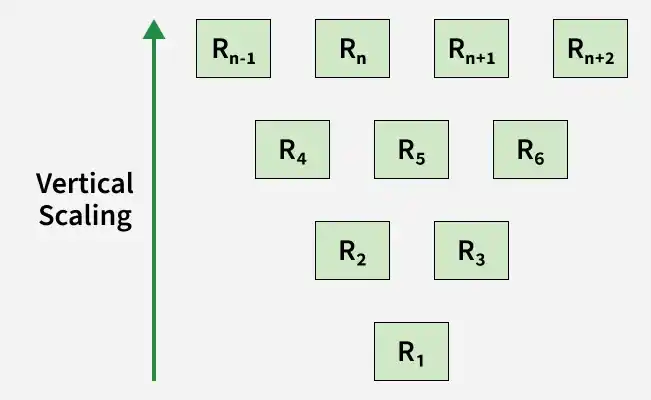
**1. Vertical Scalability (Scale-up) -
In this type of scalability, we increase the power of existing resources in the working environment in an upward direction.
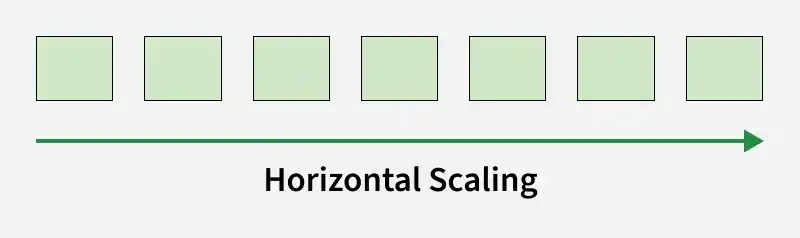
**2. Horizontal Scalability: In this kind of scaling, the resources are added in a horizontal row.
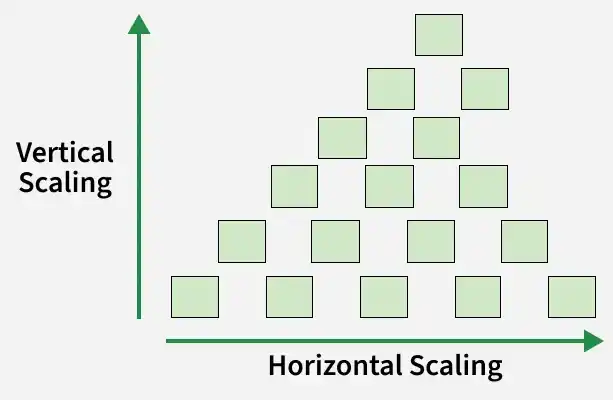
**3. Diagonal Scalability -
It is a mixture of both Horizontal and Vertical scalability where the resources are added both vertically and horizontally.
**Difference Between Cloud Elasticity and Scalability :
| | Cloud Elasticity | **Cloud Scalability | | | ------------------ | ---------------------------------------------------------------------------------------------------------------------- | -------------------------------------------------------------------------------------------------------------------------- | | 1 | Elasticity is used just to meet the sudden up and down in the workload for a small period of time. | Scalability is used to meet the static increase in the workload. | | 2 | Elasticity is used to meet dynamic changes, where the resources need can increase or decrease. | Scalability is always used to address the increase in workload in an organization. | | 3 | Elasticity is commonly used by small companies whose workload and demand increases only for a specific period of time. | Scalability is used by giant companies whose customer circle persistently grows in order to do the operations efficiently. | | 4 | It is a short term planning and adopted just to deal with an unexpected increase in demand or seasonal demands. | Scalability is a long term planning and adopted just to deal with an expected increase in demand. |