Implementing Wireless Segmentation (original) (raw)
Last Updated : 28 Apr, 2026
Wireless network segmentation is the process of dividing a Wi-Fi network into isolated parts so each segment has separate security rules and controlled access. It improves security and traffic management by restricting communication between different wireless zones.
- Separates users, guests, and devices into isolated network segments
- Uses SSIDs, VLANs, or virtual networks for logical separation
- Allows different security policies for each segment
- Improves performance by controlling and prioritizing traffic
- Common in enterprise and campus wireless setups
Implementing Wireless Network Segmentation
The process below applies to both home and organizational setups. You’ll need a router/firewall that supports VLANs (or one flashed with DD-WRT/OpenWrt).
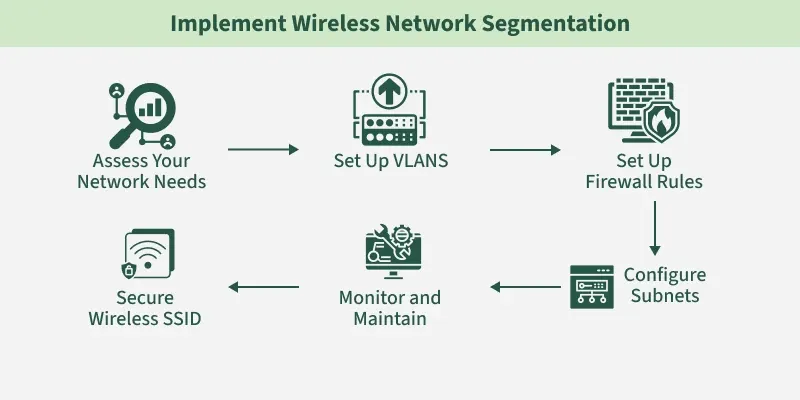
Step 1: Assess Your Network Needs
Decide which devices and users need their own segments. For example:
- **Main network: Laptops, smartphones, workstations (trusted devices).
- **Guest network: Visitors (internet only).
- **IoT network: Smart TVs, cameras, voice assistants.
- **Admin network: IT/admin systems, servers.
Step 2: Set Up VLANs (Virtual Local Area Networks)
For Routers Supporting VLANs:
- Log into your router’s admin interface (e.g., 192.168.1.1).
- Go to Advanced and check VLAN/Network settings.
- Create VLANs for each segment (Main, Guest, IoT, Admin).
- Assign VLAN IDs (e.g., VLAN10 = Main, VLAN20 = Guest).
- Map VLANs to SSIDs (wireless networks) or router ports.
**For Routers Without Native VLAN Support:
To enable VLANs, consider flashing your router’s firmware using third-party firmware like DD-WRT or OpenWrt, which supports VLANs.
Step 3: Configure Subnets
Assign different subnets to each VLAN in order to avoid IP address collisions in the VLANs. This further enhances the modularity of the traffic between segments. For example:
- **Main network: 192.168.1.x
- **Guest network: 192.168.2.x
- **IoT network: 192.168.3.x
Step 4: Set Up Firewall Rules
When using VLANs, it is necessary to regulate traffic between VLANs, enhance protection, and reduce the risk of malicious internet connections, so firewalls must be implemented to control traffic between VLANs. For example, you want the guest and IoT network to have internet access while they need not have any access to the main network.
- In your router/firewall settings, open the Firewall/Security tab and Create rules such as
- **Allow **Guest + IoT: Internet.
- **Block **Guest: Main.
- **Block **IoT: Admin.
- **Allow **Admin: All (for management).
- Save and apply rules.
**Example rule (OpenWrt):
config rule
option src 'guest'
option dest 'lan'
option target 'DROP'
Step 5: Monitor and Maintain
It is also important to maintain vigilance by continually examining traffic data and modifying security policies as applicable. In large networks, you can monitor specific segments based on a range of criteria using the available network management tools.
Importance of Wireless Network Segmentation
Due to the open and easily accessible nature of Wi-Fi, wireless network segmentation becomes essential for several reasons:
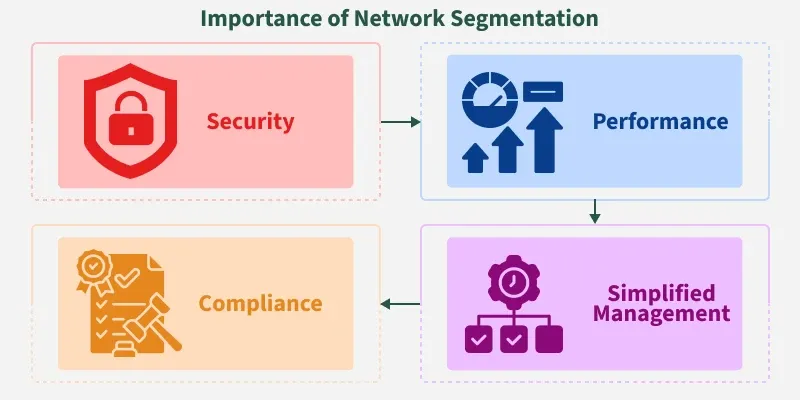
1. Enhanced Security
- Limits the chances of intruders accessing the entire network
- Isolates compromised or guest devices from critical systems
- Prevents malware from spreading across segments
- Strengthens overall protection through controlled inter-segment communication
2. Improved Performance
- Reduces network congestion by distributing traffic across segments
- Enhances speed and responsiveness for users and devices
- Supports high-traffic environments with multiple devices
- Optimizes bandwidth usage and minimizes bottlenecks
3. Simplified Management
- Allows localized management of smaller sub-networks
- Enables stronger, segment-specific security and access control policies
- Makes monitoring and troubleshooting easier and faster
- Lets administrators tailor rules for each segment based on need
4. Compliance
- Helps organizations meet regulatory and industry security requirements
- Ensures sensitive data stays isolated from less-secure network areas
- Supports structured auditing and reporting
- Reduces the risk of compliance violations through controlled segmentation