Internet, Intranet and Extranet (original) (raw)
Last Updated : 23 Sep, 2025
A network facilitates the sharing, transmission, and management of information. Among the various types of networks, the three most common are the Internet, Intranet, and Extranet, each designed to support distinct communication and collaboration requirements - from global connectivity to controlled organizational information exchange
Internet
The Internet is the world’s largest public network, connecting millions of computers, devices, and servers across the globe. It has no single owner and functions through cooperation between Internet Service Providers (ISPs), organizations, and network infrastructures.
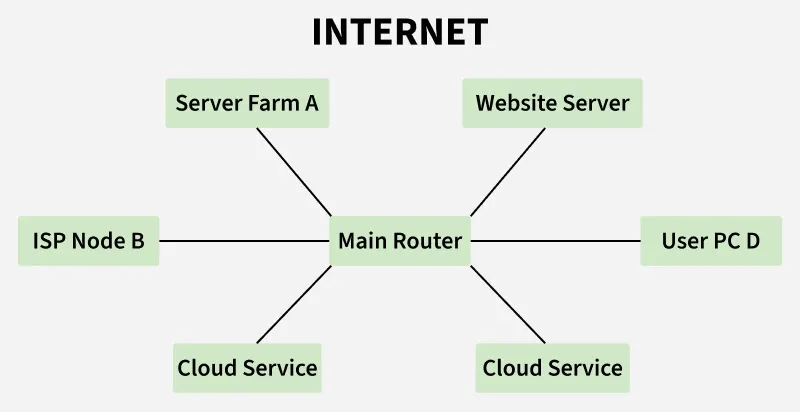
Internet
Features of Internet
- **Accessibility: Open to everyone with a network connection.
- **Availability: Global reach with billions of users worldwide.
- **Purpose: Facilitates communication, information sharing, e - commerce, research, social networking, and online collaboration.
- **Security: Dependent on user - side protections such as antivirus, firewalls, and encryption.
**Example: Browsing websites like Google, Facebook, or Wikipedia.
Intranet
An Intranet is a private network designed for internal use within an organization. It leverages the same technologies as the Internet (TCP/IP, HTTP, web browsers) but restricts access only to authorized employees.
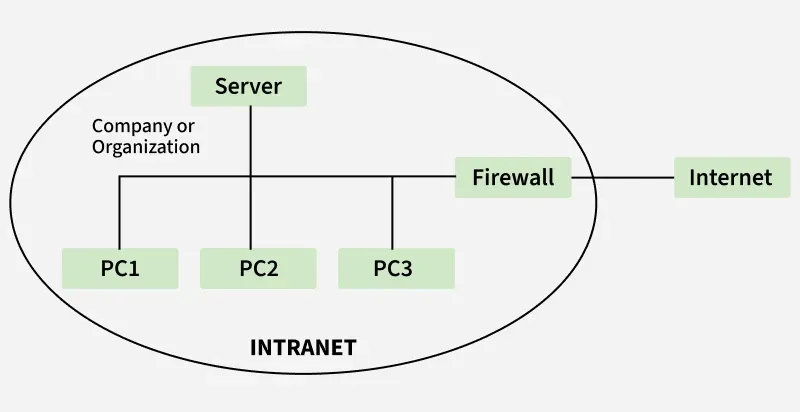
Intranet
Features of Intranet
- **Accessibility: Only available within an organization.
- **Availability: Restricted to company employees.
- **Purpose: Supports communication, collaboration, and resource management. Often includes tools like internal news portals, project management software, and HR systems.
- **Security: Protected by firewalls and organizational access policies.
**Example: Wipro using an internal network for managing projects, HR databases, and employee portals.
An Extranet is a controlled extension of an Intranet that allows external stakeholders such as suppliers, clients, or business partners to access certain internal resources. It combines the security of an Intranet with the connectivity of the Internet.
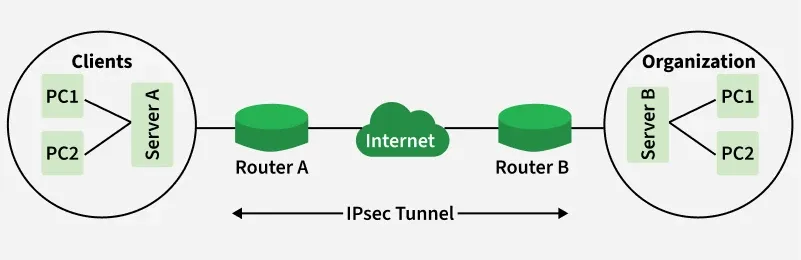
Extranet
- **Accessibility: Restricted to both employees and authorized external members.
- **Availability: Extends organizational access to vendors, partners, or customers.
- **Purpose: Enhances collaboration with external entities while maintaining security.
- **Security: Enforced through firewalls, encryption, and login authentication.
**Example: Dell and Intel collaborating through a secure extranet to manage supply chain operations.
**Difference between Internet, Intranet and Extranet
| **Point of Difference | **Internet | **Intranet | **Extranet |
|---|---|---|---|
| **Accessibility | Public – open to all | Private – only employees | Private – employees + authorized external users |
| **Coverage | Worldwide | Within an organization | Organization + selected partners/clients |
| **Purpose | Global information sharing | Internal communication & collaboration | Secure collaboration with external stakeholders |
| **Security | User - dependent; less controlled | Protected by organizational firewalls | Firewalls + encryption + controlled login |
| **Ownership | No single owner | Single organization | Single or multiple organizations |
| **Users | General public | Employees of the organization | Employees + suppliers/partners/clients |
| **Maintenance | Maintained by ISPs and global organizations | Maintained by the organization’s IT team | Maintained jointly by the organization and external partners |
| **Example | Public web browsing | Wipro’s internal HR portal | Dell–Intel supplier network |