Leaky bucket algorithm (original) (raw)
Last Updated : 11 Feb, 2026
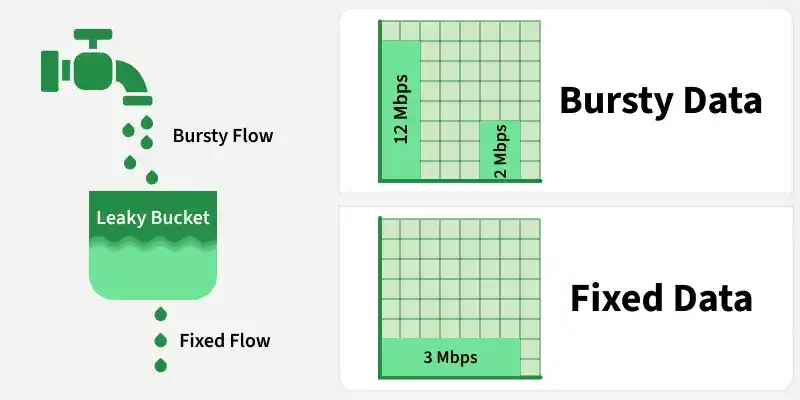
The Leaky Bucket Algorithm is a method used in networking to regulate the rate at which data is transmitted. It maintains a steady sending speed, even when data arrives in sudden bursts, preventing the network from becoming overloaded.
- Incoming packets are stored in a fixed-size buffer before transmission.
- Data is released into the network at a constant rate.
- Packets arriving after the buffer is full are discarded.
- Helps routers and switches use bandwidth in a controlled manner.
Working
A Leaky Bucket algorithm uses a FIFO queue to regulate traffic. For fixed-size packets, a constant number are removed at each clock tick. For variable-size packets, transmission is based on a fixed byte/bit rate. The following is an algorithm for variable-length packets:
1. Initialize a counter to n at the tick of the clock.
2. Repeat until n is smaller than the packet size of the packet at the head of the queue.
- Pop a packet out of the head of the queue, say P.
- Send the packet P, into the network
- Decrement the counter by the size of packet P.
3. Reset the counter and go to step 1.
**Example: Let n=1000
**Let Packet =

- Since n > size of the packet at the head of the Queue, i.e. n > 200
- Therefore, n = 1000-200 = 800
- Packet size of 200 is sent into the network.
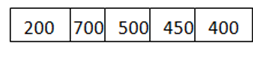
- Now, again n > size of the packet at the head of the Queue, i.e. n > 400
- Therefore, n = 800-400 = 400
- Packet size of 400 is sent into the network.
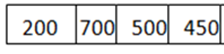
- Since, n < size of the packet at the head of the Queue, i.e. n < 450Therefore, the procedure is stopped.
- Initialize n = 1000 on another tick of the clock.
- This procedure is repeated until all the packets are sent into the network.
Below is the implementation of above explained approach:
C++ `
// cpp program to implement leakybucket #include <bits/stdc++.h> using namespace std; int main() { int no_of_queries, storage, output_pkt_size; int input_pkt_size, bucket_size, size_left;
// initial packets in the bucket
storage = 0;

// total no. of times bucket content is checked
no_of_queries = 4;

// total no. of packets that can
// be accommodated in the bucket
bucket_size = 10;

// no. of packets that enters the bucket at a time
input_pkt_size = 4;

// no. of packets that exits the bucket at a time
output_pkt_size = 1;
for (int i = 0; i < no_of_queries; i++) // space left
{
    size_left = bucket_size - storage;
    if (input_pkt_size <= size_left) {
        // update storage
        storage += input_pkt_size;
    }
    else {
        printf("Packet loss = %d\n", input_pkt_size);
    }
    printf("Buffer size= %d out of bucket size= %d\n",
           storage, bucket_size);
    storage -= output_pkt_size;
}
return 0;
}
// This code is contributed by bunny09262002 // Improved by: rishitchaudhary
Java
// Java Implementation of Leaky bucket
import java.io.; import java.util.;
class Leakybucket { public static void main(String[] args) { int no_of_queries, storage, output_pkt_size; int input_pkt_size, bucket_size, size_left;
    // initial packets in the bucket
    storage = 0;

    // total no. of times bucket content is checked
    no_of_queries = 4;

    // total no. of packets that can
    // be accommodated in the bucket
    bucket_size = 10;

    // no. of packets that enters the bucket at a time
    input_pkt_size = 4;

    // no. of packets that exits the bucket at a time
    output_pkt_size = 1;
    for (int i = 0; i < no_of_queries; i++) {
        size_left = bucket_size - storage; // space left

        if (input_pkt_size <= (size_left)) {
            storage += input_pkt_size;
        }
        else {
            System.out.println("Packet loss = "
                               + input_pkt_size);
        }
        System.out.println("Buffer size= " + storage
                           + " out of bucket size= "
                           + bucket_size);
        storage -= output_pkt_size;
    }
}
} // Improved by: rishitchaudhary
Python
initial packets in the bucket
storage = 0
total no. of times bucket content is checked
no_of_queries = 4
total no. of packets that can
be accommodated in the bucket
bucket_size = 10
no. of packets that enters the bucket at a time
input_pkt_size = 4
no. of packets that exits the bucket at a time
output_pkt_size = 1 for i in range(0, no_of_queries): # space left
size_left = bucket_size - storage
if input_pkt_size <= size_left:
  # update storage
    storage += input_pkt_size
else:
    print("Packet loss = ", input_pkt_size)

print(f"Buffer size= {storage} out of bucket size = {bucket_size}")

# as packets are sent out into the network, the size of the storage decreases
storage -= output_pkt_size
This code is contributed by Arpit Jain
Improved by: rishitchaudhary
C#
// C# Implementation of Leaking bucket using System;
class Leakingbucket { static void Main(string[] args) { int no_of_queries, storage, output_pkt_size; int input_pkt_size, bucket_size, size_left;
// initial packets in the bucket
storage = 0;

// total no. of times bucket content is checked
no_of_queries = 4;

// total no. of packets that can
// be accommodated in the bucket
bucket_size = 10;

// no. of packets that enters the bucket at a time
input_pkt_size = 4;

// no. of packets that exits the bucket at a time
output_pkt_size = 1;
for (int i = 0; i < no_of_queries; i++)
{
  size_left = bucket_size - storage; // space left

  if (input_pkt_size <= (size_left))
  {
    storage += input_pkt_size;
  }
  else
  {
    Console.WriteLine("Packet loss = " + input_pkt_size);
  }
  Console.WriteLine("Buffer size= " + storage + " out of bucket size= " + bucket_size);
  storage -= output_pkt_size;
}
} }
// This code is Contributed by phasing17
` JavaScript ``
// JS code to implement the approach
// initial packets in the bucket let storage = 0;
// total no. of times bucket content is checked let noOfQueries = 4;
// total no. of packets that can // be accommodated in the bucket let bucketSize = 10;
// no. of packets that enters the bucket at a time let inputPktSize = 4;
// no. of packets that exits the bucket at a time let outputPktSize = 1;
for (let i = 0; i < noOfQueries; i++) { // space left
let sizeLeft = bucketSize - storage; if (inputPktSize <= sizeLeft) { // update storage storage += inputPktSize; } else { console.log("Packet loss = ", inputPktSize); }
console.log(Buffer size= <span class="katex"><span class="katex-mathml"><math xmlns="http://www.w3.org/1998/Math/MathML"><semantics><mrow><mrow><mi>s</mi><mi>t</mi><mi>o</mi><mi>r</mi><mi>a</mi><mi>g</mi><mi>e</mi></mrow><mi>o</mi><mi>u</mi><mi>t</mi><mi>o</mi><mi>f</mi><mi>b</mi><mi>u</mi><mi>c</mi><mi>k</mi><mi>e</mi><mi>t</mi><mi>s</mi><mi>i</mi><mi>z</mi><mi>e</mi><mo>=</mo></mrow><annotation encoding="application/x-tex">{storage} out of bucket size = </annotation></semantics></math></span><span class="katex-html" aria-hidden="true"><span class="base"><span class="strut" style="height:0.8889em;vertical-align:-0.1944em;"></span><span class="mord"><span class="mord mathnormal">s</span><span class="mord mathnormal">t</span><span class="mord mathnormal" style="margin-right:0.02778em;">or</span><span class="mord mathnormal">a</span><span class="mord mathnormal" style="margin-right:0.03588em;">g</span><span class="mord mathnormal">e</span></span><span class="mord mathnormal">o</span><span class="mord mathnormal">u</span><span class="mord mathnormal">t</span><span class="mord mathnormal">o</span><span class="mord mathnormal" style="margin-right:0.10764em;">f</span><span class="mord mathnormal">b</span><span class="mord mathnormal">u</span><span class="mord mathnormal">c</span><span class="mord mathnormal" style="margin-right:0.03148em;">k</span><span class="mord mathnormal">e</span><span class="mord mathnormal">t</span><span class="mord mathnormal">s</span><span class="mord mathnormal">i</span><span class="mord mathnormal">ze</span><span class="mspace" style="margin-right:0.2778em;"></span><span class="mrel">=</span></span></span></span>{bucketSize});
// as packets are sent out into the network, the size of the storage decreases storage -= outputPktSize; }
// This code is contributed by phasing17
``
**Output
Buffer size= 4 out of bucket size= 10
Buffer size= 7 out of bucket size= 10
Buffer size= 10 out of bucket size= 10
Packet loss = 4
Buffer size= 9 out of bucket size= 10
**Leaky Bucket vs Token Bucket
| Leaky Bucket | Token Bucket |
|---|---|
| When the host has to send a packet , packet is thrown in bucket. | In this, the bucket holds tokens generated at regular intervals of time. |
| Bucket leaks at constant rate | Bucket has maximum capacity. |
| Bursty traffic is converted into uniform traffic by leaky bucket. | If there is a ready packet , a token is removed from Bucket and packet is send. |
| In practice bucket is a finite queue outputs at finite rate | If there is no token in the bucket, then the packet cannot be sent. |
**Advantage
- Prevents sudden traffic spikes that can cause congestion.
- Produces a smooth and consistent data flow.
- Simple to implement and requires minimal control logic.
- Makes bandwidth usage more predictable.
- Suitable for applications that require steady transmission.
Disadvantages
- Does not handle burst traffic efficiently.
- Packets may be dropped when the buffer becomes full.
- Available bandwidth may remain unused during low traffic periods.
- Less adaptable to dynamic network conditions.
- Not ideal for highly variable data traffic.
Applications
- Traffic shaping in routers and switches.
- Bandwidth control in Quality of Service (QoS) networks.
- Voice over IP (VoIP) to ensure stable call quality.
- Video streaming for continuous data delivery.
- Legacy networks such as ATM that require predictable traffic patterns.