Public Key Infrastructure (original) (raw)
Last Updated : 29 Apr, 2026
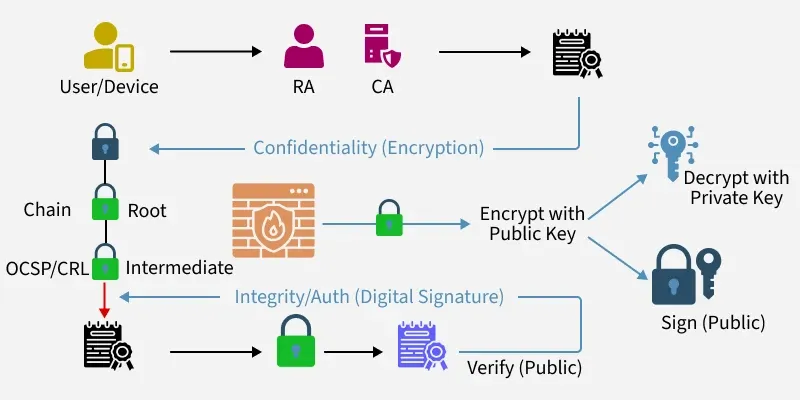
Public Key Infrastructure (PKI) is a security framework that issues and manages digital certificates to establish trust on digital networks. It ensures secure communication by validating identities, protecting data, and preventing unauthorized access.
- Provides unique digital identities to users, devices, and systems
- Secures communication using public and private key pairs
- Prevents MITM attacks by verifying key ownership
- Ensures confidentiality, integrity, and authenticity of data
Managing Keys in Cryptosystems
Cryptographic security depends on strong key management.
Key Areas of Key Management
- Secure administration of cryptographic keys
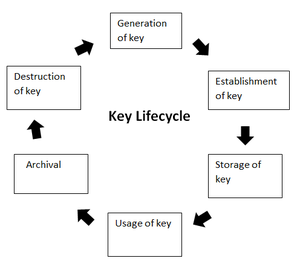
- Managing the entire key lifecycle (generation → storage → rotation → expiration → destruction)
- Protecting private keys and assuring public keys
Public Key Responsibilities
- **Private Key Secrecy: Must stay protected and accessible only to the owner.
- **Public Key Assurance: Public key must be verified so attackers can’t replace it.
- PKI ensures public key validation through certificates.
Components of a Public Key Infrastructure (PKI)
- **Digital Certificate (X.509): Contains identity + public key.
- **Private Key Tokens: Secure storage for private keys.
- **Registration Authority (RA): Verifies user identity.
- **Certification Authority (CA): Issues and signs certificates.
- **Certificate Management System (CMS): Handles storage and revocation.
Working on a PKI
Let us understand the working of PKI in steps.
1. PKI and Encryption
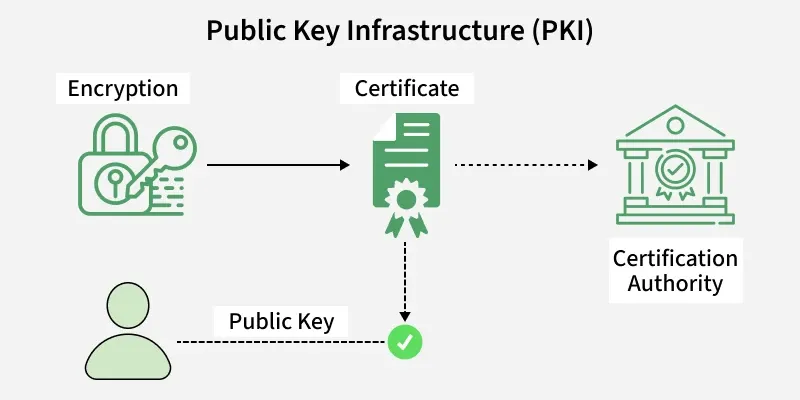
- **PKI solves the question: “How do we know a public key belongs to the correct person?”
- It prevents MITM attacks by issuing verified digital certificates.
2. Digital Certificates (X.509)
- Uniquely identify people, servers, or devices
- Store a user's public key + identity information
- Signed by the Certification Authority
- Verified using the CA’s public key
Digital certificates are issued to people and electronic systems to uniquely identify them in the digital world.
Functions of a CA
- Generates key pairs
- Issues digital certificates after identity verification
- Digitally signs certificates
- Publishes certificates in directories
- Verifies certificates during authentication
- Revokes certificates if compromised
Classes of a Digital Certificate
A digital certificate can be divided into four broad categories. These are :
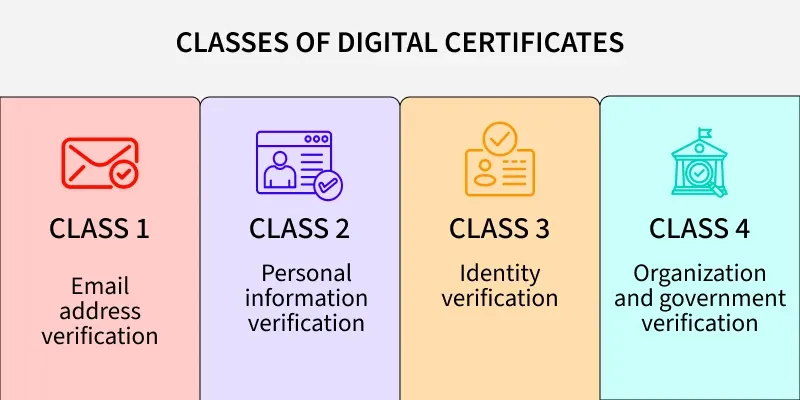
- **Class 1: These can be obtained by only providing the email address.
- **Class 2: These need more personal information.
- **Class 3: This first checks the identity of the person making a request.
- **Class 4: They are used by organizations and governments.
Process of creation of certificate
The creation of a certificate takes place as follows:
- Private and public keys are created.
- CA requests identifying attributes of the owner of a private key.
- Public key and attributes are encoded into a CSR or Certificate Signing Request.
- Key owner signs that CSR to prove the possession of a private key.
- CA signs the certificate after validation.