How does a VPN Work, It's History and Why Should You Use a VPN? (original) (raw)
Last Updated : 12 Jul, 2025
With increasing online surveillance, **cybersecurity threats, and **geo-restrictions on content, a **Virtual Private Network (VPN) has become a necessity rather than a luxury. In many Countries **Governments and ISPs (Internet Service Providers) track online activity, many streaming platforms enforce **regional restrictions, and using public Wi-Fi networks expose users to **cyberattacks. A **VPN encrypts your internet traffic, **hides your IP address, and **allows unrestricted access to websites and streaming platforms—ensuring **maximum online security and privacy.
In this guide, we’ll explain **what a VPN is, **how it works, and **why you should use one—including the latest **benefits, risks, and expert tips to help you choose the best VPN for your needs.
How does a VPN Work
What is a VPN?
A **Virtual Private Network (VPN) is a service that **encrypts your internet traffic and **masks your IP address by routing your connection through a **secure server. This prevents **hackers, ISPs (Internet Service Providers), governments, and third-party trackers from monitoring or logging your online activities.
VPN Advantages:
- **Stay anonymous online by hiding your IP address.
- **Bypass geo-blocks to access content from anywhere.
- **Prevent ISP throttling and improve internet speed.
- **Secure your data from cybercriminals, especially on **public Wi-Fi.
History of VPN: Evolution & Growth
The concept of **Virtual Private Networks (VPNs) dates back to the 1990s when businesses needed **secure remote access to private company networks:
| **Year | **Key Milestone |
|---|---|
| **1996 | Microsoft develops the **PPTP (Point-to-Point Tunneling Protocol) to create **secure connections for remote employees. |
| **2000s | VPN technology expands to **personal use, with individuals using VPNs for **privacy and security. |
| **2010s | VPN adoption surges due to concerns over **government surveillance (e.g., Edward Snowden’s NSA revelations). Newer **VPN protocols like **OpenVPN and **WireGuard improve speed and security. |
| **2020s | With **geo-restrictions, online censorship, and ISP tracking increasing, VPNs become a mainstream tool for **privacy, streaming, and unrestricted access. The rise of **AI-driven cybersecurity enhances VPN capabilities. |
| **2025 & Beyond | VPNs integrate with **Artificial Intelligence (AI) to offer **automated security, **split tunneling, and **adaptive encryption based on network risks. |
**How does a Virtual Private Network Work?
- **Encrypts Data: A VPN **scrambles your internet traffic using advanced encryption protocols (**AES-256-bit encryption) to make it unreadable to hackers, ISPs, and advertisers.
- **Hides Your IP Address: When you connect to a VPN, your **real IP address is masked and replaced with one from the VPN server. This makes your location and identity untraceable.
- **Routes Traffic Through Secure Servers: Your internet traffic is redirected through a **secure VPN server in another country, making it look like you're browsing from that location.
**Example: If you're in India but connect to a VPN server in the US, websites will see your location as the **United States instead of India.
**Working Principle of VPN with Diagram
- **Establishing a Secure Connection: A VPN creates a secure "tunnel" between your device and the VPN server to protect your data from unauthorized access.
- **Encryption of Data: When connected, the VPN encrypts all data transmitted between your device and the VPN server, ensuring it is unreadable to third parties.
- **Exchange of Encryption Keys: Your device and the VPN server exchange unique encryption keys that lock and unlock your data during transmission.
- **Masking IP Address: The VPN server replaces your real IP address with its own, hiding your location and online activity from websites and ISPs.
- **Routing Traffic Through the Server: All internet traffic is routed through the VPN server, making it appear as though you're browsing from the server's location.
- **Use of Network Protocols: VPNs rely on secure protocols like IPsec or OpenVPN to ensure:
- **Data Confidentiality: Encrypts the data to keep it private.
- **Data Integrity: Prevents tampering or altering of data during transmission.
- **Authentication: Confirms that the connection is between trusted devices and servers.
- **Protection on Public Wi-Fi: VPNs secure your data even on unsecured networks, such as public Wi-Fi, preventing hackers from intercepting sensitive information.
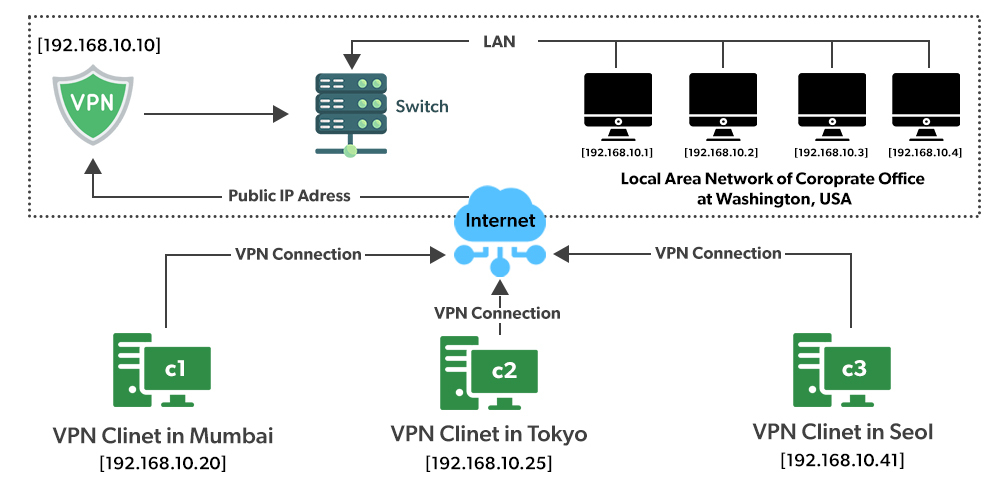
Working Principle of VPN
This ensures your online activities are private, secure, and anonymous.
**Why Should You Use a VPN in 2025?
With **data privacy laws tightening and **government surveillance increasing, using a VPN is no longer optional—it’s **essential. Here are the **key reasons why a VPN is crucial in 2025:
**1. Prevent ISP Tracking & Government Surveillance
ISPs (like AT&T, Comcast, and Vodafone) **track everything you do online—what websites you visit, what you download, and even your location. Governments also collect user data under laws like **the USA’s Patriot Act and the UK’s Investigatory Powers Act.
**With a VPN: Your data is **encrypted, and your ISP cannot monitor or log your browsing activity.
**2. Unblock Geo-Restricted Streaming & Websites
Streaming platforms like **Netflix, Disney+, Hulu, and BBC iPlayer have **region-based content restrictions. Many websites, such as **news platforms, banking services, and gaming servers, also **restrict access based on location.
**With a VPN: You can **change your virtual location by connecting to a server in another country and **bypass geo-blocks effortlessly.
**Example
- Want to watch **US Netflix while traveling in Europe? Just connect to a **US VPN server.
- Access **blocked social media and messaging apps (like WhatsApp, Telegram, or Twitter) in countries with strict censorship, like **China or UAE.
**3. Secure Your Data on Public Wi-Fi (Hotels, Airports, Cafes)
**Public Wi-Fi networks are highly vulnerable to cyberattacks. **Hackers use Wi-Fi sniffing tools to steal passwords, credit card details, and personal information.
**With a VPN: Your data is **encrypted, preventing hackers from intercepting sensitive information.
**Example: If you’re logging into your online banking account on airport Wi-Fi, a VPN protects your financial details.
**4. Prevent Bandwidth Throttling & Improve Internet Speeds
Many ISPs **throttle (slow down) your internet speed when they detect high data usage, such as:
- **Streaming in HD/4K
- **Gaming online
- **Downloading large files (P2P/Torrents)
**With a VPN: Your ISP **cannot detect your activity, ensuring **faster, unrestricted speeds.
**Example: If your ISP limits your speed while watching **YouTube or Netflix, a VPN **prevents throttling and ensures **smooth streaming.
**5. Secure Remote Work & Business Data
With remote work becoming the norm, businesses need **secure VPN connections to protect **confidential company data.
**With a VPN: Employees can securely access **company servers, internal files, and cloud-based tools **without exposing sensitive information.
**Example: Many corporations use **corporate VPNs like **NordLayer, Perimeter 81, and Cisco AnyConnect for secure remote work.
**6. Save Money on Flights, Hotels & Online Shopping
Many online retailers **show different prices based on location. **Airlines, hotel booking sites, and e-commerce platforms adjust prices based on your IP address.
**With a VPN: You can **change your location and find cheaper deals on flights, hotels, and products.
**Example: Search for a flight from a **different country’s VPN server and get **cheaper airfare.
**What Types of VPNs Are Available?
| **VPN Type | **Best For | **Pros | **Cons |
|---|---|---|---|
| **Personal VPN | Privacy, security, streaming | Easy to use, protects online activity | Slower speeds with free VPNs |
| **Corporate VPN | Business security & remote work | Encrypts sensitive data, secure access | Requires IT setup |
| **Free VPN | Occasional use | No cost, easy setup | Data limits, logs user activity |
| **Paid VPN | High security & fast speeds | No logs, fast speeds, unlimited data | Requires subscription |
**Final Verdict: Do You Need a VPN in 2025?
Yes! A VPN is **no longer optional—it’s an **essential tool for protecting your **online privacy, security, and freedom.
- **Want to prevent government surveillance? → Use a VPN.
- **Want to unblock Netflix & restricted content? → Use a VPN.
- **Want to protect your data from hackers? → Use a VPN.
With the increasing risks of **cybercrime, censorship, and online tracking, investing in a reliable **paid VPN is the smartest decision you can make in 2025.