Network Traffic Analysis in Cybersecurity (original) (raw)
Last Updated : 30 Apr, 2026
Network Traffic Analysis (NTA) is the process of monitoring and examining data moving across a network to understand its behavior and performance. It helps security teams detect threats, analyze communication patterns and maintain a secure and reliable network.
- Monitors real-time traffic to identify anomalies
- Detects cyber threats like malware, scans and data exfiltration
- Helps troubleshoot performance issues and bottlenecks
- Provides visibility into user, device and application behavior
- Supports investigations with stored logs and packet data
Implementation of Network Traffic Analysis
Follow these essential steps to effectively monitor, analyze and secure your network traffic.
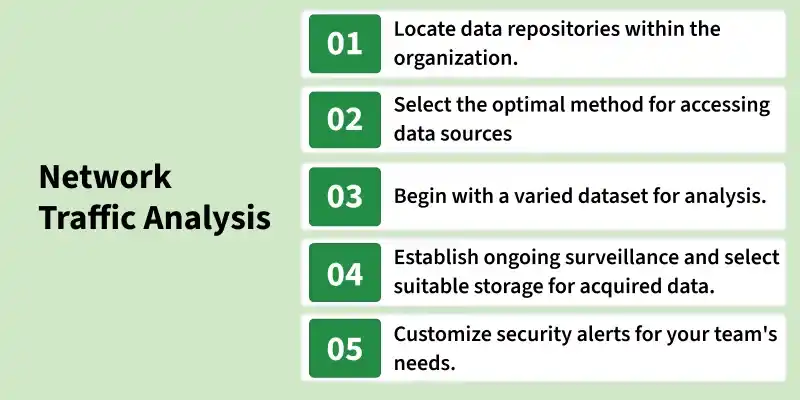
Network Traffic Analysis
- **Traffic Collection: Capture data using network taps, sensors or SPAN ports (packet or flow-based).
- **Continuous Monitoring: Track traffic volume, protocols and communication patterns in real time.
- **Pattern Analysis: Establish normal behavior (baseline) and identify deviations such as unusual IPs or ports.
- **Threat Detection: Apply signatures, heuristics and machine learning models to detect malicious activity.
- **Incident Response: Investigate alerts, block malicious traffic and strengthen defenses.
- **Data Retention: Store logs and packet captures for forensic analysis, compliance and auditing.
Purpose of Monitoring Network Traffic
Monitoring network traffic enables organizations to:
- Detect attacks such as malware, command-and-control activity and reconnaissance scans
- Identify data exfiltration and suspicious outbound traffic
- Monitor access to sensitive systems and critical assets
- Analyze user behavior to detect insider threats or misuse
- Discover and manage devices, services and shadow IT
- Diagnose performance issues like latency, congestion and downtime
- Maintain real-time visibility across the network
These functions make Network Traffic Analysis a vital tool for proactive and effective cybersecurity defense.
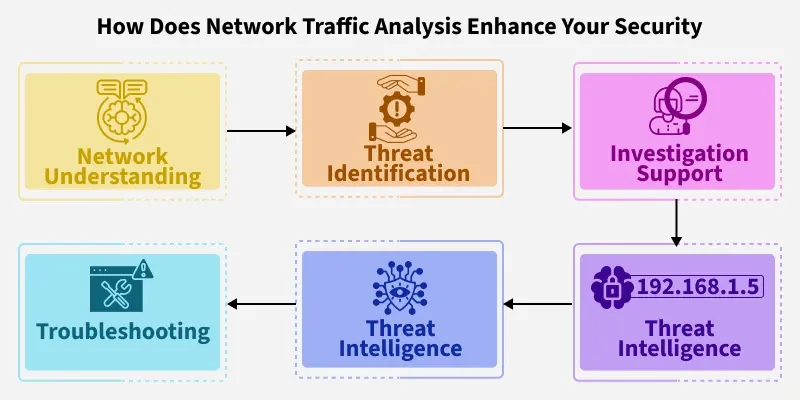
Importance of Network Traffic Analysis
- **Early Threat Detection: Detect anomalies like sudden traffic spikes or odd connection attempts before major damage occurs.
- **Detection of Stealthy Attacks: NTA inspects packet details to reveal threats hiding within normal-looking traffic.
- **Pattern Recognition: Learns recurring behaviors and alerts when suspicious patterns reappear.
- **Data Protection: Monitors who accesses sensitive data and ensures only authorized traffic is allowed.
- **Adaptive Security: As attacker methods evolve, continuous traffic monitoring helps quickly patch new weaknesses.
Modern Trends in Network Traffic Analysis
Modern NTA has evolved beyond traditional monitoring and now includes:
- **AI and Machine Learning: Automatically detect anomalies and unknown threats using behavioral analytics
- **Network Detection and Response (NDR): Combines NTA with automated threat detection and response capabilities
- **Cloud and Hybrid Visibility: Monitors traffic across on-premises, cloud and multi-cloud environments
- **Zero Trust Integration: Supports strict access control by continuously validating network behavior
- **Encrypted Traffic Analysis: Detects threats in encrypted traffic without full decryption
- **East-West Traffic Monitoring: Tracks internal network movement to detect lateral attacks
These tools help security teams capture, analyze and monitor network traffic, detect intrusions and ensure optimal performance across the infrastructure.
**Packet Capture & Analysis
- Wireshark
- tcpdump
- TShark
**Intrusion Detection/Prevention Systems (IDS/IPS)
- Snort
- Suricata
**SIEM Platforms
- Splunk
- IBM QRadar
- Microsoft Sentinel
- ELK Stack (Elasticsearch, Logstash, Kibana)
**Network Performance Monitoring
- SolarWinds
- PRTG Network Monitor
**Flow-Based Analysis
- NetFlow Analyzer
- sFlow/NetFlow collectors
Operational Value of NTA
- Enhances network visibility and situational awareness
- Improves threat detection and response capabilities
- Assists in troubleshooting and performance analysis
- Supports forensic investigations with historical data
- Contributes to threat intelligence through indicators of compromise (IoCs)