DRAM Full Form (original) (raw)
Last Updated : 12 Jul, 2025
Basically, DRAM stands for Dynamic Random Access Memory. It can simply be stated as a sort of memory that one might find in their computer or other electronic devices to store each bit of data within a memory cell. Fundamentally, these cells consist of a capacitor and a transistor, which are MOS-based, thereby making them easier to install, coupled with high storage capacity and cost-effectiveness.
Why is it called "Dynamic"?
By the term "Dynamic," it refers to the need for refreshing data continually. The leak of charge over a period results in a reversal of the bit that was stored from 1 to 0. To avoid losing data, an external memory refresh mechanism must restore the original charge back into the capacitors at stipulated intervals.
Features of DRAM
- DRAM has to have its contents refreshed constantly to maintain data.
- It is cheaper compared to other forms of memory such as SRAM.
- Slower than SRAM.
- Power consumption in the case of DRAM is less than the other memory type but always greater in comparison to the case of SRAM.
- DRAM is physically smaller in comparison to other alternatives.
- It has short data lifetime.
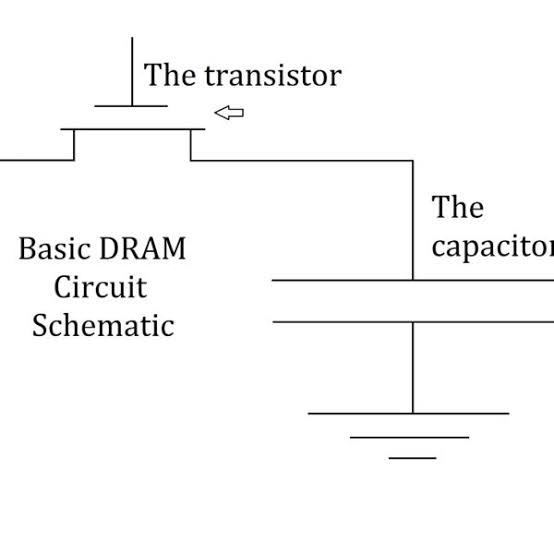
Example Of DRAM
DRAM Usage The main memory of computers is the most salient usage of DRAM technology. Most desktop and laptop RAM modules are based on DRAM technology because of its balance between speed, cost, and capacity.
Advantage of DRAM
- DRAM memory can be deleted and refreshed while running the program.
- It is Cheaper as compare to SRAM.
- It has higher storage capacity. Hence it is used to create larger RAM space system.
- It is simple in structure than SRAM.
Disadvantage of DRAM
- It is comparatively slower than SRAM. Hence it takes more time for accessing data or information.
- It loses data when power is OFF.
- It has higher power consumption compare to SRAM
Conclusion
DRAM is essentially the basic part of a computer system. It has good balance for cost efficiency and large storage area even though it needs constant refreshing. Its structure is much simpler and costs much less than that of SRAM, so it is suitable for main memory, while SRAM, although faster, is used for smaller applications requiring a high speed and more complexity involved at a higher cost.
- All data will be lost.