Cybercrime Causes And Measures To Prevent them (original) (raw)
Last Updated : 13 Apr, 2026
Cyber crime refers to illegal activities carried out using computers, mobile devices or the internet. These crimes involve stealing, hacking or misusing sensitive data such as personal information, bank details or confidential business data.
- Cyber crime is rising rapidly across the world, affecting individuals, businesses and governments.
- Understanding what cybercrime is, its causes, types and prevention methods is crucial to staying safe online.
Causes Of Cyber Crime
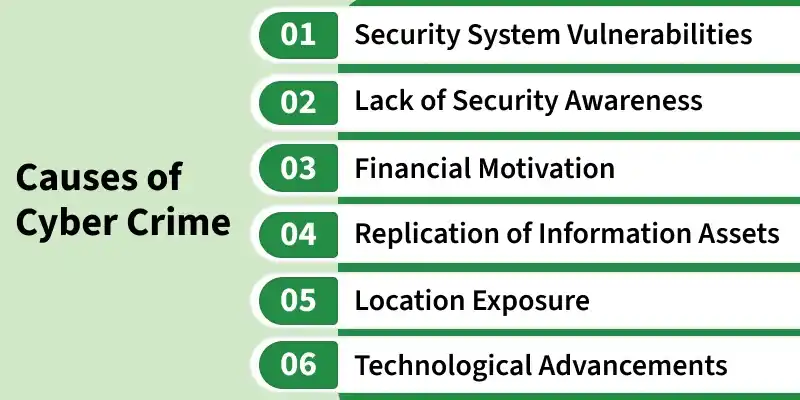
Causes Of Cyber Crime
1. Security System Vulnerabilities
Cybercrimes often occur due to weaknesses in security systems, especially when software is not regularly updated. Poor security practices make it easier for attackers to exploit these gaps and carry out attacks.
**Example: Company continues using outdated software without installing security patches, allowing hackers to exploit known vulnerabilities and access sensitive data.
2. Lack of Security Awareness
Many people underestimate online risks and lack basic cybersecurity knowledge. Simple mistakes like weak passwords or clicking suspicious links make them easy targets for cyberattacks.
**Example: An employee clicks on a fake email link and unknowingly shares login credentials due to lack of awareness about phishing.
3. Financial Motivation
Financial gain is a major driver behind many cybercrimes. Attackers often target sensitive data, bank accounts or use ransomware to extort money. Such profit-driven activities make cybercrime a persistent and growing threat.
**Example: A hacker deploys ransomware on a company’s system and demands payment to restore access to important files.
4. Replication of Information Assets
Content shared on social media can be easily copied or reshared and is difficult to remove once posted. This increases the risk of personal data misuse, so users should avoid sharing sensitive information.
**Example: A user’s personal photos are copied from social media and used to create fake accounts for scams.
5. Location
Sharing location on social media can reveal personal details like your home or routine. This makes it easier for misuse, so limiting location sharing is important for safety.
**Example: A person regularly shares live location updates, allowing strangers to track their routine and exploit the information.
6. Technological Advancements
Rapid technological growth introduces new security risks alongside its benefits. Advanced tools like AI can be misused to create complex cyberattacks, increasing cybercrime risks.
**Example: Cybercriminals use AI to create fake websites or deepfake videos that trick users into sharing sensitive information.
Prevention of Cyber Crime
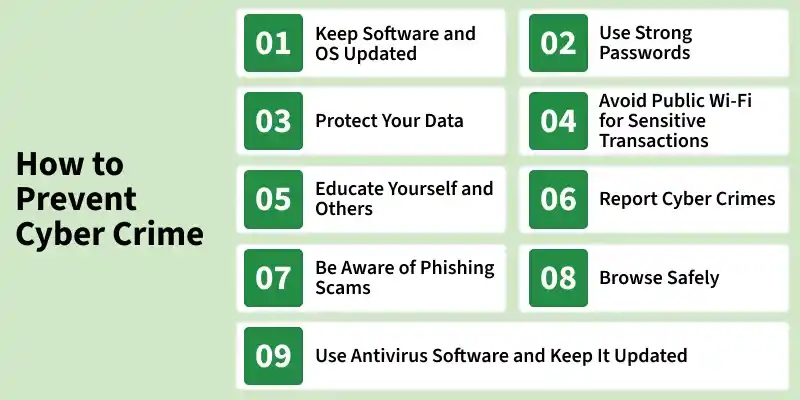
Prevention From Cyber Crime
1. Keep Software and Operating System Updated
Regular updates fix security flaws that hackers often exploit. Ignoring updates can leave your system exposed to known vulnerabilities. Keeping your software current is one of the simplest yet most effective ways to stay protected.
**Example: A user delays a system update and attackers exploit the outdated software to install malware on the device.
2. Use Antivirus Software and Keep it Updated
Reliable antivirus software helps detect and remove malicious threats before they cause harm. However, it’s only effective if it’s kept up to date. Regular scans add an extra layer of protection to your system.
**Example: An updated antivirus detects and blocks a harmful file downloaded from an unknown website before it can damage the system.
3. Use Strong Passwords
Weak passwords are easy targets for attackers. Always use a mix of letters, numbers and special characters to create strong, unique passwords. Avoid reusing the same password across multiple accounts.
**Example: A hacker easily guesses a simple password like “123456,” but fails to crack a strong password with mixed characters.
4. Protect Your Data
Sensitive data should always be handled with care. Use encryption and secure storage methods to prevent unauthorized access. Regular backups also ensure your data is safe in case of an attack.
**Example: A user stores important files in encrypted storage and keeps backups, preventing data loss after a cyberattack.
5. Avoid Public Wi-Fi for Sensitive Transactions
Public Wi-Fi networks are often unsecured and can expose your data to hackers. Avoid accessing banking or personal accounts on such networks. If necessary, use a trusted VPN for added security.
**Example: A person avoids logging into their bank account on public Wi-Fi, preventing potential data theft.
6. Educate Yourself and Others
Awareness is a key defense against cyber threats. Staying informed about common attack methods helps you recognize risks early. Sharing this knowledge also helps others stay safe online.
**Example: An employee recognizes a phishing email during training and reports it instead of clicking the link.
7. Report Cyber Crimes
Reporting cyber incidents helps authorities take action and prevent further damage. It also contributes to tracking and reducing cybercrime. Always report suspicious or harmful activities to the appropriate authorities.
**Example: A victim reports an online fraud case, helping authorities track and stop the cybercriminal.
8. Be Aware of Phishing Scams
Phishing attacks trick users into sharing sensitive information through fake emails or websites. Always verify the source before clicking on links or downloading attachments. Being cautious can prevent major data breaches.
**Example: A user notices a suspicious email and avoids clicking the link, preventing their login details from being stolen.
9. Browse Safely
Avoid visiting untrusted websites or clicking on unknown links. Look for secure websites (HTTPS) before entering any personal information. Safe browsing habits significantly reduce the risk of cyber threats.
**Example: A user checks for “HTTPS” before entering payment details, ensuring the website is secure.