Cybersecurity Framework (original) (raw)
Last Updated : 4 Jun, 2026
Cybersecurity frameworks help organizations protect digital assets and manage evolving cyber risks through a structured and consistent approach. They provide a ready foundation for implementing security practices, enabling more efficient and controlled management of information systems.
- Provides a reusable security foundation, reducing the need to design systems from scratch.
- Helps minimize system complexity through structured implementation.
- Supports efficient use of time and organizational resources.
- Enhances reliability and performance of security measures.
- Promotes scalability of security practices as organizations grow.
Process of Cybersecurity Frameworks
Cybersecurity frameworks aim to strengthen an organization’s security posture through continuous improvement.
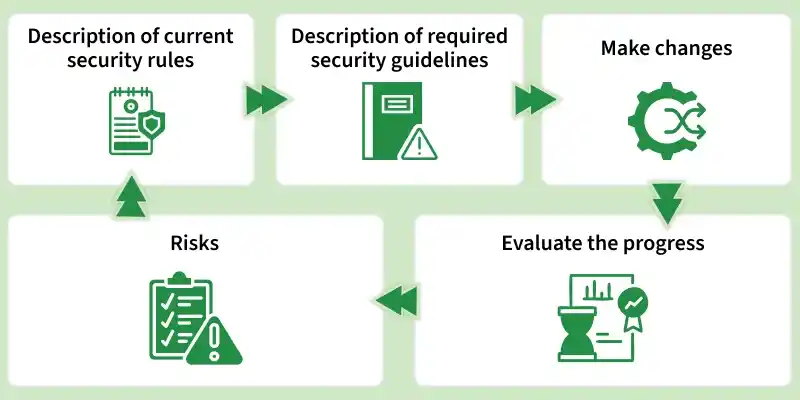
Objectives of Cybersecurity Frameworks
- **Description of Current Security Rules: This step involves understanding the existing security policies, tools and controls in an organization. It helps identify what protections are already in place and how effective they are.
- **Description of Required Security Guidelines: After analyzing the current setup, organizations define what security standards and guidelines are needed. These are based on best practices, compliance requirements and identified gaps.
- **Make Changes: In this stage, necessary improvements and updates are implemented. This may include installing new security tools, updating policies or fixing vulnerabilities.
- **Evaluate the Progress: Organizations then monitor and assess whether the changes are effective. This includes checking performance, testing security measures and ensuring goals are being met.
- **Risks: This step focuses on identifying and analyzing potential threats and vulnerabilities. Understanding risks helps in taking preventive actions to protect systems and data.
Components of Cybersecurity Framework
Every cybersecurity framework consists of three essential components:
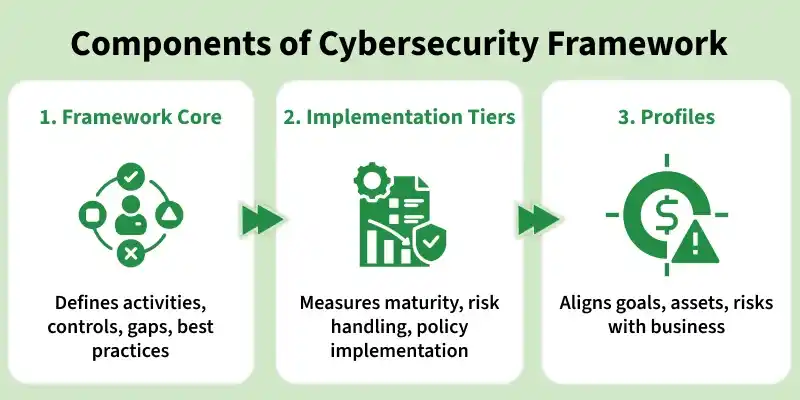
Components of cybersecurity framework
1. Framework Core
Defines security activities, outcomes and best practices.
- Identifies required security controls
- Helps assess gaps between current and desired security levels
2. Implementation Tiers
Describe how well security policies are implemented.
- Covers mission goals, risk tolerance and cost considerations
- Measures maturity of cybersecurity practices
3. Profiles
Organization-specific records aligned with business needs.
- Define goals, assets and risk priorities
- Help customize the framework
Functions of Cybersecurity Frameworks
A cybersecurity framework is built around five core functions that form a continuous security lifecycle
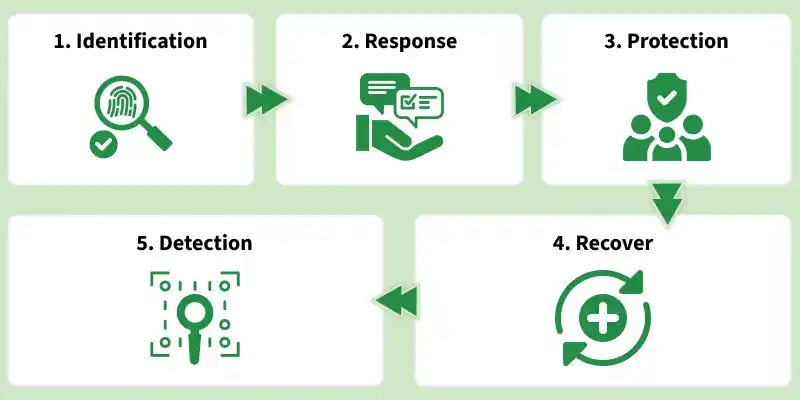
Functions of cybersecurity frameworks
1. Identify
- Understand assets, systems and risks
- Identify vulnerabilities and threats
2. Protect
- Implement safeguards to secure systems
- Includes access control, encryption and policies
3. Detect
- Monitor systems to identify security incidents
- Enables early breach detection
4. Respond
- Take action after a cyber incident
- Includes communication and containment
5. Recover
- Restore systems and operations
- Improve resilience against future attacks
Need for Cybersecurity Framework
- **National Security: Protects sensitive defense and strategic data
- **Digital Economy Growth: Supports India’s expanding digital infrastructure
- **Technological Advancements: Manages risks from AI, IoT and cloud systems
- **Data Protection: Ensures integrity and security of national data
Common Cybersecurity Frameworks
- **NIST Cybersecurity Framework: Risk-based security guidelines for organizations
- **ISO 27001/27002: International standards for information security management
- **FISMA: U.S. federal information security compliance framework
- **SOC 2: Security and privacy controls for service organizations
- **HIPAA: Protects healthcare data and privacy
Types of Cybersecurity Frameworks
1. Risk Management Frameworks
These frameworks help organizations identify, assess and manage cybersecurity risks by evaluating threats and vulnerabilities and applying appropriate controls. They support ongoing monitoring and informed decision-making to reduce security exposure.
**Examples:
- **NIST Risk Management Framework (RMF): Integrates security and risk management into system development.
- **ISO/IEC 27005: Provides guidelines for information security risk management aligned with ISO 27001.
2. Compliance Frameworks
Compliance frameworks ensure organizations meet legal, regulatory and industry security requirements. They help protect sensitive data, avoid penalties and maintain trust through defined rules and audit standards.
**Examples:
- **GDPR: Focuses on data privacy and protection in the EU.
- **HIPAA: Sets standards for protecting healthcare information in the U.S.
3. Control Frameworks
These frameworks provide structured security controls and best practices to protect systems, networks and data. They serve as practical guidelines for strengthening overall cybersecurity posture.
**Examples:
- **CIS Controls: Prioritized actions to defend against common cyber threats.
- **NIST Cybersecurity Framework (CSF): Uses core functions: Identify, Protect, Detect, Respond, Recover.
4. Governance Frameworks
Governance frameworks align cybersecurity and IT strategy with business objectives. They focus on accountability, decision-making structures and effective management of IT resources and risks.
**Examples:
- **COBIT: Framework for IT governance and enterprise management.
- **ITIL: Best practices for IT service management and value delivery.
5. Incident Response Frameworks
These frameworks guide organizations in preparing for, detecting, responding to and recovering from cybersecurity incidents. They help minimize damage and improve resilience.
**Examples:
- **NIST SP 800-61: Computer Security Incident Handling Guide.
- **SANS Incident Response Process: Lifecycle-based approach including preparation, detection, containment, recovery and lessons learned.
Benefits of Cybersecurity Frameworks
- Establishes global security standards for organizations
- Improves collaboration between different systems and industries
- Reduces implementation cost through structured processes
- Provides flexible and reusable security models
- Strengthens overall cyber resilience and risk management