Cascadeless in DBMS (original) (raw)
Last Updated : 12 Jul, 2025
In a Database Management System (DBMS), maintaining data consistency and avoiding unnecessary complications during transaction execution are critical. A cascadeless schedule is a type of transaction schedule that ensures reliability by preventing cascading rollbacks. Cascading rollbacks occur when the failure of one transaction forces the rollback of other dependent transactions, leading to potential data loss and system inefficiencies.
In this article, we will explore the concept of cascadeless schedules, their significance in DBMS, and how they contribute to efficient transaction management. We will also discuss their practical implementation and provide examples to illustrate their importance in maintaining database integrity.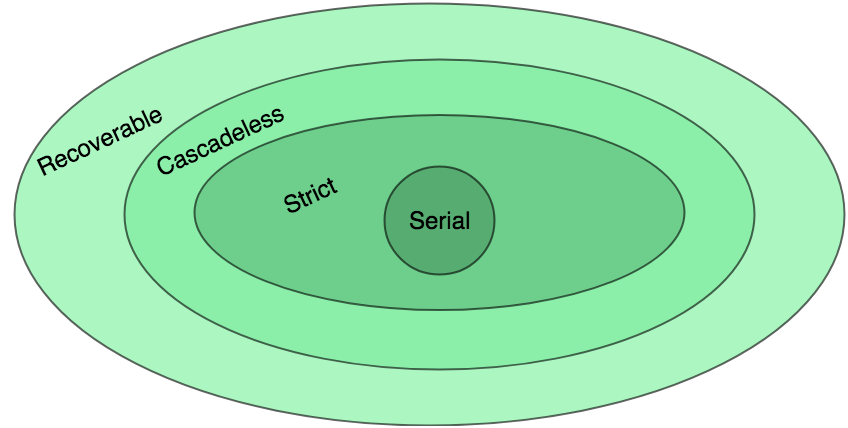
Cascading in DBMS
Cascading refers to a situation where the failure of one transaction causes a chain reaction of rollbacks in other dependent transactions. This happens because the dependent transactions rely on data or changes made by the failed transaction. If the changes are rolled back, the dependent transactions also need to roll back to maintain consistency.
How Cascading Happens?
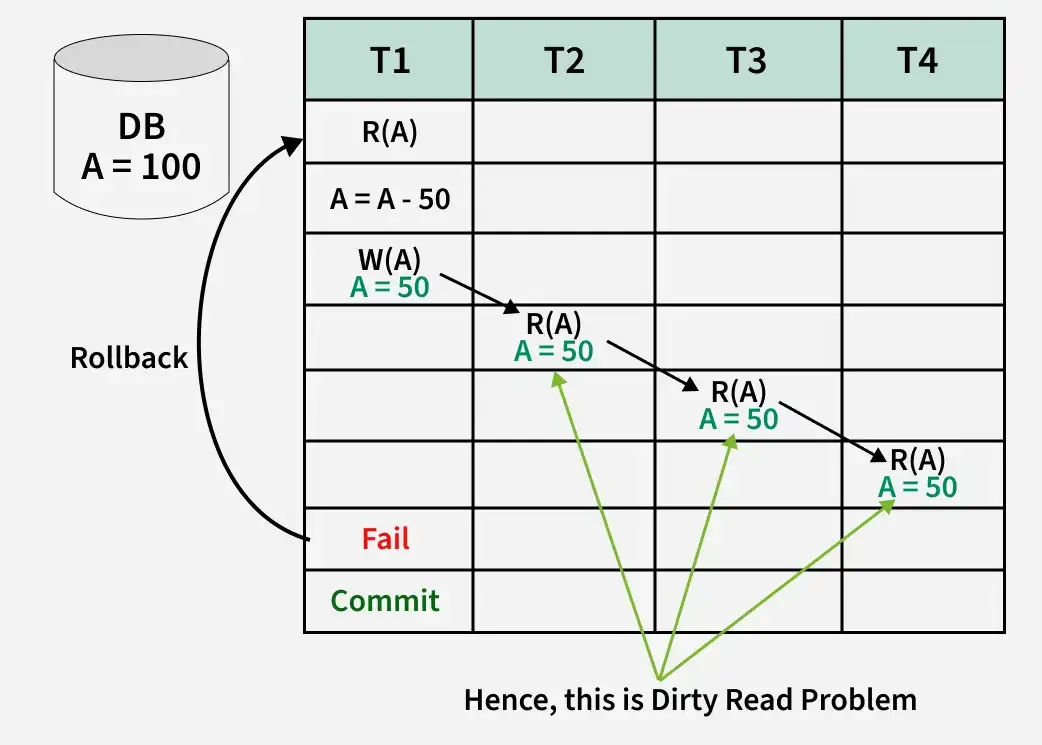
Cascading occurs when a transaction reads uncommitted data (also called dirty data) from another transaction. If the first transaction fails or is rolled back, the data read by the second transaction becomes invalid, forcing the rollback of the dependent transaction as well.
Here,
Transaction 12 depends on transaction T1.
Transaction T3 depends on transaction T2.
Transaction T4 depends on transaction T3.
In this schedule,
The failure of transaction T1 causes the transaction T2 to rollback.
The rollback of transaction T2 causes the transaction T3 to rollback.
The rollback of transaction 13 causes the transaction T4 to rollback.
Problems Due to Cascading in DBMS
Cascading in a DBMS occurs when a transaction failure leads to a chain reaction of rollbacks in other dependent transactions. This situation arises when transactions access or rely on uncommitted changes made by another transaction. Here are the major problems caused by cascading:
1. **Cascading Rollbacks
- If in a schedule, failure of one transaction causes several other dependent transactions to rollback or abort, then such a schedule is called as a Cascading Rollback or Cascading Abort or Cascading Schedule. It simply leads to the wastage of CPU time.
These Cascading Rollbacks occur because of Dirty Read problems. - When a Transaction reads data from uncommitted write in another transaction, then it is known as _Dirty Read. If that writing transaction failed, and that written data may updated again. Therefore, this causes Dirty Read Problem.
Read more about Cascading Rollbacks.
2. **Data Inconsistency
- Cascading leads to inconsistencies as multiple transactions are interrupted and rolled back.
- Partially processed data can leave the database in an invalid state if not managed carefully.
3. **Loss of Progress
- All dependent transactions lose their progress due to cascading rollbacks, even if they were not directly involved in the failure.
- This leads to wasted computational effort and resources.
What is a Cascadeless Schedule in DBMS?
A cascadeless schedule is a type of transaction schedule in a database where no transaction is allowed to read data that has been modified by another transaction until that transaction has either committed or aborted. This ensures that transactions only work with stable, reliable data, avoiding problems caused by uncommitted changes
**How a Cascadeless Schedule Works?
- When a transaction modifies a data item, other transactions are restricted from accessing (reading) that data until the first transaction has finalized its changes.
- This means the data is only accessible after the transaction has either:
- **Committed: Confirmed and saved its changes permanently.
- **Aborted: Rolled back its changes, returning the data to its previous state.
By enforcing this rule, cascadeless schedules prevent situations where one transaction depends on uncommitted changes from another, which could lead to cascading rollbacks if the first transaction fails.
**NOTE:
- Cascadeless schedule allows only committed read operations.
- However, it allows uncommitted write operations.
Importance of Cascadeless Schedules in Transaction
Cascadeless schedules plays a crucial role in managing transactions effectively in a Database Management System (DBMS). They ensure a safe and consistent environment for executing transactions, which is vital for maintaining database reliability. Here are the key reasons why cascadeless schedules are important in transaction management:
1. **Prevention of Cascading Rollbacks
- Cascadeless schedules avoid cascading rollbacks, which occur when the failure of one transaction causes dependent transactions to roll back.
- By ensuring that a transaction can only read committed data, the system eliminates the risk of chain reactions triggered by failed transactions.
2. **Ensures Data Consistency
- Transactions working with uncommitted data can lead to inconsistencies if the data is rolled back.
- Cascadeless schedules ensure that all transactions only access committed and reliable data, preserving database integrity.
3. **Simplifies Recovery
- In the event of a transaction failure, only the failed transaction needs to be rolled back.
- Other transactions, which are not dependent on uncommitted data, can continue execution, simplifying recovery procedures.
To Read about Recoverability in DBMS Refer, Here.
Conclusion
Cascadeless schedules are important in DBMS because they help maintain data consistency and prevent problems like cascading rollbacks. By ensuring that transactions only work with committed data, they make the database more reliable and easier to manage. This approach also simplifies recovery when a transaction fails, as it avoids affecting other transactions unnecessarily.
Using cascadeless schedules, along with techniques like strict locking and proper transaction management, ensures that the database runs smoothly and handles multiple transactions efficiently. Overall, cascadeless schedules are a key part of keeping databases consistent, reliable, and easy to use.