Introduction to Clampers (original) (raw)
Last Updated : 23 Jul, 2025
Clamper circuits are essential in electronic circuits because they allow signals to be changed in voltage levels without altering the shape of their waveforms. These circuits are used in many different contexts, such as voltage regulation and signal processing, to modify the location of the signal.
**What is a Clamper?
A Clamper circuit is designed to add a DC level to an AC signal, shifting the entire signal waveform either upwards or downwards. Clamper shift an input signal by an amount defined by an independent voltage source. Typically, clamper circuits use a combination of diodes, capacitors, and sometimes resistors to achieve this effect. Clampers are also know as dc restores or clamped capacitors. Clampers are useful in many applications where adjusting the signal level is necessary for further processing or protection.
**Types of Clamper Circuits
Clamper circuits come in several varieties, each suited for different applications. The most common types include:
**Positive Clampers
Positive clamping circuit clamps the input signal to the +ve Dc level i.e. above the zero level.
**Negative Clampers
Negative clamping circuit clamps the input signal to the -ve Dc level i.e. below the zero level.
**Biased Clampers
A biased clamper allows a waveform to be shifted above (or below) a dc reference other than 0 V.
By using a voltage source and resistor, the clamper can be biased to bind the output voltage to a different value.
The voltage supplied to the resistor will be equal to the offset from 0.7V (assuming an Si diode) in the case of either a positive or negative clamper - the clamper type will determine the direction of the offset..
Working Principle of Clamper Circuits
Clamper circuits operate by charging a capacitor to the peak value of the input signal during one half of the waveform cycle. The diode allows current to flow in a specific direction, charging the capacitor. The stored charge then shifts the waveform up or down based on the clamper’s configuration.
**Positive Clampers
- During the negative half-cycle of the input signal, the diode is forward biased, thus conducts and acts like a short circuit. The output Vo -> 0 volts. The capacitor is charged ton the peak value of input Vm and it behaves like a battery.
- During the positive half-cycle, the diode becomes reverse-biased, the diode does not conduct and acts as a open circuit. Capacitor can only discharge thought the R(load). Since the R(load) is high resistance, the capacitor discharges very little each period.
- Appling KVL across the loop 1 (KVL of maximum positive input, Vin = +Vm)
Vi + Vm -Vout = 0
- Hence the out put voltage,
Vout = Vin(peak) +Vm = Vm +Vm
this give positive clamp voltage. Vo = Vm + Vm = 2Vm.
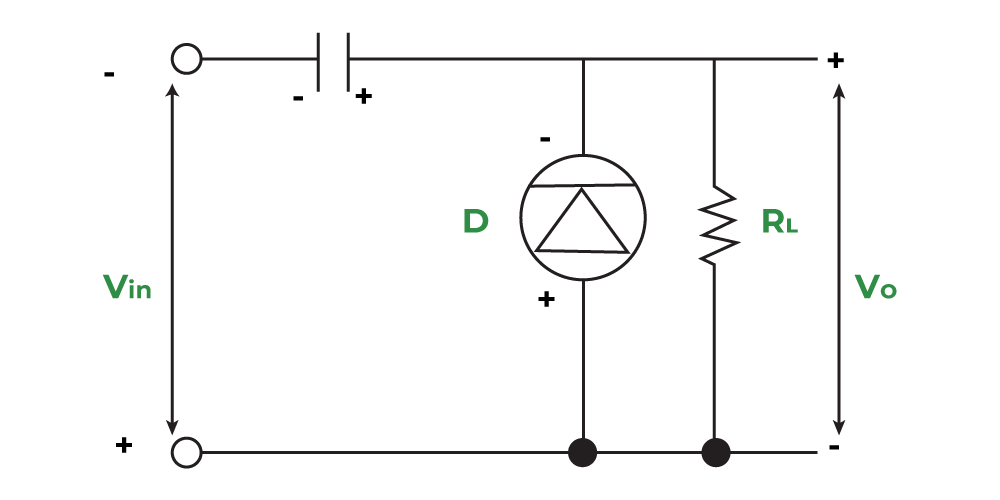
positive clamper circuit
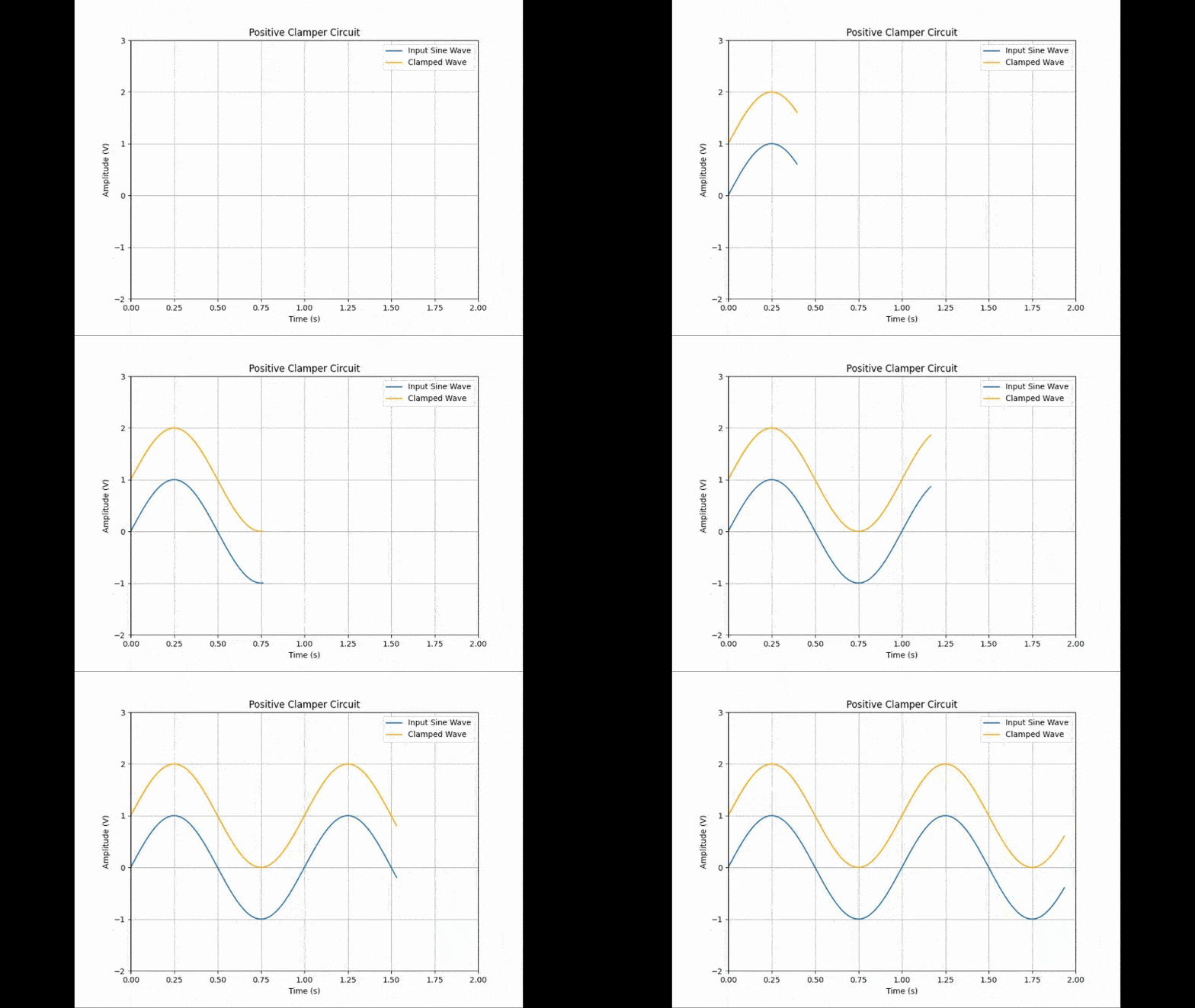
output waveform
**Negative Clampers
During the negative half-cycle of the input signal, the diode is forward biased, thus conducts and acts like a short circuit.. The capacitor is charged ton the peak value of input Vm and it behaves like a battery. During this interval the output Vo which is taken across the short circuit will be zero.
- During the negative half cycle of the input signal, the diode does not conduct and act as an open circuit.
- The output voltage can be found by applying KVL (KVL at maximum negative input, Vin = -Vm).
Vm - Vm - Vo = 0
Vo = -2Vm
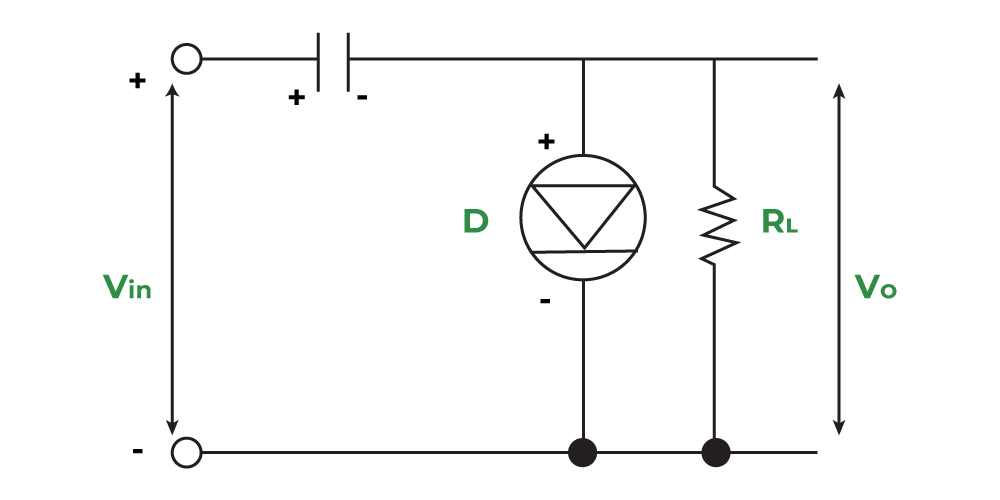
negative clamper circuit
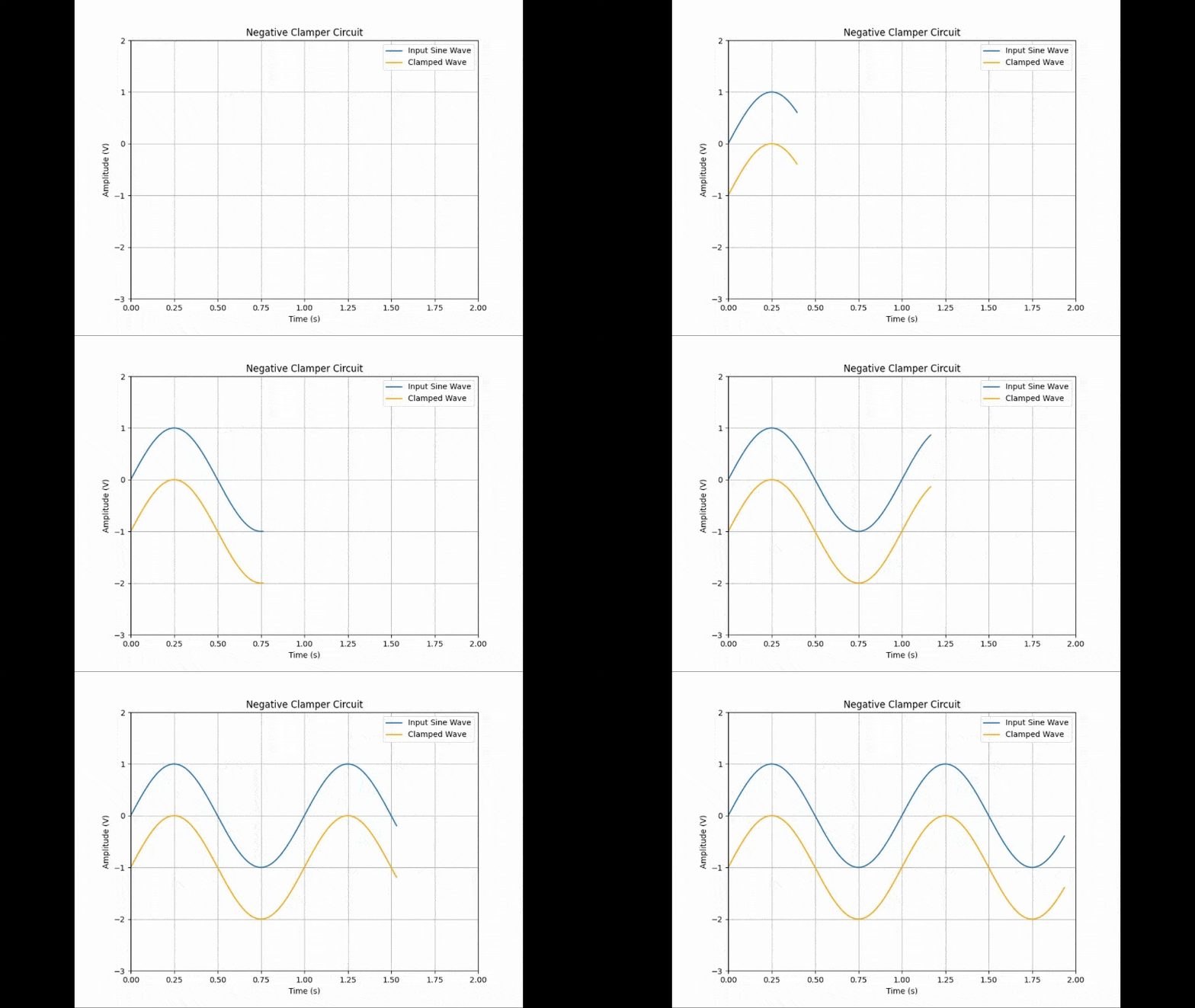
output waveform
Mathematical Representation
The mathematical equation representing the output of a clamper circuit can be expressed as:
**Vout(t) = Vin(t) + Vshift
Where:
V out(t) -> output voltage at time t.
Vin(t) -> input voltage at time t.
V shift is the voltage shift introduced by the clamper, determined by the capacitor and diode configuration.
**Output Waveforms
Different clamper circuits produce various output waveforms based on the type of clamping and input signal:
**Half-Wave Rectified Sine Wave
Half Wave rectifier sine wave is produced by applying a clamper to a sine wave, resulting in a waveform with only positive or negative peaks.

Half-Wave Rectified
**Full-Wave Rectified Wave
Full Wave Rectifier achieved using a combination of clamper and rectifier circuits to create a waveform that is fully positive or negative.

Full-Wave Rectified
**Benefits of Clampers
- Signal conditioning: Gets analog signals ready for digital conversion or processing.
- Voltage regulation: By clamping signals, it keeps voltage levels steady.
- Protection: Prevents high voltage from damaging delicate components.
Drawbacks **of Clampers
- Component Dependency: The quality of the capacitor and diode affects performance.
- Design Complexity: Because accurate DC biasing is required, biased clampers can have complicated designs.
- Possible Distortion: A signal may be distorted by clampers that are not adjusted correctly.
Usages for Clamper Circuits
Clamper circuits are required in numerous electronic applications, such as:
- Signal conditioning involves preparing signals for conversion or additional processing.
- Voltage Regulation: They keep power supplies voltage levels stable.
- Protection circuits: They provide component protection against spikes in voltage.
- Power supplies: They aid in regulating the amplitudes and waveform shapes of converters.
Conclusion
In electronic systems, clamper circuits are necessary for efficiently changing the voltage levels of signals. They are useful in a variety of applications, such as power regulation and signal processing, due to their capacity to modify signal locations. Anyone who works with electronics and circuit design has to understand these devices and how they operate.