Add Two Numbers in a Linked List (original) (raw)
Given two non-negative integers represented as linked lists with heads head1 and head2, where each node contains a single digit, return a new linked list representing their sum.
**Note: The input lists may contain leading zeros, but the resulting sum list must not contain any leading zeros.
**Examples:
**Input:
**Explanation: Sum of 123 and 999 is 1122.
**Input:
**Output: 7 -> 0
**Explanation: Sum of 63 and 7 is 70.
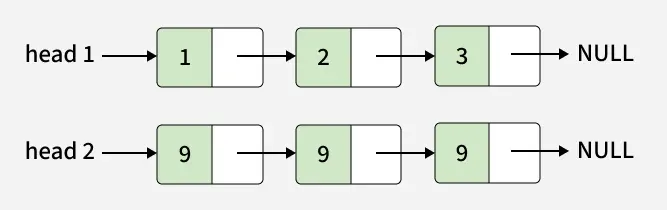
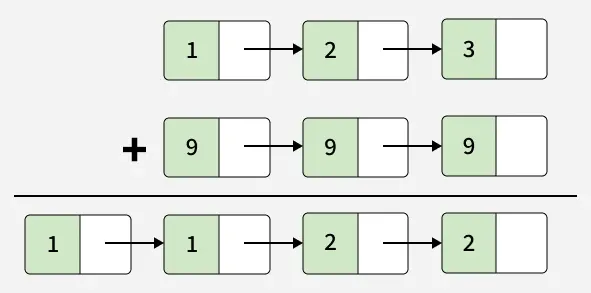
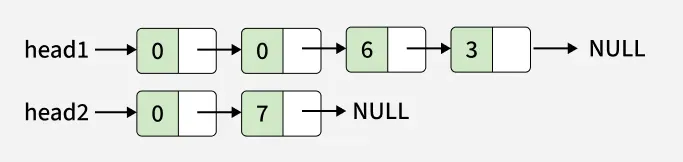
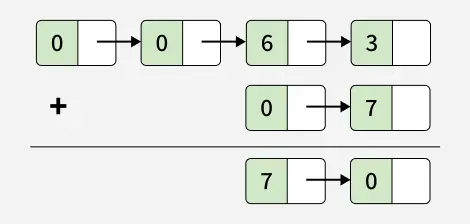
Table of Content
- [Naive Approach] By creating a new list - O(m + n) Time and O(max(m, n)) Space
- [Expected Approach] By storing sum on the longer list - O(m + n) Time and O(1) Space
- [Other Approach] Using Recursion - O(m + n) Time and O(max(m, n)) Space
[Naive Approach] By creating a new list - O(m + n) Time and O(max(m, n)) Space
To sum two linked lists, start by creating an empty linked list, say result, for the sum. Reverse both original linked lists to start from the least significant digit.
Use two pointers to traverse the reversed lists simultaneously. For each pair of nodes, compute their sum and if the sum exceeds 9, store the **remainder (sum modulo 10) in the new node and forward the carry to the next pair of nodes. Append each new node to result.
Continue until both lists are fully traversed, handling any remaining nodes from the longer list and carrying over any final carry. Finally, reverse the result linked list to get the sum of the two linked list.
C++ `
#include using namespace std;
class Node { public: int data; Node *next; Node(int val) { data = val; next = nullptr; } };
// Function to reverse the linked list Node *reverse(Node *head) { Node *prev = nullptr, *curr = head, *next;
while (curr != nullptr) {
    next = curr->next;
    curr->next = prev;
    prev = curr;
    curr = next;
}
return prev;
}
// Function to trim leading zeros in linked list Node trimLeadingZeros(Node head) { while(head->next != nullptr && head->data == 0) head = head->next; return head; }
// Function to add two numbers represented by linked list Node *addTwoLists(Node *num1, Node *num2) { Node *res = nullptr, *curr = nullptr; int carry = 0;
num1 = trimLeadingZeros(num1);
num2 = trimLeadingZeros(num2);

num1 = reverse(num1);
num2 = reverse(num2);

// Iterate till either num1 is not empty or num2 is
// not empty or carry is greater than 0
while (num1 != nullptr || num2 != nullptr || carry != 0) {
    int sum = carry;

    if (num1 != nullptr) {
        sum += num1->data;
        num1 = num1->next;
    }

    if (num2 != nullptr) {
        sum += num2->data;
        num2 = num2->next;
    }

    Node* newNode = new Node(sum % 10);

    carry = sum / 10;

      // If this is the first node, then make this node
      // as the head of the resultant linked list
      if(res == nullptr) {
        res = newNode;
          curr = newNode;
    }
      else {

          // Append new node to resultant linked list
          // and move to the next node
        curr->next = newNode;
        curr = curr->next;
    }
}

return reverse(res);
}
void printList(Node *head) { Node *curr = head; while (curr != nullptr) { cout << curr->data; if(curr->next != NULL){ cout << " -> "; } curr = curr->next; } cout << "\n"; }
int main() {
Node *num1 = new Node(1);
num1->next = new Node(2);
num1->next->next = new Node(3);

Node *num2 = new Node(9);
num2->next = new Node(9);
num2->next->next = new Node(9);

Node *sum = addTwoLists(num1, num2);
printList(sum);

return 0;
}
C
#include <stdio.h>
struct Node { int data; struct Node *next; };
struct Node *createNode(int val);
// Function to reverse the linked list struct Node *reverse(struct Node *head) { struct Node *prev = NULL, *curr = head, *next;
while (curr != NULL) {
    next = curr->next;
    curr->next = prev;
    prev = curr;
    curr = next;
}
return prev;
}
// Function to trim leading zeros in linked list struct Node* trimLeadingZeros(struct Node* head) { while (head->next != NULL && head->data == 0) head = head->next; return head; }
// Function to add two numbers represented by linked list struct Node *addTwoLists(struct Node *num1, struct Node *num2) { struct Node *res = NULL, *curr = NULL; int carry = 0;
num1 = trimLeadingZeros(num1);
num2 = trimLeadingZeros(num2);

num1 = reverse(num1);
num2 = reverse(num2);

// Iterate till either num1 is not empty or num2 is
// not empty or carry is greater than 0
while (num1 != NULL || num2 != NULL || carry != 0) {
    int sum = carry;

    if (num1 != NULL) {
        sum += num1->data;
        num1 = num1->next;
    }

    if (num2 != NULL) {
        sum += num2->data;
        num2 = num2->next;
    }

    struct Node* newNode = createNode(sum % 10);

    carry = sum / 10;

    // If this is the first node, then make this node
    // as the head of the resultant linked list
    if (res == NULL) {
        res = newNode;
        curr = newNode;
    }
      else {

          // Append new node to resultant linked list
        // and move to the next node
        curr->next = newNode;
        curr = curr->next;
    }
}

return reverse(res);
}
void printList(struct Node *head) { struct Node *curr = head; while (curr != NULL) { printf("%d", curr->data); if(curr->next != NULL){ printf(" -> "); } curr = curr->next; } printf("\n"); }
struct Node *createNode(int val) { struct Node *node = (struct Node *)malloc(sizeof(struct Node)); node->data = val; node->next = NULL; return node; }
int main() {
struct Node *num1 = createNode(1);
num1->next = createNode(2);
num1->next->next = createNode(3);

struct Node *num2 = createNode(9);
num2->next = createNode(9);
num2->next->next = createNode(9);

struct Node *sum = addTwoLists(num1, num2);
printList(sum);

return 0;
}
Java
class Node { int data; Node next;
Node(int val) {
    data = val;
    next = null;
}
}
class GfG {
// Function to reverse the linked list
static Node reverse(Node head) {
    Node prev = null;
    Node curr = head;
    Node next;

    while (curr != null) {
        next = curr.next;
        curr.next = prev;
        prev = curr;
        curr = next;
    }
    return prev;
}

// Function to trim leading zeros in linked list
static Node trimLeadingZeros(Node head) {
    while (head != null && head.data == 0) {
        head = head.next;
    }
    return head;
}

// Function to add two numbers represented by linked list
static Node addTwoLists(Node num1, Node num2) {
    Node res = null;
    Node curr = null;
    int carry = 0;

    num1 = trimLeadingZeros(num1);
    num2 = trimLeadingZeros(num2);

    num1 = reverse(num1);
    num2 = reverse(num2);

    // Iterate till either num1 is not empty or num2 is
    // not empty or carry is greater than 0
    while (num1 != null || num2 != null || carry != 0) {
        int sum = carry;

        if (num1 != null) {
            sum += num1.data;
            num1 = num1.next;
        }

        if (num2 != null) {
            sum += num2.data;
            num2 = num2.next;
        }

        Node newNode = new Node(sum % 10);

        carry = sum / 10;

        // If this is the first node, then make this node
        // as the head of the resultant linked list
        if (res == null) {
            res = newNode;
            curr = newNode;
        } else {

            // Append new node to resultant linked list
            // and move to the next node
            curr.next = newNode;
            curr = curr.next;
        }
    }

    return reverse(res);
}

static void printList(Node head) {
    Node curr = head;
    while (curr != null) {
        System.out.print(curr.data);
        if(curr.next != null){
            System.out.print(" -> ");
        }
        curr = curr.next;
    }
    System.out.println();
}

public static void main(String[] args) {

    Node num1 = new Node(1);
    num1.next = new Node(2);
    num1.next.next = new Node(3);

    Node num2 = new Node(9);
    num2.next = new Node(9);
    num2.next.next = new Node(9);

    Node sum = addTwoLists(num1, num2);
    printList(sum);
}
}
Python
class Node: def init(self, val): self.data = val self.next = None
function to reverse the linked list
def reverse(head): prev = None curr = head
while curr is not None:
    nextNode = curr.next
    curr.next = prev
    prev = curr
    curr = nextNode

return prev
function to trim leading zeros in linked list
def trimLeadingZeros(head): while head and head.data == 0: head = head.next return head
Function to add two numbers represented by linked list
def addTwoLists(num1, num2): res = None curr = None carry = 0
num1 = trimLeadingZeros(num1)
num2 = trimLeadingZeros(num2)

num1 = reverse(num1)
num2 = reverse(num2)

# Iterate till either num1 is not empty or num2 is
# not empty or carry is greater than 0
while num1 is not None or num2 is not None or carry != 0:
    sumValue = carry

    if num1 is not None:
        sumValue += num1.data
        num1 = num1.next

    if num2 is not None:
        sumValue += num2.data
        num2 = num2.next

    newNode = Node(sumValue % 10)

    carry = sumValue // 10

    # If this is the first node, then make this node
    # as the head of the resultant linked list
    if res is None:
        res = newNode
        curr = newNode
    else:
        # Append new node to resultant linked list
        # and move to the next node
        curr.next = newNode
        curr = curr.next

return reverse(res)
def printList(head): curr = head while curr is not None: print(curr.data, end="") if curr.next != None: print(" -> ", end="") curr = curr.next print()
if name == "main":
num1 = Node(1)
num1.next = Node(2)
num1.next.next = Node(3)

num2 = Node(9)
num2.next = Node(9)
num2.next.next = Node(9)

sumList = addTwoLists(num1, num2)
printList(sumList)
C#
using System;
class Node { public int data; public Node next;
public Node(int val) {
    data = val;
    next = null;
}
}
class GfG {
  // Function to reverse the linked list
static Node reverse(Node head) {
    Node prev = null;
    Node curr = head;
    Node next;

    while (curr != null) {
        next = curr.next;
        curr.next = prev;
        prev = curr;
        curr = next;
    }
    return prev;
}

// function to trim leading zeros in linked list
static Node trimLeadingZeros(Node head) {
    while (head != null && head.data == 0) {
        head = head.next;
    }
    return head;
}

// Function to add two numbers represented by linked list
static Node addTwoLists(Node num1, Node num2) {
    Node res = null;
    Node curr = null;
    int carry = 0;

    num1 = trimLeadingZeros(num1);
    num2 = trimLeadingZeros(num2);

    num1 = reverse(num1);
    num2 = reverse(num2);

    // Iterate till either num1 is not empty or num2 is
    // not empty or carry is greater than 0
    while (num1 != null || num2 != null || carry != 0) {
        int sum = carry;

        if (num1 != null) {
            sum += num1.data;
            num1 = num1.next;
        }

        if (num2 != null) {
            sum += num2.data;
            num2 = num2.next;
        }

        Node newNode = new Node(sum % 10);

        carry = sum / 10;

        // If this is the first node, then make this node
        // as the head of the resultant linked list
        if (res == null) {
            res = newNode;
            curr = newNode;
        }
        else {

            // Append new node to resultant linked list
            // and move to the next node
            curr.next = newNode;
            curr = curr.next;
        }
    }

    return reverse(res);
}

static void printList(Node head) {
    Node curr = head;
    while (curr != null) {
        Console.Write(curr.data);
        if(curr.next != null){
            Console.Write(" -> ");
        }
        curr = curr.next;
    }
    Console.WriteLine();
}

static void Main() {

    Node num1 = new Node(1);
    num1.next = new Node(2);
    num1.next.next = new Node(3);

    Node num2 = new Node(9);
    num2.next = new Node(9);
    num2.next.next = new Node(9);

    Node sum = addTwoLists(num1, num2);
    printList(sum);
}
}
JavaScript
class Node { constructor(val) { this.data = val; this.next = null; } }
// Function to reverse the linked list function reverse(head) { let prev = null; let curr = head; let next;
while (curr !== null) {
    next = curr.next;
    curr.next = prev;
    prev = curr;
    curr = next;
}
return prev;
}
// function to trim leading zeros in linked list function trimLeadingZeros(head) { while (head !== null && head.data === 0) { head = head.next; } return head; }
// Function to add two numbers represented by linked list function addTwoLists(num1, num2) { let res = null; let curr = null; let carry = 0;
num1 = trimLeadingZeros(num1);
num2 = trimLeadingZeros(num2);

num1 = reverse(num1);
num2 = reverse(num2);

// Iterate till either num1 is not empty or num2 is
// not empty or carry is greater than 0
while (num1 !== null || num2 !== null || carry !== 0) {
    let sum = carry;

    if (num1 !== null) {
        sum += num1.data;
        num1 = num1.next;
    }

    if (num2 !== null) {
        sum += num2.data;
        num2 = num2.next;
    }

    let newNode = new Node(sum % 10);

    carry = Math.floor(sum / 10);

    // If this is the first node, then make this node
    // as the head of the resultant linked list
    if (res === null) {
        res = newNode;
        curr = newNode;
    }
    else {
        // Append new node to resultant linked list
        // and move to the next node
        curr.next = newNode;
        curr = curr.next;
    }
}

return reverse(res);
}
function printList(head) { let curr = head; let result = ''; while (curr !== null) { result += curr.data; if(curr.next !== null){ result += " -> "; } curr = curr.next; } console.log(result.trim()); }
// Driver Code
let num1 = new Node(1); num1.next = new Node(2); num1.next.next = new Node(3);
let num2 = new Node(9); num2.next = new Node(9); num2.next.next = new Node(9);
let sum = addTwoLists(num1, num2); printList(sum);
`
[Expected Approach] By storing sum on the longer list - O(m + n) Time and O(1) Space
The idea is to first reverse both linked lists so that addition can be performed starting from the least significant digit. We then iterate through both lists simultaneously, adding corresponding digits along with any carry. For each sum, we create a new node and insert it at the front of the result list.
After processing all nodes, if a carry remains, we add a new node for it. Finally, the resulting list represents the sum without any leading zeros.
Illustrations:
C++ `
#include using namespace std;
class Node { public: int data; Node *next; Node(int val) { data = val; next = nullptr; } };
// Function to reverse a linked list Node* reverse(Node* head) { Node *prev = nullptr, *curr = head, *next; while (curr != nullptr) { next = curr->next; curr->next = prev; prev = curr; curr = next; } return prev; }
Node* addTwoLists(Node* head1, Node* head2) {
// Reverse both lists to start from least significant digit
head1 = reverse(head1);
head2 = reverse(head2);

Node* sum = NULL;
int carry = 0;

// Traverse both lists until all digits and carry are processed
while (head1 != NULL || head2 != NULL || carry != 0) {
    int newVal = carry;

    if (head1) {
        newVal += head1->data;
        head1 = head1->next;
    }

    if (head2) {
        newVal += head2->data;
        head2 = head2->next;
    }

    carry = newVal / 10;
    newVal %= 10;

    // Insert the new digit at the front of the result list
    Node* newNode = new Node(newVal);
    newNode->next = sum;
    sum = newNode;
}

// Remove leading zeros, if any
while (sum != NULL && sum->data == 0) {
    Node* temp = sum;
    sum = sum->next;
    delete temp;
}

// If result is empty, return single node with 0
if (sum == NULL) {
    return new Node(0);
}
return sum;
}
void printList(Node *head) { Node *curr = head; while (curr != nullptr) { cout << curr->data; if(curr->next != NULL){ cout << " -> "; } curr = curr->next; } cout << "\n"; }
int main() {
Node *num1 = new Node(1);
num1->next = new Node(2);
num1->next->next = new Node(3);

Node *num2 = new Node(9);
num2->next = new Node(9);
num2->next->next = new Node(9);

Node *sum = addTwoLists(num1, num2);
printList(sum);

return 0;
}
C
#include <stdio.h>
struct Node { int data; struct Node *next; };
struct Node *createNode(int val);
// Function to create a new node struct Node* newNode(int data) { struct Node* node = (struct Node*)malloc(sizeof(struct Node)); node->data = data; node->next = NULL; return node; }
// Function to reverse a linked list struct Node* reverse(struct Node* head) { struct Node *prev = NULL, *curr = head, *next; while (curr != NULL) { next = curr->next; curr->next = prev; prev = curr; curr = next; } return prev; }
// Function to add two linked lists struct Node* addTwoLists(struct Node* head1, struct Node* head2) {
// Reverse both lists to start
// from least significant digit
head1 = reverse(head1);
head2 = reverse(head2);

struct Node* sum = NULL;
int carry = 0;

// Traverse both lists until all
// digits and carry are processed
while (head1 != NULL || head2 != NULL || carry != 0) {
    int newVal = carry;

    if (head1) {
        newVal += head1->data;
        head1 = head1->next;
    }
    if (head2) {
        newVal += head2->data;
        head2 = head2->next;
    }

    carry = newVal / 10;
    newVal %= 10;

    // Insert the new digit at the front of the result list
    struct Node* node = newNode(newVal);
    node->next = sum;
    sum = node;
}

// Remove leading zeros, if any
while (sum != NULL && sum->data == 0) {
    struct Node* temp = sum;
    sum = sum->next;
    free(temp);
}

// If result is empty, return single node with 0
if (sum == NULL) {
    return newNode(0);
}
return sum;
} void printList(struct Node *head) { struct Node *curr = head; while (curr != NULL) { printf("%d", curr->data); if(curr->next != NULL) printf(" -> "); curr = curr->next; } printf("\n"); }
struct Node *createNode(int val) { struct Node *node = (struct Node *)malloc(sizeof(struct Node)); node->data = val; node->next = NULL; return node; }
int main() {
struct Node *num1 = createNode(1);
num1->next = createNode(2);
num1->next->next = createNode(3);

struct Node *num2 = createNode(9);
num2->next = createNode(9);
num2->next->next = createNode(9);

struct Node *sum = addTwoLists(num1, num2);
printList(sum);

return 0;
}
Java
class Node { int data; Node next;
Node(int val) {
    data = val;
    next = null;
}
}
class GfG {
// Function to reverse the linked list
static Node reverse(Node head) {
    Node prev = null, curr = head, next = null;
    while (curr != null) {
        next = curr.next;
        curr.next = prev;
        prev = curr;
        curr = next;
    }
    return prev;
}

static Node addTwoLists(Node head1, Node head2) {

    // Reverse both lists to start
    // from least significant digit
    head1 = reverse(head1);
    head2 = reverse(head2);

    Node sum = null;
    int carry = 0;

    // Traverse until both lists
    // and carry are processed
    while (head1 != null || head2 != null || carry > 0) {
        int newVal = carry;

        if (head1 != null) {
            newVal += head1.data;
            head1 = head1.next;
        }
        if (head2 != null) {
            newVal += head2.data;
            head2 = head2.next;
        }

        carry = newVal / 10;
        newVal %= 10;

        // Create new node and insert
        // at front of result list
        Node newNode = new Node(newVal);
        newNode.next = sum;
        sum = newNode;
    }

    // Remove leading zeros if present
    while (sum != null && sum.data == 0) {
        sum = sum.next;
    }

    return (sum == null) ? new Node(0) : sum;
}

static void printList(Node head) {
    Node curr = head;
    while (curr != null) {
        System.out.print(curr.data);
        if(curr.next != null){
            System.out.print(" -> ");
        }
        curr = curr.next;
    }
    System.out.println();
}

public static void main(String[] args) {

    Node num1 = new Node(1);
    num1.next = new Node(2);
    num1.next.next = new Node(3);

    Node num2 = new Node(9);
    num2.next = new Node(9);
    num2.next.next = new Node(9);

    Node sum = addTwoLists(num1, num2);
    printList(sum);
}
}
Python
class Node: def init(self, val): self.data = val self.next = None
Function to reverse the linked list
def reverse(head): prev = None current = head
while current is not None:
    next = current.next
    current.next = prev
    prev = current
    current = next

return prev
def addTwoLists(head1, head2):
# Reverse both lists to simplify addition
head1 = reverse(head1)
head2 = reverse(head2)

sumList = None
carry = 0

# Loop until both lists and carry are exhausted
while head1 is not None or head2 is not None or carry > 0:
    newVal = carry

    if head1 is not None:
        newVal += head1.data
        head1 = head1.next
    if head2 is not None:
        newVal += head2.data
        head2 = head2.next

    carry = newVal // 10
    newVal = newVal % 10

    # Create a new node and link it at the front
    newNode = Node(newVal)
    newNode.next = sumList
    sumList = newNode

# Return the final sum list
return sumList
def printList(head): curr = head while curr is not None: print(curr.data, end="") if curr.next is not None: print(" -> ", end="") curr = curr.next print()
if name == "main":
num1 = Node(1)
num1.next = Node(2)
num1.next.next = Node(3)

num2 = Node(9)
num2.next = Node(9)
num2.next.next = Node(9)

sumList = addTwoLists(num1, num2)
printList(sumList)
C#
using System;
class Node { public int data; public Node next;
public Node(int val) {
    data = val;
    next = null;
}
}
class GfG {
// Function to reverse a linked list
static Node reverse(Node head) {
    Node prev = null;
    Node current = head;
    Node next;

    while (current != null) {
        next = current.next;
        current.next = prev;
        prev = current;
        current = next;
    }

    return prev;
}

static Node addTwoLists(Node head1, Node head2) {

    // Reverse both lists to simplify addition
    head1 = reverse(head1);
    head2 = reverse(head2);

    Node sum = null;
    int carry = 0;

    // Loop while nodes remain or carry is non-zero
    while (head1 != null || head2 != null || carry != 0) {
        int newVal = carry;

        if (head1 != null) {
            newVal += head1.data;
            head1 = head1.next;
        }

        if (head2 != null) {
            newVal += head2.data;
            head2 = head2.next;
        }

        carry = newVal / 10;
        newVal = newVal % 10;

        Node newNode = new Node(newVal);
        newNode.next = sum;
        sum = newNode;
    }

    // Remove leading zeros
    while (sum != null && sum.data == 0) {
        sum = sum.next;
    }

    return (sum != null) ? sum : new Node(0);
}

static void printList(Node head) {
    Node curr = head;
    while (curr != null) {
        Console.Write(curr.data);
        if(curr.next != null){
            Console.Write(" -> ");
        }
        curr = curr.next;
    }
    Console.WriteLine();
}

static void Main() {

    Node num1 = new Node(1);
    num1.next = new Node(2);
    num1.next.next = new Node(3);

    Node num2 = new Node(9);
    num2.next = new Node(9);
    num2.next.next = new Node(9);

    Node sum = addTwoLists(num1, num2);
    printList(sum);
}
}
JavaScript
class Node { constructor(val) { this.data = val; this.next = null; } }
// function to reverse a linked list function reverse(head) { let prev = null; let current = head; let next;
while (current !== null) {
    next = current.next;
    current.next = prev;
    prev = current;
    current = next;
}
return prev;
}
function addTwoLists(head1, head2) {
// reverse both lists to start
// from least significant digit
head1 = reverse(head1);
head2 = reverse(head2);

let sum = null;
let carry = 0;

// loop until both lists and
// carry are exhausted
while (head1 !== null || head2 !== null || carry !== 0) {
    let newVal = carry;

    if (head1) {
        newVal += head1.data;
        head1 = head1.next;
    }
    if (head2) {
        newVal += head2.data;
        head2 = head2.next;
    }

    carry = Math.floor(newVal / 10);
    newVal = newVal % 10;

    let newNode = new Node(newVal);
    newNode.next = sum;
    sum = newNode;
}

// remove leading zeros
while (sum !== null && sum.data === 0) {
    sum = sum.next;
}

return sum === null ? new Node(0) : sum;
}
function printList(head) { let curr = head; let result = ""; while (curr !== null) { result += curr.data; if(curr.next !== null){ result += " -> "; } curr = curr.next; } console.log(result.trim()); }
// Driver Code let num1 = new Node(1); num1.next = new Node(2); num1.next.next = new Node(3);
let num2 = new Node(9); num2.next = new Node(9); num2.next.next = new Node(9);
let sum = addTwoLists(num1, num2); printList(sum);
`
[Other Approach] Using Recursion - O(m + n) Time and O(max(m, n)) Space
The idea is to use recursionto compute the **sum. Recursively move to the end of the lists, calculate the **sum of the last nodes (including any **carry from **previous additions), while backtracking add up the sums together.
For a more detailed solution and code, check this article Add two numbers represented as Linked List using Recursion.