Duplicate Subtree Check (original) (raw)
Last Updated : 24 May, 2026
Given a binary tree, determine whether the tree contains any duplicate subtree of size two or more. Two subtrees are considered duplicates if they have the same structure and identical node values.
Return **true if such a duplicate subtree exists; otherwise, return **false.
**Note: Subtrees consisting of only a single leaf node are not considered duplicate subtrees.
**Example:
**Input: root = [1, 2, 3, 4, 5, N, 2, N, N, N, N, 4, 5]
**Output: True
**Explanation: The duplicate subtree is shown below.
**Input: root = [1, 2, 3]
**Output: False
**Explanation: There is no duplicate sub-tree in the given binary tree.
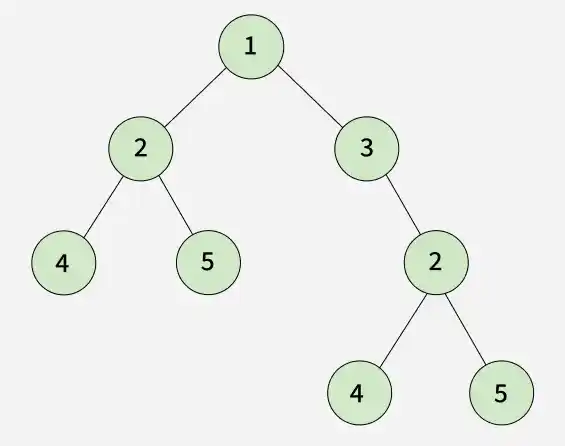
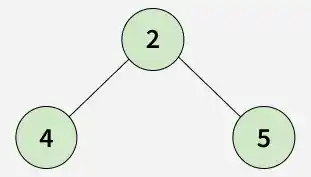
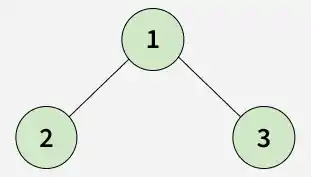

Table of Content
- [Naive Approach] Generating All Subtrees - O(n ^ 2) Time and O(n ^ 2) Space
- [Optimized Approach] Early Termination DFS - O(n ^ 2) Time and O(n ^ 2) Space
[Naive Approach] Generating All Subtrees - O(n ^ 2) Time and O(n ^ 2) Space
The idea is to generate all subtrees (of size greater than 1)of the binary tree and store their Serialized Form in an arrayor hash map. Then iterate through the array/map to check for duplicate subtrees.
- Traverse the binary tree recursively in postorder fashion.
- Serialize every subtree into a unique string representation.
- For null nodes return "N" and for leaf nodes return their value.
- Combine current node, left subtree, and right subtree strings to form the serialized subtree.
- Store the frequency of every serialized subtree in a hash map.
- After traversal, if any subtree frequency is greater than 1, return true; otherwise return false. C++ `
#include <bits/stdc++.h> using namespace std;
class Node { public: int data; Node *left, *right;
Node(int x)
{
    data = x;
    left = nullptr;
    right = nullptr;
}
};
// Function which generates all the subtrees // and stores their serialized form in map string dupSubRecur(Node *root, unordered_map<string, int> &map) { // Base Case: // For null nodes if (root == nullptr) { return "N"; }
// Base Case:
// For leaf nodes,
// return node value as string
if (root->left == nullptr && root->right == nullptr)
{
    return to_string(root->data);
}

// Process left subtree
string left = dupSubRecur(root->left, map);

// Process right subtree
string right = dupSubRecur(root->right, map);

// Generate serialized subtree
string curr = "";

curr += to_string(root->data);
curr += '*';
curr += left;
curr += '*';
curr += right;

// Store subtree frequency
map[curr]++;

return curr;
}
bool dupSub(Node *root) { unordered_map<string, int> map;
// Generate all subtree serializations
dupSubRecur(root, map);

// Check duplicate subtree
for (auto p : map)
{
    // If subtree occurs more than once
    if (p.second > 1)
    {
        return true;
    }
}

return false;
}
int main()
{
// 1
// /
// 2 3
// / \
// 4 5 2
// /
// 4 5
Node *root = new Node(1);

root->left = new Node(2);
root->right = new Node(3);

root->left->left = new Node(4);
root->left->right = new Node(5);

root->right->right = new Node(2);
root->right->right->left = new Node(4);
root->right->right->right = new Node(5);

// Function Call
if (dupSub(root) == true)
{
    cout << "True" << endl;
}
else
{
    cout << "False" << endl;
}

return 0;
}
Java
import java.util.HashMap;
class Node { int data; Node left, right;
Node(int x)
{
    data = x;
    left = null;
    right = null;
}
}
public class GFG { // Function which generates all the subtrees // and stores their serialized form in map static String dupSubRecur(Node root, HashMap<String, Integer> map) { // Base Case: // For null nodes if (root == null) { return "N"; }
    // Base Case:
    // For leaf nodes,
    // return node value as string
    if (root.left == null && root.right == null) {
        return Integer.toString(root.data);
    }

    // Process left subtree
    String left = dupSubRecur(root.left, map);

    // Process right subtree
    String right = dupSubRecur(root.right, map);

    // Generate serialized subtree
    String curr = "";

    curr += Integer.toString(root.data);
    curr += '*';
    curr += left;
    curr += '*';
    curr += right;

    // Store subtree frequency
    map.put(curr, map.getOrDefault(curr, 0) + 1);

    return curr;
}

static boolean dupSub(Node root)
{
    HashMap<String, Integer> map = new HashMap<>();

    // Generate all subtree serializations
    dupSubRecur(root, map);

    // Check duplicate subtree
    for (String key : map.keySet()) {
        // If subtree occurs more than once
        if (map.get(key) > 1) {
            return true;
        }
    }

    return false;
}

public static void main(String[] args)
{
    //         1
    //       /   \
    //      2     3
    //     / \     \
    //    4   5     2
    //              / \
    //             4   5

    Node root = new Node(1);

    root.left = new Node(2);
    root.right = new Node(3);

    root.left.left = new Node(4);
    root.left.right = new Node(5);

    root.right.right = new Node(2);
    root.right.right.left = new Node(4);
    root.right.right.right = new Node(5);

    // Function Call
    if (dupSub(root) == true) {
        System.out.println("True");
    }
    else {
        System.out.println("False");
    }
}
}
Python
class Node:
def __init__(self, x):
    self.data = x
    self.left = None
    self.right = None
Function which generates all the subtrees
and stores their serialized form in map
def dupSubRecur(root, mp):
# Base Case:
# For null nodes
if root is None:
    return "N"

# Base Case:
# For leaf nodes,
# return node value as string
if root.left is None and root.right is None:
    return str(root.data)

# Process left subtree
left = dupSubRecur(root.left, mp)

# Process right subtree
right = dupSubRecur(root.right, mp)

# Generate serialized subtree
curr = ""

curr += str(root.data)
curr += '*'
curr += left
curr += '*'
curr += right

# Store subtree frequency
mp[curr] = mp.get(curr, 0) + 1

return curr
def dupSub(root):
mp = {}

# Generate all subtree serializations
dupSubRecur(root, mp)

# Check duplicate subtree
for key in mp:

    # If subtree occurs more than once
    if mp[key] > 1:
        return True

return False
Driver Code
if name == "main":
# 1
# /
# 2 3
# / \
# 4 5 2
# /
# 4 5
root = Node(1)

root.left = Node(2)
root.right = Node(3)

root.left.left = Node(4)
root.left.right = Node(5)

root.right.right = Node(2)
root.right.right.left = Node(4)
root.right.right.right = Node(5)

# Function Call
if dupSub(root) == True:
    print("True")
else:
    print("False")
C#
using System; using System.Collections.Generic;
class Node { public int data; public Node left, right;
public Node(int x)
{
    data = x;
    left = null;
    right = null;
}
}
class GFG { // Function which generates all the subtrees // and stores their serialized form in map static string DupSubRecur(Node root, Dictionary<string, int> map) { // Base Case: // For null nodes if (root == null) { return "N"; }
    // Base Case:
    // For leaf nodes,
    // return node value as string
    if (root.left == null && root.right == null) {
        return root.data.ToString();
    }

    // Process left subtree
    string left = DupSubRecur(root.left, map);

    // Process right subtree
    string right = DupSubRecur(root.right, map);

    // Generate serialized subtree
    string curr = "";

    curr += root.data.ToString();
    curr += '*';
    curr += left;
    curr += '*';
    curr += right;

    // Store subtree frequency
    if (map.ContainsKey(curr)) {
        map[curr]++;
    }
    else {
        map[curr] = 1;
    }

    return curr;
}

static bool dupSub(Node root)
{
    Dictionary<string, int> map
        = new Dictionary<string, int>();

    // Generate all subtree serializations
    DupSubRecur(root, map);

    // Check duplicate subtree
    foreach(var p in map)
    {
        // If subtree occurs more than once
        if (p.Value > 1) {
            return true;
        }
    }

    return false;
}

static void Main()
{
    //         1
    //       /   \
    //      2     3
    //     / \     \
    //    4   5     2
    //              / \
    //             4   5

    Node root = new Node(1);

    root.left = new Node(2);
    root.right = new Node(3);

    root.left.left = new Node(4);
    root.left.right = new Node(5);

    root.right.right = new Node(2);
    root.right.right.left = new Node(4);
    root.right.right.right = new Node(5);

    // Function Call
    if (dupSub(root) == true) {
        Console.WriteLine("True");
    }
    else {
        Console.WriteLine("False");
    }
}
}
JavaScript
class Node { constructor(x) { this.data = x; this.left = null; this.right = null; } }
// Function which generates all the subtrees // and stores their serialized form in map function dupSubRecur(root, map) { // Base Case: // For null nodes if (root === null) { return "N"; }
// Base Case:
// For leaf nodes,
// return node value as string
if (root.left === null && root.right === null) {
    return root.data.toString();
}

// Process left subtree
let left = dupSubRecur(root.left, map);

// Process right subtree
let right = dupSubRecur(root.right, map);

// Generate serialized subtree
let curr = "";

curr += root.data.toString();
curr += "*";
curr += left;
curr += "*";
curr += right;

// Store subtree frequency
if (map.has(curr)) {
    map.set(curr, map.get(curr) + 1);
}
else {
    map.set(curr, 1);
}

return curr;
}
function dupSub(root) { let map = new Map();
// Generate all subtree serializations
dupSubRecur(root, map);

// Check duplicate subtree
for (let [key, value] of map) {
    // If subtree occurs more than once
    if (value > 1) {
        return true;
    }
}

return false;
}
// Driver Code
// 1
// /
// 2 3
// / \
// 4 5 2
// /
// 4 5
let root = new Node(1);
root.left = new Node(2); root.right = new Node(3);
root.left.left = new Node(4); root.left.right = new Node(5);
root.right.right = new Node(2); root.right.right.left = new Node(4); root.right.right.right = new Node(5);
// Function Call if (dupSub(root) === true) { console.log("True"); } else { console.log("False"); }
`
[Optimized Approach] Early Termination DFS - O(n ^ 2) Time and O(n ^ 2) Space
The idea is to use a hash set to store the subtrees in Serialized String Form. For a given subtree of size greater than 1, if its equivalent serializedstring already exists, then return true. If all subtrees are unique, return false.
- Traverse the binary tree using recursion in postorder fashion.
- Serialize every subtree into a unique string representation.
- For null nodes, return "N" and for leaf nodes return their value.
- Combine current node, left subtree, and right subtree strings to form the serialization.
- Check whether the serialized subtree already exists in the hash set.
- If it already exists, return true; otherwise store it in the set and continue traversal. C++ `
#include <bits/stdc++.h> using namespace std;
class Node { public: int data; Node *left, *right;
Node(int x)
{
    data = x;
    left = nullptr;
    right = nullptr;
}
};
// Function to serialize subtree string dupSubRecur(Node *root, unordered_set &s) { // Base Case: // For null nodes if (root == nullptr) { return "N"; }
// Base Case:
// For leaf nodes
if (root->left == nullptr && root->right == nullptr)
{
    return to_string(root->data);
}

// Process left subtree
string left = dupSubRecur(root->left, s);

// If duplicate already found,
// stop further recursion
if (left == "#")
{
    return "#";
}

// Process right subtree
string right = dupSubRecur(root->right, s);

// If duplicate already found,
// stop further recursion
if (right == "#")
{
    return "#";
}

// Create serialization string
string curr = "";
curr += to_string(root->data);
curr += '*';
curr += left;
curr += '*';
curr += right;

// If subtree already exists,
// duplicate subtree found
if (s.find(curr) != s.end())
{
    return "#";
}

// Store subtree serialization
s.insert(curr);

return curr;
}
bool dupSub(Node *root) { unordered_set s;
// If duplicate found,
// function returns "#"
return (dupSubRecur(root, s) == "#");
}
int main()
{
// 1
// /
// 2 3
// / \
// 4 5 2
// /
// 4 5
Node *root = new Node(1);

root->left = new Node(2);
root->right = new Node(3);

root->left->left = new Node(4);
root->left->right = new Node(5);

root->right->right = new Node(2);
root->right->right->left = new Node(4);
root->right->right->right = new Node(5);

// Function Call
if (dupSub(root) == true)
{
    cout << "True" << endl;
}
else
{
    cout << "False" << endl;
}

return 0;
}
Java
import java.util.HashSet;
class Node { int data; Node left, right;
Node(int x)
{
    data = x;
    left = null;
    right = null;
}
}
public class GFG { // Function to serialize subtree static String dupSubRecur(Node root, HashSet set) { // Base Case: // For null nodes if (root == null) { return "N"; }
    // Base Case:
    // For leaf nodes
    if (root.left == null && root.right == null) {
        return Integer.toString(root.data);
    }

    // Process left subtree
    String left = dupSubRecur(root.left, set);

    // If duplicate already found,
    // stop further recursion
    if (left.equals("#")) {
        return "#";
    }

    // Process right subtree
    String right = dupSubRecur(root.right, set);

    // If duplicate already found,
    // stop further recursion
    if (right.equals("#")) {
        return "#";
    }

    // Create serialization string
    String curr = "";

    curr += Integer.toString(root.data);
    curr += '*';
    curr += left;
    curr += '*';
    curr += right;

    // If subtree already exists,
    // duplicate subtree found
    if (set.contains(curr)) {
        return "#";
    }

    // Store subtree serialization
    set.add(curr);

    return curr;
}

static boolean dupSub(Node root)
{
    HashSet<String> set = new HashSet<>();

    // If duplicate found,
    // function returns "#"
    return dupSubRecur(root, set).equals("#");
}

public static void main(String[] args)
{
    //         1
    //       /   \
    //      2     3
    //     / \     \
    //    4   5     2
    //              / \
    //             4   5

    Node root = new Node(1);

    root.left = new Node(2);
    root.right = new Node(3);

    root.left.left = new Node(4);
    root.left.right = new Node(5);

    root.right.right = new Node(2);
    root.right.right.left = new Node(4);
    root.right.right.right = new Node(5);

    // Function Call
    if (dupSub(root) == true) {
        System.out.println("True");
    }
    else {
        System.out.println("False");
    }
}
}
Python
class Node:
def __init__(self, x):
    self.data = x
    self.left = None
    self.right = None
Function to serialize subtree
def dupSubRecur(root, s):
# Base Case:
# For null nodes
if root is None:
    return "N"

# Base Case:
# For leaf nodes
if root.left is None and root.right is None:
    return str(root.data)

# Process left subtree
left = dupSubRecur(root.left, s)

# If duplicate already found,
# stop further recursion
if left == "#":
    return "#"

# Process right subtree
right = dupSubRecur(root.right, s)

# If duplicate already found,
# stop further recursion
if right == "#":
    return "#"

# Create serialization string
curr = ""
curr += str(root.data)
curr += '*'
curr += left
curr += '*'
curr += right

# If subtree already exists,
# duplicate subtree found
if curr in s:
    return "#"

# Store subtree serialization
s.add(curr)

return curr
def dupSub(root):
s = set()

# If duplicate found,
# function returns "#"
return dupSubRecur(root, s) == "#"
Driver Code
if name == "main":
# 1
# /
# 2 3
# / \
# 4 5 2
# /
# 4 5
root = Node(1)

root.left = Node(2)
root.right = Node(3)

root.left.left = Node(4)
root.left.right = Node(5)

root.right.right = Node(2)
root.right.right.left = Node(4)
root.right.right.right = Node(5)

# Function Call
if dupSub(root) == True:
    print("True")
else:
    print("False")
C#
using System; using System.Collections.Generic;
class Node { public int data; public Node left, right;
public Node(int x)
{
    data = x;
    left = null;
    right = null;
}
}
class GFG { // Function to serialize subtree static string DupSubRecur(Node root, HashSet set) { // Base Case: // For null nodes if (root == null) { return "N"; }
    // Base Case:
    // For leaf nodes
    if (root.left == null &&
        root.right == null)
    {
        return root.data.ToString();
    }

    // Process left subtree
    string left = DupSubRecur(root.left, set);

    // If duplicate already found,
    // stop further recursion
    if (left == "#")
    {
        return "#";
    }

    // Process right subtree
    string right = DupSubRecur(root.right, set);

    // If duplicate already found,
    // stop further recursion
    if (right == "#")
    {
        return "#";
    }

    // Create serialization string
    string curr = "";

    curr += root.data.ToString();
    curr += '*';
    curr += left;
    curr += '*';
    curr += right;

    // If subtree already exists,
    // duplicate subtree found
    if (set.Contains(curr))
    {
        return "#";
    }

    // Store subtree serialization
    set.Add(curr);

    return curr;
}

static bool dupSub(Node root)
{
    HashSet<string> set = new HashSet<string>();

    // If duplicate found,
    // function returns "#"
    return DupSubRecur(root, set) == "#";
}

static void Main()
{
    //         1
    //       /   \
    //      2     3
    //     / \     \
    //    4   5     2
    //              / \
    //             4   5

    Node root = new Node(1);

    root.left = new Node(2);
    root.right = new Node(3);

    root.left.left = new Node(4);
    root.left.right = new Node(5);

    root.right.right = new Node(2);
    root.right.right.left = new Node(4);
    root.right.right.right = new Node(5);

    // Function Call
    if (dupSub(root) == true)
    {
        Console.WriteLine("True");
    }
    else
    {
        Console.WriteLine("False");
    }
}
}
JavaScript
class Node { constructor(x) { this.data = x; this.left = null; this.right = null; } }
// Function to serialize subtree function dupSubRecur(root, set) { // Base Case: // For null nodes if (root === null) { return "N"; }
// Base Case:
// For leaf nodes
if (root.left === null && root.right === null) {
    return root.data.toString();
}

// Process left subtree
let left = dupSubRecur(root.left, set);

// If duplicate already found,
// stop further recursion
if (left === "#") {
    return "#";
}

// Process right subtree
let right = dupSubRecur(root.right, set);

// If duplicate already found,
// stop further recursion
if (right === "#") {
    return "#";
}

// Create serialization string
let curr = "";

curr += root.data.toString();
curr += "*";
curr += left;
curr += "*";
curr += right;

// If subtree already exists,
// duplicate subtree found
if (set.has(curr)) {
    return "#";
}

// Store subtree serialization
set.add(curr);

return curr;
}
function dupSub(root) { let set = new Set();
// If duplicate found,
// function returns "#"
return dupSubRecur(root, set) === "#";
}
// Driver Code
// 1
// /
// 2 3
// / \
// 4 5 2
// /
// 4 5
let root = new Node(1);
root.left = new Node(2); root.right = new Node(3);
root.left.left = new Node(4); root.left.right = new Node(5);
root.right.right = new Node(2); root.right.right.left = new Node(4); root.right.right.right = new Node(5);
// Function Call if (dupSub(root) === true) { console.log("True"); } else { console.log("False"); }
`