Check if a given Binary Tree is Sum Tree (original) (raw)
Last Updated : 19 Sep, 2024
Given a binary tree, the task is to check if it is a **Sum Tree. A Sum Tree is a Binary Tree where the value of a **node is equal to the sum of the nodes present in its **left subtree and **right subtree. An **empty tree is Sum Tree and the sum of an empty tree can be considered as **0. A leaf node is also considered a Sum Tree.
**Example:
**Input:
**Output: True
**Explanation: The above tree follows the property of Sum Tree.**Input:
**Output: False
**Explanation: The above tree doesn't follows the property of Sum Tree as **6 + 2 != 10.
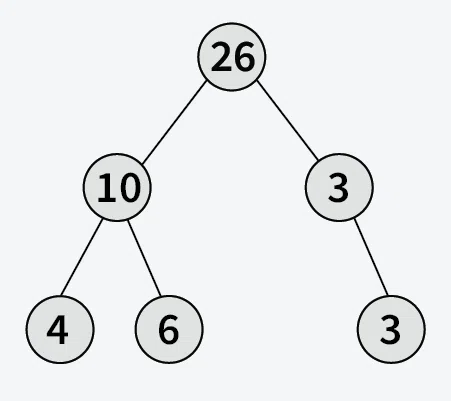
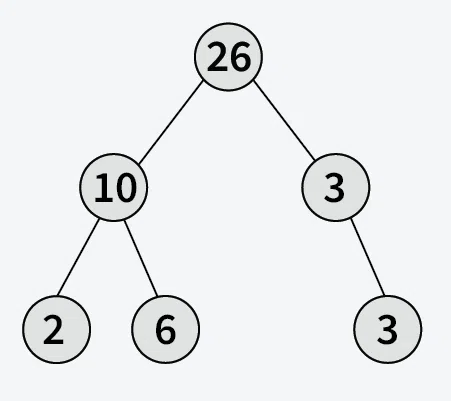

Table of Content
- [Naive Approach] By Checking Every Node - O(n^2) Time and O(h) Space
- [Expected Approach] Calculating left and right subtree sum directly - O(n) Time and O(h) Space
- [Alternate Approach] Using post order traversal - O(n) Time and O(h) Space
[Naive Approach] By Checking Every Node - O(n^2) Time and O(h) Space:
The idea is to get the **sum in the left subtree and **right subtree for **each node and compare it with the node's value. Also **recursively check if the left and right subtree are sum trees.
Below is the implementation of the above approach:
C++ `
// C++ program to check if Binary tree // is sum tree or not #include using namespace std;
class Node { public: int data; Node* left; Node* right; Node(int x) { data = x; left = right = nullptr; } };
// A utility function to get the sum // of values in tree int sum(Node *root) { if (root == NULL) return 0;
return sum(root->left) + root->data +
       sum(root->right);
}
// Returns 1 if sum property holds for // the given node and both of its children bool isSumTree(Node* root) { int ls, rs;
// If root is NULL or it's a leaf
// node then return true
if (root == nullptr ||
   (root->left == nullptr &&
    root->right == nullptr))
    return true;
// Get sum of nodes in left and // right subtrees ls = sum(root->left); rs = sum(root->right);
// If the root and both of its // children satisfy the property // return true else false if ((root->data == ls + rs) && isSumTree(root->left) && isSumTree(root->right)) return true;
return false; }
int main() {
// create hard coded tree
//       26
//      /  \
//     10   3
//    / \    \
//   4  6     3
Node* root = new Node(26);
root->left = new Node(10);
root->right = new Node(3);
root->left->left = new Node(4);
root->left->right = new Node(6);
root->right->right = new Node(3);

if (isSumTree(root))
    cout << "True";
else
    cout << "False";

return 0;
}
C
// C program to check if Binary tree // is sum tree or not #include <stdio.h> #include <stdlib.h>
struct Node { int data; struct Node* left; struct Node* right; };
// A utility function to get the sum of values in tree int sum(struct Node* root) { if (root == NULL) return 0;
return sum(root->left) + root->data +
  sum(root->right);
}
// Returns 1 if sum property holds for the // given node and both of its children int isSumTree(struct Node* root) { int ls, rs;
// If root is NULL or it's a leaf node
  // then return true
if (root == NULL || (root->left == NULL &&
                     root->right == NULL))
    return 1;

// Get sum of nodes in left and right subtrees
ls = sum(root->left);
rs = sum(root->right);

// If the root and both of its children satisfy
  // the property, return true else false
if ((root->data == ls + rs) &&
    isSumTree(root->left) && isSumTree(root->right))
    return 1;

return 0;
}
struct Node* createNode(int x) { struct Node* node = (struct Node*)malloc(sizeof(struct Node)); node->data = x; node->left = node->right = NULL; return node; }
int main() {
// create hard coded tree
//       26
//      /  \
//     10   3
//    / \    \
//   4  6     3
struct Node* root = createNode(26);
root->left = createNode(10);
root->right = createNode(3);
root->left->left = createNode(4);
root->left->right = createNode(6);
root->right->right = createNode(3);

if (isSumTree(root))
    printf("True");
else
    printf("False");

return 0;
}
Java
// Java program to check if Binary tree // is sum tree or not class Node { int data; Node left, right;
Node(int x) {
    data = x;
    left = right = null;
}
}
// A utility function to get the sum of values in tree class GfG {
static int sum(Node root) {
    if (root == null)
        return 0;

    return sum(root.left) + root.data +
      sum(root.right);
}

// Returns true if sum property holds for the
  // given node and both of its children
static boolean isSumTree(Node root) {
    int ls, rs;

    // If root is null or it's a leaf node
      // then return true
    if (root == null || (root.left == null &&
                         root.right == null))
        return true;

    // Get sum of nodes in left and right subtrees
    ls = sum(root.left);
    rs = sum(root.right);

    // If the root and both of its children satisfy
      // the property, return true else false
    return (root.data == ls + rs) &&
      isSumTree(root.left) && isSumTree(root.right);
}

public static void main(String[] args) {

    // create hard coded tree
    //       26
    //      /  \
    //     10   3
    //    / \    \
    //   4  6     3
    Node root = new Node(26);
    root.left = new Node(10);
    root.right = new Node(3);
    root.left.left = new Node(4);
    root.left.right = new Node(6);
    root.right.right = new Node(3);

    if (isSumTree(root))
        System.out.println("True");
    else
        System.out.println("False");
}
}
Python
Python3 program to implement
the above approach
class Node: def init(self, x): self.data = x self.left = None self.right = None
A utility function to get the sum of values in tree
def sum_tree(root): if root is None: return 0 return sum_tree(root.left) + root.data + sum_tree(root.right)
Returns True if sum property holds for the given
node and both of its children
def is_sum_tree(root):
# If root is None or it's a leaf node then return True
if root is None or (root.left is None and root.right is None):
    return True

# Get sum of nodes in left and right subtrees
ls = sum_tree(root.left)
rs = sum_tree(root.right)

# If the root and both of its children
# satisfy the property, return True else False
return root.data == ls + rs and \
       is_sum_tree(root.left) and \
   	 is_sum_tree(root.right)
if name == "main":
# create hard coded tree
#       26
#      /  \
#     10   3
#    / \    \
#   4  6     3
root = Node(26)
root.left = Node(10)
root.right = Node(3)
root.left.left = Node(4)
root.left.right = Node(6)
root.right.right = Node(3)

if is_sum_tree(root):
    print("True")
else:
    print("False")
C#
// C# program to check if Binary tree // is sum tree or not using System;
class Node { public int data; public Node left, right;
public Node(int x) {
    data = x;
    left = right = null;
}
}
class GfG {
// A utility function to get the sum of values in tree
static int Sum(Node root) {
    if (root == null)
        return 0;

    return Sum(root.left) + root.data +
      Sum(root.right);
}

// Returns true if sum property holds for
  // the given node and both of its children
static bool IsSumTree(Node root) {
    int ls, rs;

    // If root is null or it's a leaf node then return true
    if (root == null || (root.left == null &&
                         root.right == null))
        return true;

    // Get sum of nodes in left and right subtrees
    ls = Sum(root.left);
    rs = Sum(root.right);

    // If the root and both of its children
      // satisfy the property, return true else false
    return (root.data == ls + rs) &&
      IsSumTree(root.left) &&
      IsSumTree(root.right);
}

static void Main(string[] args) {

    // create hard coded tree
    //       26
    //      /  \
    //     10   3
    //    / \    \
    //   4  6     3
    Node root = new Node(26);
    root.left = new Node(10);
    root.right = new Node(3);
    root.left.left = new Node(4);
    root.left.right = new Node(6);
    root.right.right = new Node(3);

    if (IsSumTree(root))
        Console.WriteLine("True");
    else
        Console.WriteLine("False");
}
}
JavaScript
// JavaScript program to check if Binary tree // is sum tree or not class Node { constructor(x) { this.data = x; this.left = this.right = null; } }
// A utility function to get the sum of values in tree function sum(root) { if (root == null) return 0;
return sum(root.left) + root.data + sum(root.right);}
// Returns true if sum property holds for the given // node and both of its children function isSumTree(root) {
// If root is null or it's a leaf node then return true
if (root == null || (root.left == null && root.right == null))
    return true;

// Get sum of nodes in left and right subtrees
let ls = sum(root.left);
let rs = sum(root.right);

// If the root and both of its children satisfy the
// property, return true else false
return root.data == ls + rs &&
isSumTree(root.left) &&
isSumTree(root.right);
}
// create hard coded tree
// 26
// /
// 10 3
// / \
// 4 6 3
let root = new Node(26);
root.left = new Node(10);
root.right = new Node(3);
root.left.left = new Node(4);
root.left.right = new Node(6);
root.right.right = new Node(3);
if (isSumTree(root)) { console.log("True"); } else { console.log("False"); }
`
**Time Complexity: O(n^2), where n are the number of nodes in binary tree.
**Auxiliary Space: O(h)
[Expected Approach] Calculating left and right subtree sum directly - O(n) Time and O(h) Space:
The idea is to first check if **left and right **subtrees are **sum trees. If they are, then the sum of **left and right **subtrees can easily be obtained in O(1) time.
Step by Step implementation:
- For a given **root node, **recursively check if **left subtree and **right subtree are **sum trees. If one of them or both are not sum tree, simply return **false.
- If both of them are **sum trees, then we can find the sum of left subtree and right subtree in **O(1) using the following conditions:
- If the root is null, then the **sum is 0.
- If the root is a leaf node, then sum is equal to **root's value.
- Otherwise, the sum if equal to twice of root's value. This is because this subtree is a sum tree. So the sum of this subtree's subtree is equal to root's value. So the total sum becomes 2*root->val.**
Below is the implementation of the above approach:
C++ `
// C++ program to check if Binary tree // is sum tree or not #include<bits/stdc++.h> using namespace std;
class Node { public: int data; Node* left; Node* right; Node(int x) { data = x; left = right = nullptr; } };
// Utility function to check if // the given node is leaf or not bool isLeaf(Node *node) { if(node == nullptr) return false; if(node->left == nullptr && node->right == nullptr) return true; return false; }
bool isSumTree(Node* root) { int ls, rs;
// If node is NULL or it's a leaf node then
// return true
if(root == nullptr || isLeaf(root))
    return true;

// If the left subtree and right subtree are sum trees,
// then we can find subtree sum in O(1).
if( isSumTree(root->left) && isSumTree(root->right)) {

    // Get the sum of nodes in left subtree
    if(root->left == nullptr)
        ls = 0;
    else if(isLeaf(root->left))
        ls = root->left->data;
    else
        ls = 2 * (root->left->data);

    // Get the sum of nodes in right subtree
    if(root->right == nullptr)
        rs = 0;
    else if(isLeaf(root->right))
        rs = root->right->data;
    else
        rs = 2 * (root->right->data);

    // If root's data is equal to sum of nodes in left
    // and right subtrees then return true else return false
    return(root->data == ls + rs);
}

// if either of left or right subtree is not
// sum tree, then return false.
return false;
}
int main() {
// create hard coded tree
//       26
//      /  \
//     10   3
//    / \    \
//   4  6     3
Node* root = new Node(26);
root->left = new Node(10);
root->right = new Node(3);
root->left->left = new Node(4);
root->left->right = new Node(6);
root->right->right = new Node(3);

if (isSumTree(root))
    cout << "True";
else
    cout << "False";

return 0;
}
C
// C program to check if Binary tree // is sum tree or not #include <stdio.h> #include <stdlib.h>
struct Node { int data; struct Node* left; struct Node* right; };
// Utility function to check if the given node is leaf or not int isLeaf(struct Node* node) { if (node == NULL) return 0; if (node->left == NULL && node->right == NULL) return 1; return 0; }
int isSumTree(struct Node* root) { int ls, rs;
// If node is NULL or it's a leaf node then return true
if (root == NULL || isLeaf(root))
    return 1;

// If the left subtree and right subtree are sum trees,
// then we can find subtree sum in O(1).
if (isSumTree(root->left) && isSumTree(root->right)) {

    // Get the sum of nodes in left subtree
    if (root->left == NULL)
        ls = 0;
    else if (isLeaf(root->left))
        ls = root->left->data;
    else
        ls = 2 * (root->left->data);

    // Get the sum of nodes in right subtree
    if (root->right == NULL)
        rs = 0;
    else if (isLeaf(root->right))
        rs = root->right->data;
    else
        rs = 2 * (root->right->data);

    // If root's data is equal to sum of nodes in left
    // and right subtrees then return true else return false
    return (root->data == ls + rs);
}

// if either of left or right subtree
  // is not sum tree, then return false.
return 0;
}
struct Node* createNode(int x) { struct Node* node = (struct Node*)malloc(sizeof(struct Node)); node->data = x; node->left = node->right = NULL; return node; }
int main() {
// create hard coded tree
// 26
// /
// 10 3
// / \
// 4 6 3
struct Node* root = createNode(26);
root->left = createNode(10);
root->right = createNode(3);
root->left->left = createNode(4);
root->left->right = createNode(6);
root->right->right = createNode(3);
if (isSumTree(root))
    printf("True");
else
    printf("False");

return 0;
}
Java
// Java program to check if Binary tree // is sum tree or not class Node { int data; Node left, right;
Node(int x) {
    data = x;
    left = right = null;
}
}
class GfG {
// Utility function to check if the given node is leaf or not
static boolean isLeaf(Node node) {
    if (node == null)
        return false;
    if (node.left == null && node.right == null)
        return true;
    return false;
}

static boolean isSumTree(Node root) {
    int ls, rs;

    // If node is null or it's a leaf node then return true
    if (root == null || isLeaf(root))
        return true;

    // If the left subtree and right subtree are sum trees,
    // then we can find subtree sum in O(1).
    if (isSumTree(root.left) && isSumTree(root.right)) {

        // Get the sum of nodes in left subtree
        if (root.left == null)
            ls = 0;
        else if (isLeaf(root.left))
            ls = root.left.data;
        else
            ls = 2 * (root.left.data);

        // Get the sum of nodes in right subtree
        if (root.right == null)
            rs = 0;
        else if (isLeaf(root.right))
            rs = root.right.data;
        else
            rs = 2 * (root.right.data);

        // If root's data is equal to sum of nodes in left
        // and right subtrees then return true else return false
        return root.data == ls + rs;
    }

    // if either of left or right subtree is not
      // sum tree, then return false.
    return false;
}

public static void main(String[] args) {

    // create hard coded tree
    //       26
    //      /  \
    //     10   3
    //    / \    \
    //   4  6     3
    Node root = new Node(26);
    root.left = new Node(10);
    root.right = new Node(3);
    root.left.left = new Node(4);
    root.left.right = new Node(6);
    root.right.right = new Node(3);

    if (isSumTree(root))
        System.out.println("True");
    else
        System.out.println("False");
}
}
Python
Python3 program to check if
Binary tree is sum tree or not
class Node: def init(self, x): self.data = x self.left = None self.right = None
Utility function to check if the
given node is leaf or not
def is_leaf(node): if node is None: return False if node.left is None and node.right is None: return True return False
def is_sum_tree(root):
# If node is None or it's a leaf node then return True
if root is None or is_leaf(root):
    return True

# If the left subtree and right subtree are sum trees,
# then we can find subtree sum in O(1).
if is_sum_tree(root.left) and is_sum_tree(root.right):

    # Get the sum of nodes in left subtree
    if root.left is None:
        ls = 0
    elif is_leaf(root.left):
        ls = root.left.data
    else:
        ls = 2 * root.left.data

    # Get the sum of nodes in right subtree
    if root.right is None:
        rs = 0
    elif is_leaf(root.right):
        rs = root.right.data
    else:
        rs = 2 * root.right.data

    # If root's data is equal to sum of nodes in left
    # and right subtrees then return True else return False
    return root.data == ls + rs

# if either of left or right subtree is not sum
# tree, then return False.
return False
if name == "main":
# create hard coded tree
#       26
#      /  \
#     10   3
#    / \    \
#   4  6     3
root = Node(26)
root.left = Node(10)
root.right = Node(3)
root.left.left = Node(4)
root.left.right = Node(6)
root.right.right = Node(3)

if is_sum_tree(root):
    print("True")
else:
    print("False")
C#
// C# program to check if Binary tree // is sum tree or not using System;
class Node { public int data; public Node left, right;
public Node(int x) {
    data = x;
    left = right = null;
}
}
class GfG {
// Utility function to check if the given
  // node is leaf or not
static bool IsLeaf(Node node) {
    if (node == null)
        return false;
    if (node.left == null &&
        node.right == null)
        return true;
    return false;
}

static bool IsSumTree(Node root) {
    int ls, rs;

    // If node is null or it's a leaf node
      // then return true
    if (root == null || IsLeaf(root))
        return true;

    // If the left subtree and right subtree are sum trees,
    // then we can find subtree sum in O(1).
    if (IsSumTree(root.left) && IsSumTree(root.right)) {

        // Get the sum of nodes in left subtree
        if (root.left == null)
            ls = 0;
        else if (IsLeaf(root.left))
            ls = root.left.data;
        else
            ls = 2 * root.left.data;

        // Get the sum of nodes in right subtree
        if (root.right == null)
            rs = 0;
        else if (IsLeaf(root.right))
            rs = root.right.data;
        else
            rs = 2 * root.right.data;

        // If root's data is equal to sum of
          // nodes in left and right subtrees
        // then return true else return false
        return root.data == ls + rs;
    }

    // if either of left or right subtree is
      // not sum tree, then return false.
    return false;
}

static void Main(string[] args) {

    // create hard coded tree
    //       26
    //      /  \
    //     10   3
    //    / \    \
    //   4  6     3
    Node root = new Node(26);
    root.left = new Node(10);
    root.right = new Node(3);
    root.left.left = new Node(4);
    root.left.right = new Node(6);
    root.right.right = new Node(3);

    if (IsSumTree(root))
        Console.WriteLine("True");
    else
        Console.WriteLine("False");
}
}
JavaScript
class Node { constructor(x) { this.data = x; this.left = null; this.right = null; } }
// Utility function to check if the given // node is leaf or not function isLeaf(node) { if (node === null) return false; if (node.left === null && node.right === null) return true; return false; }
function isSumTree(root) { let ls, rs;
// If node is null or it's a leaf node then return true
if (root === null || isLeaf(root)) return true;

// If the left subtree and right subtree are sum trees,
// then we can find subtree sum in O(1).
if (isSumTree(root.left) && isSumTree(root.right)) {

    // Get the sum of nodes in left subtree
    if (root.left === null) ls = 0;
    else if (isLeaf(root.left)) ls = root.left.data;
    else ls = 2 * root.left.data;

    // Get the sum of nodes in right subtree
    if (root.right === null) rs = 0;
    else if (isLeaf(root.right)) rs = root.right.data;
    else rs = 2 * root.right.data;

    // If root's data is equal to sum of nodes in left
    // and right subtrees then return true else return false
    return root.data === ls + rs;
}

// if either of left or right subtree is not
// sum tree, then return false.
return false;
}
// create hard coded tree
// 26
// /
// 10 3
// / \
// 4 6 3
let root = new Node(26);
root.left = new Node(10);
root.right = new Node(3);
root.left.left = new Node(4);
root.left.right = new Node(6);
root.right.right = new Node(3);
if (isSumTree(root)) console.log("True"); else console.log("False");
`
**Time Complexity: O(n), where n are the number of nodes in binary tree.
**Auxiliary Space: O(h)
[Alternate Approach] Using post order traversal - O(n) Time and O(h) Space:
The idea is **recursively check if the left and right subtrees are **sum trees. If a subtree is sum tree, it will return the **sum of its **root node, left tree and right tree. Otherwise it will return -1.
Step by step implementation:
- For each current node, **recursively check the **left and **right subtree for sum tree.
- If the **subtree is sum tree, it will return the **sum of its root node, left tree and right tree.
- Compare the **sum of **left subtree and **right subtree with the **root node. If they are equal, return **sum of root node, left subtree and right subtree. Otherwise return -1.
Below is the implementation of the above approach:
C++ `
// C++ program to check if Binary tree // is sum tree or not #include<bits/stdc++.h> using namespace std;
class Node { public: int data; Node* left; Node* right; Node(int x) { data = x; left = right = nullptr; } };
// returns sum if tree is SumTree // else return -1 int isSumTree(Node* root) {
if(root == nullptr)
    return 0;

// If node is leaf node, return its value.
if (root->left == nullptr && root->right == nullptr)
    return root->data;

// Calculate left subtree sum
int ls = isSumTree(root->left);

// if left subtree is not sum tree,
// return -1.
if(ls == -1)
    return -1;

// Calculate right subtree sum
int rs = isSumTree(root->right);

// if right subtree is not sum tree,
// return -1.
if(rs == -1)
    return -1;


if(ls + rs == root->data)
    return ls + rs + root->data;
else
    return -1;
}
int main() {
// create hard coded tree
//       26
//      /  \
//     10   3
//    / \    \
//   4  6     3
Node* root = new Node(26);
root->left = new Node(10);
root->right = new Node(3);
root->left->left = new Node(4);
root->left->right = new Node(6);
root->right->right = new Node(3);

if (isSumTree(root)!=-1)
    cout << "True";
else
    cout << "False";

return 0;
}
C
// C program to check if Binary tree // is sum tree or not #include <stdio.h> #include <stdlib.h>
struct Node { int data; struct Node* left; struct Node* right; };
// returns sum if tree is SumTree // else return -1 int isSumTree(struct Node* root) { if (root == NULL) return 0;
// If node is leaf node, return its value.
if (root->left == NULL && root->right == NULL)
    return root->data;

// Calculate left subtree sum
int ls = isSumTree(root->left);

// if left subtree is not sum tree, return -1.
if (ls == -1)
    return -1;

// Calculate right subtree sum
int rs = isSumTree(root->right);

// if right subtree is not sum tree, return -1.
if (rs == -1)
    return -1;

if (ls + rs == root->data)
    return ls + rs + root->data;
else
    return -1;
}
struct Node* createNode(int x) { struct Node* node = (struct Node*)malloc(sizeof(struct Node)); node->data = x; node->left = node->right = NULL; return node; }
int main() {
// create hard coded tree
//       26
//      /  \
//     10   3
//    / \    \
//   4  6     3
struct Node* root = createNode(26);
root->left = createNode(10);
root->right = createNode(3);
root->left->left = createNode(4);
root->left->right = createNode(6);
root->right->right = createNode(3);

if (isSumTree(root) != -1)
    printf("True");
else
    printf("False");

return 0;
}
Java
// Java program to check if Binary tree // is sum tree or not
class Node { int data; Node left, right;
Node(int x) {
    data = x;
    left = right = null;
}
}
class GfG {
// returns sum if tree is SumTree
// else return -1
static int isSumTree(Node root) {
    if (root == null)
        return 0;

    // If node is leaf node, return its value.
    if (root.left == null && root.right == null)
        return root.data;

    // Calculate left subtree sum
    int ls = isSumTree(root.left);

    // if left subtree is not sum tree, return -1.
    if (ls == -1)
        return -1;

    // Calculate right subtree sum
    int rs = isSumTree(root.right);

    // if right subtree is not sum tree, return -1.
    if (rs == -1)
        return -1;

    if (ls + rs == root.data)
        return ls + rs + root.data;
    else
        return -1;
}

public static void main(String[] args) {

    // create hard coded tree
    //       26
    //      /  \
    //     10   3
    //    / \    \
    //   4  6     3
    Node root = new Node(26);
    root.left = new Node(10);
    root.right = new Node(3);
    root.left.left = new Node(4);
    root.left.right = new Node(6);
    root.right.right = new Node(3);

    if (isSumTree(root) != -1)
        System.out.println("True");
    else
        System.out.println("False");
}
}
Python
Python3 program to check if
Binary tree is sum tree or not
class Node: def init(self, x): self.data = x self.left = None self.right = None
returns sum if tree is SumTree
else return -1
def is_sum_tree(root): if root is None: return 0
# If node is leaf node, return its value.
if root.left is None and root.right is None:
    return root.data

# Calculate left subtree sum
ls = is_sum_tree(root.left)

# if left subtree is not sum tree, return -1.
if ls == -1:
    return -1

# Calculate right subtree sum
rs = is_sum_tree(root.right)

# if right subtree is not sum tree, return -1.
if rs == -1:
    return -1

if ls + rs == root.data:
    return ls + rs + root.data
else:
    return -1
if name == "main":
# create hard coded tree
#       26
#      /  \
#     10   3
#    / \    \
#   4  6     3
root = Node(26)
root.left = Node(10)
root.right = Node(3)
root.left.left = Node(4)
root.left.right = Node(6)
root.right.right = Node(3)

if is_sum_tree(root) != -1:
    print("True")
else:
    print("False")
C#
// C# program to check if Binary tree // is sum tree or not using System;
class Node { public int data; public Node left, right;
public Node(int x) {
    data = x;
    left = right = null;
}
}
class GfG {
// returns sum if tree is SumTree
// else return -1
static int IsSumTree(Node root) {
    if (root == null)
        return 0;

    // If node is leaf node, return its value.
    if (root.left == null && root.right == null)
        return root.data;

    // Calculate left subtree sum
    int ls = IsSumTree(root.left);

    // if left subtree is not sum tree, return -1.
    if (ls == -1)
        return -1;

    // Calculate right subtree sum
    int rs = IsSumTree(root.right);

    // if right subtree is not sum tree, return -1.
    if (rs == -1)
        return -1;

    if (ls + rs == root.data)
        return ls + rs + root.data;
    else
        return -1;
}

static void Main(string[] args) {

    // create hard coded tree
    //       26
    //      /  \
    //     10   3
    //    / \    \
    //   4  6     3
    Node root = new Node(26);
    root.left = new Node(10);
    root.right = new Node(3);
    root.left.left = new Node(4);
    root.left.right = new Node(6);
    root.right.right = new Node(3);

    if (IsSumTree(root) != -1)
        Console.WriteLine("True");
    else
        Console.WriteLine("False");
}
}
JavaScript
// JavaScript program to check if // Binary tree is sum tree or not
class Node { constructor(x) { this.data = x; this.left = null; this.right = null; } }
// returns sum if tree is SumTree // else return -1 function isSumTree(root) { if (root === null) return 0;
// If node is leaf node, return its value.
if (root.left === null && root.right === null) return root.data;

// Calculate left subtree sum
const ls = isSumTree(root.left);

// if left subtree is not sum tree, return -1.
if (ls === -1) return -1;

// Calculate right subtree sum
const rs = isSumTree(root.right);

// if right subtree is not sum tree, return -1.
if (rs === -1) return -1;

if (ls + rs === root.data) return ls + rs + root.data;
else return -1;
}
// create hard coded tree
// 26
// /
// 10 3
// / \
// 4 6 3
let root = new Node(26);
root.left = new Node(10);
root.right = new Node(3);
root.left.left = new Node(4);
root.left.right = new Node(6);
root.right.right = new Node(3);
if (isSumTree(root) !== -1) console.log("True"); else console.log("False");
`
**Time Complexity: O(n), where **n are the number of nodes in binary tree.
**Auxiliary Space: O(h)