Delete alternate nodes of a Linked List (original) (raw)
Last Updated : 21 Apr, 2026
Given a Singly Linked List, starting from the second node delete all alternate nodes of it.
Examples:
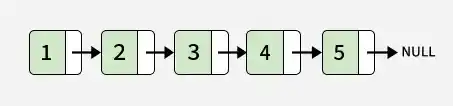
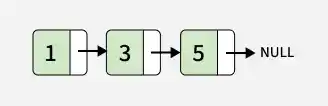
**Input: LinkedList: 1->2->3->4->5->6
**Output: 1->3->5
**Explanation: Deleting alternate nodes ie 2, 4, 6 results in the linked list with elements 1->3->5.

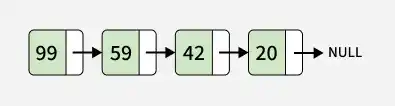
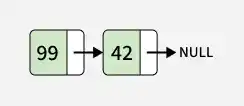
**Input: LinkedList: 99->59->42->20
**Output: 99->42
Recursive Approach - Time: O(n) Time O(n) Space
Traverse the linked list recursively and remove every alternate node. At each step, adjust the current node’s next pointer to bypass the next node, effectively deleting it. Then move to the next valid node using recursion and repeat the process until the end of the list is reached.
**Algorithm:
- If the node is NULL or node->next is NULL, stop recursion.
- Store the next node to be deleted in a temporary pointer: temp = node->next
- Update the link to skip the node: node->next = temp->next
- Delete the skipped node: delete(temp)
- Move to the next valid node using recursion: deleteAlt(node->next)
**Note : temp and delete(temp) are needed in C and C++ only as automatic garbage collection does not happen there.
C++ `
#include using namespace std;
// A linked list node class Node { public: int data; Node *next; Node(int val) { data = val; next = NULL; } };
// deletes alternate nodes void deleteAlt(Node *head) { if (head == NULL) return;
Node *prev = head;
Node *node = head->next;

while (prev!= NULL && node!= NULL)
{
    prev->next = node->next;
    delete node;

    prev = prev->next;
    if (prev!= NULL)
        node = prev->next;
}
}
// print list void printList(Node *node) { while (node!= NULL) { cout << node->data << " "; node = node->next; } }
int main() { //linked list: 1->2->3->4->5 Node* head = new Node(1); head->next = new Node(2); head->next->next = new Node(3); head->next->next->next = new Node(4); head->next->next->next->next = new Node(5);
cout << "List before calling deleteAlt() \n";
printList(head);

deleteAlt(head);

cout << "\nList after calling deleteAlt() \n";
printList(head);

return 0;
}
C
#include <stdio.h> #include <stdlib.h>
// A linked list node struct Node { int data; struct Node* next; };
// Function to create a new node struct Node* newNode(int data) { struct Node* node = (struct Node*)malloc(sizeof(struct Node)); node->data = data; node->next = NULL; return node; }
// deletes alternate nodes void deleteAlt(struct Node* head) { if (head == NULL) return;
struct Node* prev = head;
struct Node* node = head->next;

while (prev!= NULL && node!= NULL) {
    prev->next = node->next;
    free(node);
    prev = prev->next;
    if (prev!= NULL)
        node = prev->next;
}
}
// print list void printList(struct Node* node) { while (node!= NULL) { printf("%d ", node->data); node = node->next; } }
int main() { //linked list: 1->2->3->4->5 struct Node* head = newNode(1); head->next = newNode(2); head->next->next = newNode(3); head->next->next->next = newNode(4); head->next->next->next->next = newNode(5);
printf("List before calling deleteAlt() \n");
printList(head);

deleteAlt(head);

printf("\nList after calling deleteAlt() \n");
printList(head);

return 0;
}
Java
import java.io.*;
// A linked list node class Node { int data; Node next; Node(int val) { data = val; next = null; } }
class LinkedList {
// deletes alternate nodes
void deleteAlt(Node head) {
    if (head == null)
        return;

    Node prev = head;
    Node node = head.next;

    while (prev!= null && node!= null) {
        prev.next = node.next;
        node = null;
        prev = prev.next;
        if (prev!= null)
            node = prev.next;
    }
}

// print list
void printList(Node node) {
    while (node!= null) {
        System.out.print(node.data + " ");
        node = node.next;
    }
}

public static void main(String[] args) {
    Node head = new Node(1);
    head.next = new Node(2);
    head.next.next = new Node(3);
    head.next.next.next = new Node(4);
    head.next.next.next.next = new Node(5);

    LinkedList list = new LinkedList();
    System.out.println("List before calling deleteAlt()");
    list.printList(head);

    list.deleteAlt(head);

    System.out.println("\nList after calling deleteAlt()");
    list.printList(head);
}
}
Python
A linked list node
class Node: def init(self, val): self.data = val self.next = None
deletes alternate nodes
def deleteAlt(head): if head is None: return
prev = head
node = head.next

while prev is not None and node is not None:
    prev.next = node.next
    node = None
    prev = prev.next
    if prev is not None:
        node = prev.next
print list
def printList(node): while node is not None: print(node.data, end=" ") node = node.next
main
if name == 'main':
# linked list: 1->2->3->4->5
head = Node(1)
head.next = Node(2)
head.next.next = Node(3)
head.next.next.next = Node(4)
head.next.next.next.next = Node(5)

print("List before calling deleteAlt()\n")
printList(head)
print()

deleteAlt(head)

print("List after calling deleteAlt()\n")
printList(head)
print()
C#
using System;
// A linked list node public class Node { public int data; public Node next; public Node(int val) { data = val; next = null; } }
public class Program { // deletes alternate nodes public static void deleteAlt(Node head) { if (head == null) return;
    Node prev = head;
    Node node = head.next;

    while (prev != null && node != null)
    {
        prev.next = node.next;   // unlink node

        prev = prev.next;

        if (prev != null)
            node = prev.next;
    }
}

// print list
public static void printList(Node node)
{
    while (node != null)
    {
        Console.Write(node.data + " ");
        node = node.next;
    }
}

public static void Main()
{
    // linked list: 1->2->3->4->5
    Node head = new Node(1);
    head.next = new Node(2);
    head.next.next = new Node(3);
    head.next.next.next = new Node(4);
    head.next.next.next.next = new Node(5);

    Console.WriteLine("List before calling deleteAlt()");
    printList(head);

    deleteAlt(head);

    Console.WriteLine("\nList after calling deleteAlt()");
    printList(head);
}
}
JavaScript
class Node { constructor(val) { this.data = val; this.next = null; } }
// deletes alternate nodes function deleteAlt(head) { if (head === null) { return; }
let prev = head;
let node = head.next;

while (prev!== null && node!== null) {
    prev.next = node.next;
    node = null;
    prev = prev.next;
    if (prev!== null) {
        node = prev.next;
    }
}
}
// print list function printList(node) { while (node!== null) { console.log(node.data + " "); node = node.next; } }
// Main execution let head = new Node(1); head.next = new Node(2); head.next.next = new Node(3); head.next.next.next = new Node(4); head.next.next.next.next = new Node(5);
console.log("List before calling deleteAlt()"); printList(head);
deleteAlt(head);
console.log("\nList after calling deleteAlt()"); printList(head);
`
Output
List before calling deleteAlt() 1 2 3 4 5 List after calling deleteAlt() 1 3 5
Iterative Approach - O(n) Time O(1) Space
Maintain a pointer to the node just before the one to be deleted, Update its next link to skip the unwanted node. Then move forward and repeat the process for the remaining list.
**Algorithm:
Start from the head of the linked list.
- If the list is empty (head == NULL), stop.
- Set prev = head and node = head->next.
- Traverse the list while both prev and node are not NULL.
- Update the link to skip the node to be deleted: prev->next = node->next
- Delete the node: delete(node)
- Move prev to the next valid node: prev = prev->next
- If prev is not NULL, update: node = prev->next
**Note : delete(mode) ste needed in C and C++ only as automatic garbage collection does not happen there.
C++ `
#include <bits/stdc++.h> using namespace std;
// A linked list node class Node { public: int data; Node *next; Node(int val) { data = val; next = NULL; } };
// deletes alternate nodes void deleteAlt(Node *head) { if (head == NULL) return;
Node *prev = head;
Node *node = head->next;

while (prev != NULL && node != NULL)
{
    prev->next = node->next;
    delete(node);

    prev = prev->next;
    if (prev != NULL)
        node = prev->next;
}
}
// print linked list void printList(Node *node) { while (node != NULL) { cout << node->data << " "; node = node->next; } }
// Driver code int main() { // list: 1->2->3->4->5 Node* head = new Node(1); head->next = new Node(2); head->next->next = new Node(3); head->next->next->next = new Node(4); head->next->next->next->next = new Node(5);
cout << "List before deletion:\n";
printList(head);

deleteAlt(head);

cout << "\nList after deleting:\n";
printList(head);

return 0;
}
C
#include <stdio.h> #include <stdlib.h>
// A linked list node struct Node { int data; struct Node *next; };
struct Node* newNode(int val) { struct Node* node = (struct Node*)malloc(sizeof(struct Node)); node->data = val; node->next = NULL; return node; }
// deletes alternate nodes void deleteAlt(struct Node *head) { if (head == NULL) return;
struct Node *prev = head;
struct Node *node = head->next;

while (prev!= NULL && node!= NULL) {
    prev->next = node->next;
    free(node);
    prev = prev->next;
    if (prev!= NULL)
        node = prev->next;
}
}
// print linked list void printList(struct Node *node) { while (node!= NULL) { printf("%d ", node->data); node = node->next; } }
// Driver code int main() { // list: 1->2->3->4->5 struct Node* head = newNode(1); head->next = newNode(2); head->next->next = newNode(3); head->next->next->next = newNode(4); head->next->next->next->next = newNode(5);
printf("List before deletion:\n");
printList(head);

deleteAlt(head);

printf("\nList after deleting:\n");
printList(head);

return 0;
}
Java
import java.util.*;
// A linked list node class Node { int data; Node next; Node(int val) { data = val; next = null; } }
public class LinkedList {
// deletes alternate nodes
static void deleteAlt(Node head) {
    if (head == null)
        return;

    Node prev = head;
    Node node = head.next;

    while (prev!= null && node!= null) {
        prev.next = node.next;
        node = null; // for garbage collection
        prev = prev.next;
        if (prev!= null)
            node = prev.next;
    }
}

// print linked list
static void printList(Node node) {
    while (node!= null) {
        System.out.print(node.data + " ");
        node = node.next;
    }
}

// Driver code
public static void main(String[] args) {

    // list: 1->2->3->4->5
    Node head = new Node(1);
    head.next = new Node(2);
    head.next.next = new Node(3);
    head.next.next.next = new Node(4);
    head.next.next.next.next = new Node(5);

    System.out.println("List before deletion:");
    printList(head);

    deleteAlt(head);

    System.out.println("\nList after deleting:");
    printList(head);
}
}
Python
class Node: def init(self, data): self.data = data self.next = None
deletes alternate nodes
def deleteAlt(head): if head is None: return
prev = head
node = head.next

while prev is not None and node is not None:
    prev.next = node.next
    node = None
    prev = prev.next
    if prev is not None:
        node = prev.next
print linked list
def printList(node): while node is not None: print(node.data, end=" ") node = node.next
Driver code
if name == 'main':
# list: 1->2->3->4->5
head = Node(1)
head.next = Node(2)
head.next.next = Node(3)
head.next.next.next = Node(4)
head.next.next.next.next = Node(5)

print("List before deletion:\n")
printList(head)

deleteAlt(head)

print("\nList after deleting:\n")
printList(head)
C#
using System;
public class Node { public int data; public Node next;
public Node(int x)
{
    data = x;
    next = null;
}
}
public class GfG { // deletes alternate nodes public static void deleteAlt(Node head) { if (head == null) return;
    Node prev = head;
    Node node = head.next;

    while (prev != null && node != null)
    {
        prev.next = node.next;  // unlink

        prev = prev.next;
        if (prev != null)
            node = prev.next;
    }
}

// print linked list
public static void printList(Node node)
{
    while (node != null)
    {
        Console.Write(node.data + " ");
        node = node.next;
    }
}

// Driver code
public static void Main()
{
    // list: 1->2->3->4->5
    Node head = new Node(1);
    head.next = new Node(2);
    head.next.next = new Node(3);
    head.next.next.next = new Node(4);
    head.next.next.next.next = new Node(5);

    Console.WriteLine("List before deletion:");
    printList(head);

    deleteAlt(head);

    Console.WriteLine("\nList after deleting:");
    printList(head);
}
}
JavaScript
/* A linked list node */ function Node(data) { this.data = data; this.next = null; }
/* deletes alternate nodes */ function deleteAlt(head) { if (head == null) { return; }
let prev = head;
let node = head.next;

while (prev!= null && node!= null) {
    prev.next = node.next;
    node = null;  // delete(node);

    prev = prev.next;
    if (prev!= null) {
        node = prev.next;
    }
}
}
/* print linked list */ function printList(node) { while (node!= null) { console.log(node.data + " "); node = node.next; } }
/* Driver code */ (function main() {
/* list: 1->2->3->4->5 */
let head = new Node(1);
head.next = new Node(2);
head.next.next = new Node(3);
head.next.next.next = new Node(4);
head.next.next.next.next = new Node(5);

console.log("List before deletion:");
printList(head);

deleteAlt(head);

console.log("\nList after deleting:");
printList(head);
})();
`
Output
List before deletion: 1 2 3 4 5 List after deleting: 1 3 5
Please write comments if you find the above code/algorithm incorrect, or find better ways to solve the same problem.