Detect Cycle in a Directed Graph (original) (raw)
Given a directed graph represented by its adjacency list **adj[][], determine whether the graph contains a cycle/Loop or not.
A cycle is a path that starts and ends at the same vertex, following the direction of edges.
**Examples:
**Input: adj[][] = [[1], [2], [0, 3], []]
**Output: true
**Explanation: There is a cycle 0 -> 1 -> 2 -> 0.**Input: adj[][] = [[2], [0], []]
**Output: false
**Explanation: There is no cycle in the graph.
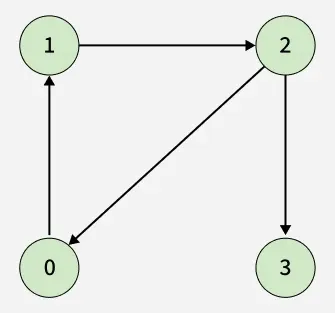
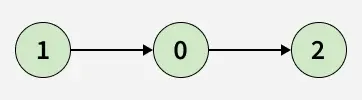
Table of Content
- [Approach 1] Using DFS - O(V + E) Time and O(V) Space
- [Approach 2] Using Topological Sorting - O(V + E) Time and O(V) Space
[Approach 1] Using DFS - O(V + E) Time and O(V) Space
To detect a cycle in a directed graph, we use Depth First Search (DFS). In DFS, we go as deep as possible from a starting node. If during this process, we reach a node that we’ve already visited in the same DFS path, it means we’ve gone back to an ancestor — this shows a cycle exists.
But there’s a problem: When we start DFS from one node, some nodes get marked as visited. Later, when we start DFS from another node, those visited nodes may appear again, even if there’s no cycle.
So, using only visited[] isn’t enough.
To fix this, we use two arrays:
- visited[] - marks nodes visited at least once.
- recStack[] - marks nodes currently in the recursion (active) path.
If during DFS we reach a node that’s already in the recStack, we’ve found a path from the current node back to one of its ancestors, forming a cycle. As soon as we finish exploring all paths from a node, we remove it from the recursion stack by marking recStack[node] = false. This ensures that only the nodes in the current DFS path are tracked.
**Illustration:
C++ `
//Driver Code Starts #include #include using namespace std;
//Driver Code Ends
// Utility DFS function to detect cycle in a directed graph bool isCyclicUtil(vector<vector>& adj, int u, vector& visited, vector& recStack) {
 // node is already in recursion stack cycle found
if (recStack[u]) return true;

 // already processed no need to visit again
if (visited[u]) return false;

visited[u] = true;
recStack[u] = true;

// Recur for all adjacent nodes
for (int v : adj[u]) {
    if (isCyclicUtil(adj, v, visited, recStack))
        return true;
}
 // remove from recursion stack before backtracking
recStack[u] = false;
return false;
}
// Function to detect cycle in a directed graph bool isCyclic(vector<vector>& adj) { int V = adj.size(); vector visited(V, false); vector recStack(V, false);
// Run DFS from every unvisited node
for (int i = 0; i < V; i++) {
    if (!visited[i] && isCyclicUtil(adj, i, visited, recStack))
        return true;
}
return false;
}
//Driver Code Starts
int main() { vector<vector> adj = {{1},{2},{0, 3}};
cout << (isCyclic(adj) ? "true" : "false") << endl;
return 0;
}
//Driver Code Ends
Java
//Driver Code Starts import java.util.ArrayList; public class GFG {
//Driver Code Ends
// Utility DFS function to detect cycle in a directed graph
static boolean isCyclicUtil(ArrayList<ArrayList<Integer>> adj,
int u, boolean[] visited, boolean[] recStack) {

    // Node already in recursion stack cycle found
    if (recStack[u]) return true;

    // Already processed no need to visit again
    if (visited[u]) return false;

    visited[u] = true;
    recStack[u] = true;

    // Recur for all adjacent nodes
    for (int v : adj.get(u)) {
        if (isCyclicUtil(adj, v, visited, recStack))
            return true;
    }

    // Remove from recursion stack before backtracking
    recStack[u] = false;
    return false;
}

// Function to detect cycle in a directed graph
static boolean isCyclic(ArrayList<ArrayList<Integer>> adj) {
    int V = adj.size();
    boolean[] visited = new boolean[V];
    boolean[] recStack = new boolean[V];

    // Run DFS from every unvisited node
    for (int i = 0; i < V; i++) {
        if (!visited[i] && isCyclicUtil(adj, i, visited, recStack))
            return true;
    }
    return false;
}
//Driver Code Starts
// Function to add an edge to the adjacency list
static void addEdge(ArrayList<ArrayList<Integer>> adj, int u, int v) {
    adj.get(u).add(v);
}

public static void main(String[] args) {
    int V = 4;

    ArrayList<ArrayList<Integer>> adj = new ArrayList<>();
    for (int i = 0; i < V; i++) {
        adj.add(new ArrayList<>());
    }

    // Add directed edges
    addEdge(adj, 0, 1);
    addEdge(adj, 1, 2);
    addEdge(adj, 2, 0);
    addEdge(adj, 2, 3);

    System.out.println(isCyclic(adj) ? "true" : "false");
}
}
//Driver Code Ends
Python
Utility DFS function to detect cycle in a directed graph
def isCyclicUtil(adj, u, visited, recStack):
# node is already in recursion stack cycle found
if recStack[u]:
    return True

# already processed no need to visit again
if visited[u]:
    return False

visited[u] = True
recStack[u] = True

# Recur for all adjacent nodes
for v in adj[u]:
    if isCyclicUtil(adj, v, visited, recStack):
        return True

# remove from recursion stack before backtracking
recStack[u] = False
return False
Function to detect cycle in a directed graph
def isCyclic(adj): V = len(adj) visited = [False] * V recStack = [False] * V
# Run DFS from every unvisited node
for i in range(V):
    if not visited[i] and isCyclicUtil(adj, i, visited, recStack):
        return True
return False
#Driver Code Starts
if name == "main": adj = [[1], [2], [0, 3]]
print("true" if isCyclic(adj) else "false")#Driver Code Ends
C#
//Driver Code Starts using System; using System.Collections.Generic;
class GFG { // Utility DFS function to detect cycle in a directed graph //Driver Code Ends
static bool isCyclicUtil(List<List<int>> adj, int u, bool[] visited, bool[] recStack)
{
    // Node already in recursion stack cycle found
    if (recStack[u]) return true;

    // Already processed → no need to visit again
    if (visited[u]) return false;

    visited[u] = true;
    recStack[u] = true;

    // Recur for all adjacent nodes
    foreach (int v in adj[u])
    {
        if (isCyclicUtil(adj, v, visited, recStack))
            return true;
    }

    // Remove from recursion stack before backtracking
    recStack[u] = false;
    return false;
}

// Function to detect cycle in a directed graph
static bool isCyclic(List<List<int>> adj)
{
    int V = adj.Count;
    bool[] visited = new bool[V];
    bool[] recStack = new bool[V];

    // Run DFS from every unvisited node
    for (int i = 0; i < V; i++)
    {
        if (!visited[i] && isCyclicUtil(adj, i, visited, recStack))
            return true;
    }
    return false;
}
//Driver Code Starts // Function to add an edge to the adjacency list static void addEdge(List<List> adj, int u, int v) { adj[u].Add(v); }
static void Main()
{
    int V = 4;

    List<List<int>> adj = new List<List<int>>();
    for (int i = 0; i < V; i++)
    {
        adj.Add(new List<int>());
    }

    // Add directed edges
    addEdge(adj, 0, 1);
    addEdge(adj, 1, 2);
    addEdge(adj, 2, 0);
    addEdge(adj, 2, 3);

    Console.WriteLine(isCyclic(adj) ? "true" : "false");
}
}
//Driver Code Ends
JavaScript
// Utility DFS function to detect cycle in a directed graph function isCyclicUtil(adj, u, visited, recStack) {
// node is already in recursion stack cycle found
if (recStack[u]) return true;

// already processed no need to visit again
if (visited[u]) return false;

visited[u] = true;
recStack[u] = true;

// Recur for all adjacent nodes
for (let v of adj[u]) {
    if (isCyclicUtil(adj, v, visited, recStack))
        return true;
}

// remove from recursion stack before backtracking
recStack[u] = false;
return false;
}
// Function to detect cycle in a directed graph function isCyclic(adj) { const V = adj.length; const visited = Array(V).fill(false); const recStack = Array(V).fill(false);
// Run DFS from every unvisited node
for (let i = 0; i < V; i++) {
    if (!visited[i] && isCyclicUtil(adj, i, visited, recStack))
        return true;
}
return false;
}
// Driver Code //Driver Code Starts let V = 4;
const adj = [[1],[2],[0, 3]];
console.log(isCyclic(adj) ? "true" : "false");
//Driver Code Ends
`
[Approach 2] Using Topological Sorting - O(V + E) Time and O(V) Space
The idea is to use Kahn’s algorithm because it works only for Directed Acyclic Graphs (DAGs). So, while performing topological sorting using Kahn’s algorithm, if we are able to include all the vertices in the topological order, it means the graph has no cycle and is a DAG.
However, if at the end there are still some vertices left (i.e., their in-degree never becomes 0), it means those vertices are part of a cycle. Hence, if we cannot get all the vertices in the topological sort, the graph must contain at least one cycle.
C++ `
//Driver Code Starts #include #include #include using namespace std;
//Driver Code Ends
bool isCyclic(vector<vector> &adj) { int V = adj.size(); // Array to store in-degree of each vertex vector inDegree(V, 0); queue q; // Count of visited (processed) nodes int visited = 0;
//Compute in-degrees of all vertices
for (int u = 0; u < V; ++u)
{
    for (int v : adj[u])
    {
        inDegree[v]++;
    }
}

//  Add all vertices with in-degree 0 to the queue
for (int u = 0; u < V; ++u)
{
    if (inDegree[u] == 0)
    {
        q.push(u);
    }
}

// Perform BFS (Topological Sort)
while (!q.empty())
{
    int u = q.front();
    q.pop();
    visited++;

    // Reduce in-degree of neighbors
    for (int v : adj[u])
    {
        inDegree[v]--;
        if (inDegree[v] == 0)
        {
            // Add to queue when in-degree becomes 0
            q.push(v);
        }
    }
}

//  If visited nodes != total nodes, a cycle exists
return visited != V;
}
//Driver Code Starts
int main() {
vector<vector<int>> adj = {{1},{2},{0, 3}};

cout << (isCyclic(adj) ? "true" : "false") << endl;

return 0;
} //Driver Code Ends
Java
//Driver Code Starts import java.util.Queue; import java.util.LinkedList; import java.util.ArrayList;
public class GFG {
//Driver Code Ends
static boolean isCyclic(ArrayList<ArrayList<Integer>> adj)
{
    int V = adj.size();

    // Array to store in-degree of each vertex
    int[] inDegree = new int[V];
    Queue<Integer> q = new LinkedList<>();

    // Count of visited (processed) nodes
    int visited = 0;

    // Compute in-degrees of all vertices
    for (int u = 0; u < V; ++u)
    {
        for (int v : adj.get(u))
        {
            inDegree[v]++;
        }
    }

    // Add all vertices with in-degree 0 to the queue
    for (int u = 0; u < V; ++u)
    {
        if (inDegree[u] == 0)
        {
            q.add(u);
        }
    }

    // Perform BFS (Topological Sort)
    while (!q.isEmpty())
    {
        int u = q.poll();
        visited++;

        // Reduce in-degree of neighbors
        for (int v : adj.get(u))
        {
            inDegree[v]--;
            if (inDegree[v] == 0)
            {
                // Add to queue when in-degree becomes 0
                q.add(v);
            }
        }
    }

    // If visited nodes != total nodes, a cycle exists
    return visited != V;
}
//Driver Code Starts
 // Function to add an edge to the adjacency list
static void addEdge(ArrayList<ArrayList<Integer>> adj, int u, int v) {
    adj.get(u).add(v);
}

public static void main(String[] args)
{
    int V = 4;
    ArrayList<ArrayList<Integer>> adj = new ArrayList<>();
    for (int i = 0; i < V; i++) {
        adj.add(new ArrayList<>());
    }

    // Add edges
    addEdge(adj, 0, 1);
    addEdge(adj, 1, 2);
    addEdge(adj, 2, 0);
    addEdge(adj, 2, 3);

    System.out.println(isCyclic(adj) ? "true" : "false");
}
}
//Driver Code Ends
Python
#Driver Code Starts from collections import deque
#Driver Code Ends
def isCyclic(adj): V = max(max(sub) if sub else 0 for sub in adj) + 1
# Array to store in-degree of each vertex
inDegree = [0] * V
q = deque()

# Count of visited (processed) nodes
visited = 0

# Compute in-degrees of all vertices
for u in range(V):
    for v in adj[u]:
        inDegree[v] += 1

# Add all vertices with in-degree 0 to the queue
for u in range(V):
    if inDegree[u] == 0:
        q.append(u)

# Perform BFS (Topological Sort)
while q:
    u = q.popleft()
    visited += 1

    # Reduce in-degree of neighbors
    for v in adj[u]:
        inDegree[v] -= 1
        if inDegree[v] == 0:
            # Add to queue when in-degree becomes 0
            q.append(v)

# If visited nodes != total nodes, a cycle exists
return visited != V
#Driver Code Starts
if name == "main": adj = [[1],[2],[0, 3], []] print("true" if isCyclic(adj) else "false")
#Driver Code Ends
C#
//Driver Code Starts using System; using System.Collections.Generic;
class GFG { //Driver Code Ends
static bool isCyclic(List<List<int>> adj)
{
    int V = adj.Count;

    // Array to store in-degree of each vertex
    int[] inDegree = new int[V];
    Queue<int> q = new Queue<int>();

    // Count of visited (processed) nodes
    int visited = 0;

    // Compute in-degrees of all vertices
    for (int u = 0; u < V; ++u)
    {
        foreach (int v in adj[u])
        {
            inDegree[v]++;
        }
    }

    // Add all vertices with in-degree 0 to the queue
    for (int u = 0; u < V; ++u)
    {
        if (inDegree[u] == 0)
        {
            q.Enqueue(u);
        }
    }

    // Perform BFS (Topological Sort)
    while (q.Count > 0)
    {
        int u = q.Dequeue();
        visited++;

        // Reduce in-degree of neighbors
        foreach (int v in adj[u])
        {
            inDegree[v]--;
            if (inDegree[v] == 0)
            {
                // Add to queue when in-degree becomes 0
                q.Enqueue(v);
            }
        }
    }

    // If visited nodes != total nodes, a cycle exists
    return visited != V;
}
//Driver Code Starts // Function to add an edge to the adjacency list static void addEdge(List<List> adj, int u, int v) { adj[u].Add(v); }
static void Main()
{
    int V = 4;
    List<List<int>> adj = new List<List<int>>();
    for (int i = 0; i < V; i++)
    {
        adj.Add(new List<int>());
    }

    // Add edges
    addEdge(adj, 0, 1);
    addEdge(adj, 1, 2);
    addEdge(adj, 2, 0);
    addEdge(adj, 2, 3);

    Console.WriteLine(isCyclic(adj) ? "true" : "false");
}
}
//Driver Code Ends
JavaScript
//Driver Code Starts const Denque = require("denque");
//Driver Code Ends
function isCyclic(adj) { const V = adj.length;
// Array to store in-degree of each vertex
const inDegree = new Array(V).fill(0);
const q = new Denque();

// Count of visited (processed) nodes
let visited = 0;

//Compute in-degrees of all vertices
for (let u = 0; u < V; ++u)
{
    for (let v of adj[u])
    {
        inDegree[v]++;
    }
}

//  Add all vertices with in-degree 0 to the queue
for (let u = 0; u < V; ++u)
{
    if (inDegree[u] === 0)
    {
        q.push(u);
    }
}

// Perform BFS (Topological Sort)
while (!q.isEmpty())
{
    const u = q.shift();
    visited++;

    // Reduce in-degree of neighbors
    for (let v of adj[u])
    {
        inDegree[v]--;
        if (inDegree[v] === 0)
        {
            // Add to queue when in-degree becomes 0
            q.push(v);
        }
    }
}

//  If visited nodes != total nodes, a cycle exists
return visited !== V;
}
//Driver Code Starts
// Driver Code const adj = [ [1],[2],[0, 3],[]];
console.log(isCyclic(adj) ? "true" : "false");
//Driver Code Ends
`
**Similar Article:
**Detect Cycle in a direct graph using colors