Diameter of a Binary Tree (original) (raw)
Last Updated : 31 Jan, 2026
Given the root of a binary tree, find its diameter. The diameter of a tree is defined as the number of edges in the longest path between any two nodes.
**Examples:
**Input: The binary tree for this example is shown in the image below.
**Output: 2
**Explanation: The longest path has 2 edges ( the path 2 -> 1 -> 3 ).**Input: The binary tree for this example is shown in the image below.
**Output: 4
**Explanation: The longest path has 4 edges ( the path 5 -> 3 -> 2 -> 4 -> 6 ).
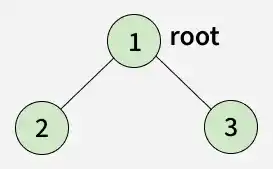
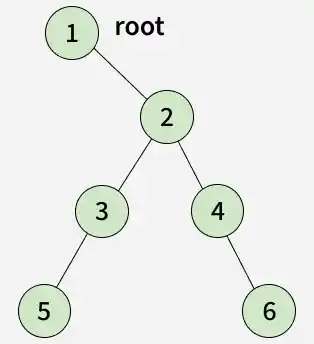

Table of Content
- [Naive Approach] By Calculating Height For Each Node - O(n^2) Time and O(h) Space
- [Expected Approach] Using Single Traversal - O(n) Time and O(h) Space
[Naive Approach] By Calculating Height For Each Node - O(n2) Time and O(h) Space
The core idea involves recursively traversing the tree. At each node, we determine the heights of its left and right subtrees and update the maximum diameter by calculating the sum of these heights.
C++ `
#include #include using namespace std;
// Node Structure class Node { public: int data; Node *left, *right; Node(int x) { data = x; left = nullptr; right = nullptr; } };
// Function to compute the height of a tree. int height(Node* root) {
if (root == nullptr)
    return 0;

// If tree is not empty then height = 1 + max of left height and right heights
return 1 + max(height(root->left),
               height(root->right));
}
// Function to get diameter of a binary tree int diameter(Node* root) {
if (root == nullptr)
    return 0;

// Get the height of left and right sub-trees
int lheight = height(root->left);
int rheight = height(root->right);

// Get the diameter of left and right sub-trees
int ldiameter = diameter(root->left);
int rdiameter = diameter(root->right);

return max({lheight + rheight, ldiameter, rdiameter});
}
int main() {
Node* root = new Node(1);
root->right = new Node(2);
root->right->left = new Node(3);
root->right->right = new Node(4);
  root->right->left->left = new Node(5);
  root->right->right->right = new Node(6);
cout << diameter(root) << endl;

return 0;
}
C
#include <stdio.h> #include <stdlib.h>
// Node Structure struct Node { int data; struct Node* left; struct Node* right; };
// Function to compute the height of a tree. int height(struct Node* root) {
if (root == NULL)
    return 0;

// If tree is not empty then height = 1 + max of left height and right heights
int leftHeight = height(root->left);
int rightHeight = height(root->right);

return 1 +
(leftHeight > rightHeight ? leftHeight : rightHeight);
}
// Function to get diameter of a binary tree int diameter(struct Node* root) { if (root == NULL) return 0;
// Get the height of left and right sub-trees
int lheight = height(root->left);
int rheight = height(root->right);

// Get the diameter of left and right sub-trees
int ldiameter = diameter(root->left);
int rdiameter = diameter(root->right);

// Diameter of current subtree
int curr = lheight+rheight;

if (ldiameter > rdiameter && ldiameter > curr)
    return ldiameter;
else if (rdiameter > ldiameter && rdiameter > curr)
    return rdiameter;
return curr;
}
struct Node* createNode(int x) { struct Node* newNode = (struct Node*)malloc(sizeof(struct Node)); newNode->data = x; newNode->left = NULL; newNode->right = NULL; return newNode; }
int main() {
struct Node* root = createNode(1);
root->right = createNode(2);
root->right->left = createNode(3);
root->right->right = createNode(4);
  root->right->left->left = createNode(5);
  root->right->right->right = createNode(6);
printf("%d\n", diameter(root));

return 0;
}
Java
import java.util.ArrayList;
// Node Structure class Node { int data; Node left, right;
Node(int x) {
    data = x;
    left = null;
    right = null;
}
}
class GFG {
// Function to compute the height of a tree.
static int height(Node root) {

    if (root == null)
        return 0;

    // If tree is not empty then height = 1 + max of left height and right heights
    return 1 + Math.max(height(root.left), height(root.right));
}

// Function to get diameter of a binary tree
static int diameter(Node root) {
    if (root == null)
        return 0;

    // Get the height of left and right sub-trees
    int lheight = height(root.left);
    int rheight = height(root.right);

    // Get the diameter of left and right sub-trees
    int ldiameter = diameter(root.left);
    int rdiameter = diameter(root.right);

    return Math.max(lheight + rheight,
                    Math.max(ldiameter, rdiameter));
}

public static void main(String[] args) {

    Node root = new Node(1);
    root.right = new Node(2);
    root.right.left = new Node(3);
    root.right.right = new Node(4);
      root.right.left.left = new Node(5);
      root.right.right.right = new Node(6);

    System.out.println(diameter(root));
}
}
Python
Node Structure
class Node: def init(self, x): self.data = x self.left = None self.right = None
Function to compute the height of a tree
def height(root):
if root is None:
    return 0

# If tree is not empty then height = 1 + max of left height and right heights
return 1 + max(height(root.left), height(root.right))
Function to get diameter of a binary tree
def diameter(root): if root is None: return 0
# Get the height of left and right sub-trees
lheight = height(root.left)
rheight = height(root.right)

# Get the diameter of left and right sub-trees
ldiameter = diameter(root.left)
rdiameter = diameter(root.right)

return max(lheight + rheight, ldiameter, rdiameter)
if name == "main":
root = Node(1)
root.right = Node(2)
root.right.left = Node(3)
root.right.right = Node(4)
root.right.left.left = Node(5)
root.right.right.right = Node(6)

print(diameter(root))
C#
using System; using System.Collections.Generic;
// Node Structure class Node { public int data; public Node left, right;
public Node(int x) {
    data = x;
    left = null;
    right = null;
}
}
class GFG {
// Function to compute the height of a tree
static int height(Node root) {

    if (root == null)
        return 0;

    // If tree is not empty then height = 1 + max of left height and right heights
    return 1 + Math.Max(height(root.left), height(root.right));
}

// Function to get diameter of a binary tree
static int diameter(Node root) {
    if (root == null)
        return 0;

    // Get the height of left and right sub-trees
    int lheight = height(root.left);
    int rheight = height(root.right);

    // Get the diameter of left and right sub-trees
    int ldiameter = diameter(root.left);
    int rdiameter = diameter(root.right);

    return Math.Max(lheight + rheight,
                    Math.Max(ldiameter, rdiameter));
}

static void Main(string[] args) {

    Node root = new Node(1);
    root.right = new Node(2);
    root.right.left = new Node(3);
    root.right.right = new Node(4);
      root.right.left.left = new Node(5);
      root.right.right.right = new Node(6);

    Console.WriteLine(diameter(root));
}
}
JavaScript
// Node Structure class Node { constructor(x) { this.data = x; this.left = null; this.right = null; } }
// Function to compute the height of a tree. function height(root) {
if (root === null)
    return 0;

// If tree is not empty then height = 1 + max of left height and right heights
return 1 + Math.max(height(root.left), height(root.right));
}
// Function to get diameter of a binary tree function diameter(root) { if (root === null) return 0;
// Get the height of left and right sub-trees
const lheight = height(root.left);
const rheight = height(root.right);

// Get the diameter of left and right sub-trees
const ldiameter = diameter(root.left);
const rdiameter = diameter(root.right);

return Math.max(lheight + rheight, ldiameter, rdiameter);
}
let root = new Node(1); root.right = new Node(2); root.right.left = new Node(3); root.right.right = new Node(4); root.right.left.left = new Node(5); root.right.right.right = new Node(6);
console.log(diameter(root));
`
[Expected Approach] Using Single Traversal - O(n) Time and O(h) Space
The core idea is to efficiently calculate the diameter, avoiding redundant height calculations. We use recursion to find both height and diameter in a single traversal. For each node, the longest path through it is the sum of its left and right subtree heights. By tracking the maximum diameter, we find the longest path.
C++ `
#include using namespace std;
// Node Structure class Node { public: int data; Node* left; Node* right;
Node(int x) {
    data = x;
    left = nullptr;
    right = nullptr;
}
};
// Global variable to store the maximum diameter int maxDiameter = 0;
int diameterRecur(Node* root) { if (!root) return 0;
// Find the height of left and right subtree
int lHeight = diameterRecur(root->left);
int rHeight = diameterRecur(root->right);

// Update the global max diameter if this node gives a longer path
if (lHeight + rHeight > maxDiameter)
    maxDiameter = lHeight + rHeight;

// Return height of current subtree
return 1 + max(lHeight, rHeight);
}
// Function to get diameter of a binary tree int diameter(Node* root) { maxDiameter = 0; diameterRecur(root); return maxDiameter; }
int main() {
Node* root = new Node(1);
root->right = new Node(2);
root->right->left = new Node(3);
root->right->right = new Node(4);
  root->right->left->left = new Node(5);
  root->right->right->right = new Node(6);

cout << diameter(root) << endl;

return 0;
}
C
#include <stdio.h> #include <stdlib.h>
// Node Structure struct Node { int data; struct Node* left; struct Node* right; };
// Function to create a new Node struct Node* createNode(int x) { struct Node* node = (struct Node*)malloc(sizeof(struct Node)); node->data = x; node->left = NULL; node->right = NULL; return node; }
int max(int a, int b) { return a > b ? a : b; }
// Global variable to store the maximum diameter int maxDiameter = 0;
int diameterRecur(struct Node* root) { if (root == NULL) return 0;
// Find the height of left and right subtree
int lHeight = diameterRecur(root->left);
int rHeight = diameterRecur(root->right);

// Update the global max diameter if this node gives a longer path
if (lHeight + rHeight > maxDiameter)
    maxDiameter = lHeight + rHeight;

// Return height of current subtree
return 1 + max(lHeight, rHeight);
}
// Function to get diameter of a binary tree int diameter(struct Node* root) { maxDiameter = 0; diameterRecur(root); return maxDiameter; }
int main() {
struct Node* root = createNode(1);
root->right = createNode(2);
root->right->left = createNode(3);
root->right->right = createNode(4);
  root->right->left->left = createNode(5);
  root->right->right->right = createNode(6);

printf("%d\n", diameter(root));

return 0;
}
Java
// Node Structure class Node { int data; Node left, right;
Node(int x) {
    data = x;
    left = null;
    right = null;
}
}
class GFG {
// Static variable to store maximum diameter
static int maxDiameter = 0;

// Recursive function to calculate height and update diameter
static int diameterRecur(Node root) {
    if (root == null)
        return 0;

    // Find the height of left and right subtree
    int lHeight = diameterRecur(root.left);
    int rHeight = diameterRecur(root.right);

    // Update the global max diameter if this node gives a longer path
    if (lHeight + rHeight > maxDiameter)
        maxDiameter = lHeight + rHeight;

    // Return height of current subtree
    return 1 + Math.max(lHeight, rHeight);
}

// Function to get diameter of a binary tree
static int diameter(Node root) {
    maxDiameter = 0;
    diameterRecur(root);
    return maxDiameter;
}

public static void main(String[] args) {

    Node root = new Node(1);
    root.right = new Node(2);
    root.right.left = new Node(3);
    root.right.right = new Node(4);
      root.right.left.left = new Node(5);
      root.right.right.right = new Node(6);

    System.out.println(diameter(root));
}
}
Python
Node Structure
class Node: def init(self, x): self.data = x self.left = None self.right = None
Global variable to store the maximum diameter
maxDiameter = 0
Recursive function to calculate height and update diameter
def diameterRecur(root): global maxDiameter if root is None: return 0
# Find the height of left and right subtree
lHeight = diameterRecur(root.left)
rHeight = diameterRecur(root.right)

# Update the global max diameter if this node gives a longer path
maxDiameter = max(maxDiameter, lHeight + rHeight)

# Return height of current subtree
return 1 + max(lHeight, rHeight)
Function to get diameter of a binary tree
def diameter(root): global maxDiameter
maxDiameter = 0

diameterRecur(root)

return maxDiameter
if name == "main": root = Node(1) root.right = Node(2) root.right.left = Node(3) root.right.right = Node(4) root.right.left.left = Node(5) root.right.right.right = Node(6) print(diameter(root))
C#
using System;
// Node Structure class Node { public int data; public Node left, right;
public Node(int x) {
    data = x;
    left = null;
    right = null;
}
}
class GFG {
// global variable to store maximum diameter
static int maxDiameter = 0;

// Recursive function which finds the diameter of the tree.
static int diameterRecur(Node root) {
    if (root == null)
        return 0;

    // find the height of left and right subtree
    int lHeight = diameterRecur(root.left);
    int rHeight = diameterRecur(root.right);

    // Check if diameter of root is greater than maxDiameter.
    maxDiameter = Math.Max(maxDiameter, lHeight + rHeight);

    // return the height of current subtree.
    return 1 + Math.Max(lHeight, rHeight);
}

// Function to get diameter of a binary tree
static int diameter(Node root) {
    maxDiameter = 0;
    diameterRecur(root);
    return maxDiameter;
}

static void Main(string[] args) {

    Node root = new Node(1);
    root.right = new Node(2);
    root.right.left = new Node(3);
    root.right.right = new Node(4);
      root.right.left.left = new Node(5);
      root.right.right.right = new Node(6);

    Console.WriteLine(diameter(root));
}
}
JavaScript
// Node Structure class Node { constructor(x) { this.data = x; this.left = null; this.right = null; } }
// global variable to store the maximum diameter let maxDiameter = 0;
// Recursive function which finds the diameter of the tree. function diameterRecur(root) { if (root === null) return 0;
// find the height of left and right subtree
let lHeight = diameterRecur(root.left);
let rHeight = diameterRecur(root.right);

// Check if diameter of root is greater than maxDiameter.
maxDiameter = Math.max(maxDiameter, lHeight + rHeight);

// return the height of current subtree.
return 1 + Math.max(lHeight, rHeight);
}
// Function to get diameter of a binary tree function diameter(root) { maxDiameter = 0; diameterRecur(root); return maxDiameter; }
let root = new Node(1); root.right = new Node(2); root.right.left = new Node(3); root.right.right = new Node(4); root.right.left.left = new Node(5); root.right.right.right = new Node(6);
console.log(diameter(root));
`
**Related article: