Length of cycle in Linked List (original) (raw)
Last Updated : 28 Aug, 2025
Given the **head of a singly linked list, determine the length of the cycle (loop) if one exists. A cycle occurs when a node's next pointer points to a previously visited node in the list. If no cycle is present, return 0.
**Examples:
**Input:
**Output: 3
**Explanation: There exists a loop in the linked list and the length of the loop is 3.**Input:
**Output: 0
**Explanation: There is no loop present in the Linked List.
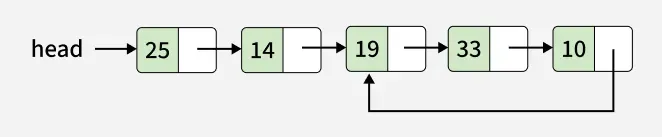


Table of Content
- [Naive Approach] Using Set - O(n) Time and O(n) Space
- [Expected Approach] Using Floyd’s Cycle Detection Algorithm - O(n) Time and O(1) Space
[Naive Approach] Using Set - O(n) Time and O(n) Space
The idea is to maintain a set to keep track of visited nodes so far. If the node is not present in set we will insert and move to another node, else we will maintain a counter from that node and will start traversing until we reach to it again by incrementing the counter variable every time.
C++ `
#include #include using namespace std;
// Node structure class Node { public: int data; Node* next; Node(int x) { data = x; next = nullptr; } };
int lengthOfLoop(Node* head) {
unordered_set<Node*> visited;
Node* current = head;
int count = 0;

while (current != nullptr) {

    // if the node is already visited,
      // it means there is a loop
    if (visited.find(current) != visited.end()) {
        Node* startOfLoop = current;
        do {
            count++;
            current = current->next;
        } while (current != startOfLoop);
        return count;
    }

    // mark the current node as visited
    visited.insert(current);

    // move to the next node
    current = current->next;
}

return 0;
}
int main() {
  Node* head = new Node(25);
head->next = new Node(14);
head->next->next = new Node(19);
head->next->next->next = new Node(33);
head->next->next->next->next = new Node(10);

head->next->next->next->next->next = head->next->next;

cout << lengthOfLoop(head) << endl;

return 0;
}
Java
import java.util.HashSet;
// Node structure class Node { int data; Node next; Node(int x) { data = x; next = null; } }
class GfG {
static int lengthOfLoop(Node head) {

    HashSet<Node> visited = new HashSet<>();
    Node current = head;
    int count = 0;

    while (current != null) {

        // if the node is already visited,
        // it means there is a loop
        if (visited.contains(current)) {
            Node startOfLoop = current;
            do {
                count++;
                current = current.next;
            } while (current != startOfLoop);
            return count;
        }

        // mark the current node as visited
        visited.add(current);

        // move to the next node
        current = current.next;
    }

    return 0;
}

public static void main(String[] args) {

    Node head = new Node(25);
    head.next = new Node(14);
    head.next.next = new Node(19);
    head.next.next.next = new Node(33);
    head.next.next.next.next = new Node(10);

    head.next.next.next.next.next = head.next.next;

    System.out.println(lengthOfLoop(head));
}
}
Python
Node structure
class Node: def init(self, x): self.data = x self.next = None
def lengthOfLoop(head):
visited = set()
current = head
count = 0

while current is not None:

    # if the node is already visited,
    # it means there is a loop
    if current in visited:
        startOfLoop = current
        while True:
            count += 1
            current = current.next
            if current == startOfLoop:
                break
        return count

    # mark the current node as visited
    visited.add(current)

    # move to the next node
    current = current.next

return 0
if name == "main":
head = Node(25)
head.next = Node(14)
head.next.next = Node(19)
head.next.next.next = Node(33)
head.next.next.next.next = Node(10)

head.next.next.next.next.next = head.next.next

print(lengthOfLoop(head))
C#
using System; using System.Collections.Generic;
// Node structure class Node { public int data; public Node next; public Node(int x) { data = x; next = null; } }
class GfG { static int lengthOfLoop(Node head) {
    HashSet<Node> visited = new HashSet<Node>();
    Node current = head;
    int count = 0;

    while (current != null) {

        // if the node is already visited,
        // it means there is a loop
        if (visited.Contains(current)) {
            Node startOfLoop = current;
            do {
                count++;
                current = current.next;
            } while (current != startOfLoop);
            return count;
        }

        // mark the current node as visited
        visited.Add(current);

        // move to the next node
        current = current.next;
    }

    return 0;
}

public static void Main(string[] args) {

    Node head = new Node(25);
    head.next = new Node(14);
    head.next.next = new Node(19);
    head.next.next.next = new Node(33);
    head.next.next.next.next = new Node(10);

    head.next.next.next.next.next = head.next.next;

    Console.WriteLine(lengthOfLoop(head));
}
}
JavaScript
// Node structure class Node { constructor(x) { this.data = x; this.next = null; } }
function lengthOfLoop(head) {
const visited = new Set();
let current = head;
let count = 0;

while (current !== null) {

    // if the node is already visited,
    // it means there is a loop
    if (visited.has(current)) {
        const startOfLoop = current;
        do {
            count++;
            current = current.next;
        } while (current !== startOfLoop);
        return count;
    }

    // mark the current node as visited
    visited.add(current);

    // move to the next node
    current = current.next;
}

return 0;
}
// Driver Code let head = new Node(25); head.next = new Node(14); head.next.next = new Node(19); head.next.next.next = new Node(33); head.next.next.next.next = new Node(10);
head.next.next.next.next.next = head.next.next;
console.log(lengthOfLoop(head));
`
[Expected Approach] Using Floyd’s Cycle Detection Algorithm - O(n) Time and O(1) Space
The idea is to use Floyd’s Cycle detection algorithm for detecting the common point in the loop. Using fast and slow pointer
**Step by Step Approach:
- Use a fast and slow pointer pointing to head of linked list.
- move fast pointer to fast->next->next and slow pointer to slow->next.
- If a common meeting point exists between the slow and fast pointers, it confirms the presence of a loop.
- Once the loop is detected, we start counting the number of nodes in the loop by initializing a counter and traversing the loop starting from the meeting point.
- If no meeting point is found, it means there is no loop, so we return 0. C++ `
#include using namespace std;
// Node structure class Node { public: int data; Node* next; Node(int x) { data = x; next = nullptr; } };
// Returns count of nodes present in loop. int countNodes(Node* node) { int res = 1; Node* curr = node; while (curr->next != node) { res++; curr = curr->next; } return res; }
// Detects and Counts nodes in loop int lengthOfLoop(Node* head) { Node *slow = head, *fast = head;
while (slow != nullptr && fast != nullptr
       && fast->next != nullptr) {

    slow = slow->next;
    fast = fast->next->next;

    // If slow and fast meet at
    // some point then there is a loop
    if (slow == fast)
        return countNodes(slow);
}

return 0;
}
int main() {
  Node* head = new Node(25);
head->next = new Node(14);
head->next->next = new Node(19);
head->next->next->next = new Node(33);
head->next->next->next->next = new Node(10);

head->next->next->next->next->next = head->next->next;

cout << lengthOfLoop(head) << endl;

return 0;
}
Java
// Node structure class Node { int data; Node next; Node(int x) { data = x; next = null; } }
class GfG {
// Returns count of nodes present in loop.
static int countNodes(Node node) {
    int res = 1;
    Node curr = node;
    while (curr.next != node) {
        res++;
        curr = curr.next;
    }
    return res;
}

// Detects and Counts nodes in loop
static int lengthOfLoop(Node head) {
    Node slow = head, fast = head;

    while (slow != null && fast != null
           && fast.next != null) {

        slow = slow.next;
        fast = fast.next.next;

        // if slow and fast meet at
        // some point then there is a loop
        if (slow == fast)
            return countNodes(slow);
    }

    return 0;
}

public static void main(String[] args) {

   Node head = new Node(25);
    head.next = new Node(14);
    head.next.next = new Node(19);
    head.next.next.next = new Node(33);
    head.next.next.next.next = new Node(10);

    head.next.next.next.next.next = head.next.next;

    System.out.println(lengthOfLoop(head));
}
}
Python
Node structure
class Node: def init(self, x): self.data = x self.next = None
Returns count of nodes present in loop.
def countNodes(node): res = 1 curr = node while curr.next != node: res += 1 curr = curr.next return res
Detects and Counts nodes in loop
def lengthOfLoop(head): slow = head fast = head
while slow is not None and fast is not None \
      and fast.next is not None:

    slow = slow.next
    fast = fast.next.next

    # if slow and fast meet at
    # some point then there is a loop
    if slow == fast:
        return countNodes(slow)

return 0
if name == "main":
head = Node(25)
head.next = Node(14)
head.next.next = Node(19)
head.next.next.next = Node(33)
head.next.next.next.next = Node(10)

head.next.next.next.next.next = head.next.next

print(lengthOfLoop(head))
C#
using System;
// Node structure class Node { public int data; public Node next; public Node(int x) { data = x; next = null; } }
class GfG {
// Returns count of nodes present in loop.
public static int countNodes(Node node) {
    int res = 1;
    Node curr = node;
    while (curr.next != node) {
        res++;
        curr = curr.next;
    }
    return res;
}

// Detects and Counts nodes in loop
public static int lengthOfLoop(Node head) {
    Node slow = head, fast = head;

    while (slow != null && fast != null
           && fast.next != null) {

        slow = slow.next;
        fast = fast.next.next;

        // if slow and fast meet at
        // some point then there is a loop
        if (slow == fast)
            return countNodes(slow);
    }

    return 0;
}

public static void Main(string[] args) {

    Node head = new Node(25);
    head.next = new Node(14);
    head.next.next = new Node(19);
    head.next.next.next = new Node(33);
    head.next.next.next.next = new Node(10);

    head.next.next.next.next.next = head.next.next;

    Console.WriteLine(lengthOfLoop(head));
}
}
JavaScript
// Node structure class Node { constructor(x) { this.data = x; this.next = null; } }
// Returns count of nodes present in loop. function countNodes(node) { let res = 1; let curr = node; while (curr.next !== node) { res++; curr = curr.next; } return res; }
// Detects and Counts nodes in loop function lengthOfLoop(head) { let slow = head, fast = head;
while (slow !== null && fast !== null &&
       fast.next !== null) {

    slow = slow.next;
    fast = fast.next.next;

    // if slow and fast meet at
    // some point then there is a loop
    if (slow === fast)
        return countNodes(slow);
}

return 0;
}
// Driver Code let head = new Node(25); head.next = new Node(14); head.next.next = new Node(19); head.next.next.next = new Node(33); head.next.next.next.next = new Node(10);
head.next.next.next.next.next = head.next.next;
console.log(lengthOfLoop(head));
`