Inorder Traversal of Binary Tree (original) (raw)
Last Updated : 8 Dec, 2025
**Inorder Traversal is a method to traverse a tree such that for each node, you first traverse its left subtree, then visit the node itself, and finally traverse its right subtree.
Examples:
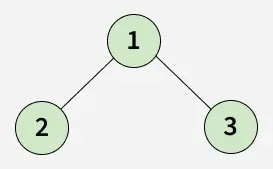
**Input:
**Output: [2, 1, 3]
**Explanation: The Inorder Traversal visits the nodes in the following order: Left, Root, Right. Therefore, we visit the left node 2, then the root node 1 and lastly the right node 3.**Input :
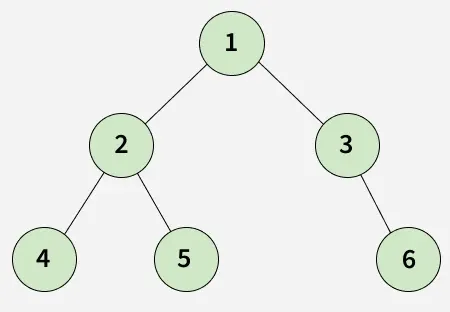
Output: [4, 2, 5, 1, 3, 6]
Explanation: Inorder Traversal (Left -> Root -> Right).** Visit 4 -> 2 -> 5 -> 1 -> 3 -> 6, resulting in 4 2 5 1 3 6.

How does Inorder Traversal work?
[Approach] Using Recursion
The main idea is to traverse the tree recursively, starting from the root node, first completely traverse the left subtree, then visit the root node itself, and finally completely traverse the right subtree.
C++ `
#include #include using namespace std;
//Node Structure class Node { public: int data; Node* left; Node* right;
Node(int x) {
    data = x;
    left = right = NULL;
}
};
void inOrder(Node* node, vector& res) { if (node == nullptr) return;
// Traverse the left subtree first
inOrder(node->left, res);

// Visit the current node
res.push_back(node->data);

// Traverse the right subtree last
inOrder(node->right, res);
}
int main() {
// Create binary tree
// 1
// /
// 2 3
// / \
// 4 5 6
Node* root = new Node(1);
root->left = new Node(2);
root->right = new Node(3);
root->left->left = new Node(4);
root->left->right = new Node(5);
root->right->right = new Node(6);
vector<int> res;
inOrder(root, res);

for( int node : res)
    cout << node << " ";

return 0;
}
C
#include <stdio.h> #include <stdlib.h>
//Node Structure struct Node { int data; struct Node* left; struct Node* right; };
// Function to create a new node struct Node* newNode(int x) { struct Node* node = (struct Node*)malloc(sizeof(struct Node)); node->data = x; node->left = NULL; node->right = NULL; return node; }
void inOrder(struct Node* node) { if (node == NULL) return;
// Traverse the left subtree first
inOrder(node->left);

// Visit the current node
printf("%d ", node->data);

// Traverse the right subtree last
inOrder(node->right);
}
int main() {
// Create binary tree
// 1
// /
// 2 3
// / \
// 4 5 6
struct Node* root = newNode(1);
root->left = newNode(2);
root->right = newNode(3);
root->left->left = newNode(4);
root->left->right = newNode(5);
root->right->right = newNode(6);
inOrder(root);
printf("\n");

return 0;
}
Java
import java.util.ArrayList;
//Node Structure class Node { int data; Node left; Node right;
Node(int x) {
    data = x;
    left = right = null;
}
}
public class GFG {
static void inOrder(Node node, ArrayList<Integer> res) {
    if (node == null)
        return;

    // Traverse the left subtree first
    inOrder(node.left, res);

    // Visit the current node
    res.add(node.data);

    // Traverse the right subtree last
    inOrder(node.right, res);
}

public static void main(String[] args) {
    // Create binary tree
    //       1
    //      /  \
    //    2     3
    //   / \     \
    //  4   5     6
    Node root = new Node(1);
    root.left = new Node(2);
    root.right = new Node(3);
    root.left.left = new Node(4);
    root.left.right = new Node(5);
    root.right.right = new Node(6);

    ArrayList<Integer> res = new ArrayList<>();
    inOrder(root, res);

    for(int node : res)
        System.out.print(node + " ");
}
}
Python
#Node Structure class Node: def init(self, x): self.data = x self.left = None self.right = None
def inOrder(node, res): if node is None: return
# Traverse the left subtree first
inOrder(node.left, res)

# Visit the current node
res.append(node.data)

# Traverse the right subtree last
inOrder(node.right, res)
if name == "main":
# Create binary tree
# 1
# /
# 2 3
# / \
# 4 5 6
root = Node(1)
root.left = Node(2)
root.right = Node(3)
root.left.left = Node(4)
root.left.right = Node(5)
root.right.right = Node(6)
res = []
inOrder(root, res)

for node in res:
    print(node, end=" ")
C#
using System; using System.Collections.Generic;
//Node Structure class Node { public int data; public Node left; public Node right;
public Node(int x) {
    data = x;
    left = right = null;
}
}
class GFG {
static void inOrder(Node node, List<int> res) {
    if (node == null)
        return;

    // Traverse the left subtree first
    inOrder(node.left, res);

    // Visit the current node
    res.Add(node.data);

    // Traverse the right subtree last
    inOrder(node.right, res);
}

static void Main(string[] args) {
    // Create binary tree
    //       1
    //      /  \
    //    2     3
    //   / \     \
    //  4   5     6
    Node root = new Node(1);
    root.left = new Node(2);
    root.right = new Node(3);
    root.left.left = new Node(4);
    root.left.right = new Node(5);
    root.right.right = new Node(6);

    List<int> res = new List<int>();
    inOrder(root, res);

    foreach(int node in res)
        Console.Write(node + " ");
}
}
JavaScript
//Node Structure class Node { constructor(x) { this.data = x; this.left = null; this.right = null; } }
function inOrder(node, res) { if (node === null) return;
// Traverse the left subtree first
inOrder(node.left, res);

// Visit the current node
res.push(node.data);

// Traverse the right subtree last
inOrder(node.right, res);
}
//Driver Code
// Create binary tree
// 1
// /
// 2 3
// / \
// 4 5 6
const root = new Node(1);
root.left = new Node(2);
root.right = new Node(3);
root.left.left = new Node(4);
root.left.right = new Node(5);
root.right.right = new Node(6);
const res = []; inOrder(root, res);
console.log(res.join(' '));
`
**Time Complexity: O(n)
**Auxiliary Space: O(h), h is the height of the tree
- In the worst case, h can be the same as n (when the tree is a skewed tree)
- In the best case, h can be the same as log n (when the tree is a complete tree)
**Key Properties:
- If applied to a Binary Search Tree (BST), it returns elements in sorted order.
- Ensures that nodes are processed in a hierarchical sequence, making it useful for expression trees and BSTs.
**Related Articles: