Insertion at the beginning in circular linked list (original) (raw)
Last Updated : 30 Aug, 2025
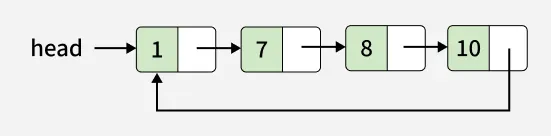
Given a Circular Linked List and an integer key representing a node. Insert the given key node at the beginning of the circular linked list.
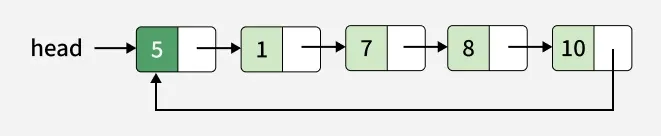
**Input: key = 5
**Output: 5 -> 1 -> 7 -> 8 -> 10
**Explanation: After inserting 5 at the beginning of the given circular linked list, it has elements as 5, 1, 7, 8, 10.
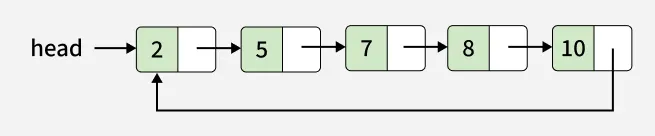
**Input: key = 1
**Output: 1 -> 2 -> 5 -> 7 -> 8 -> 10
**Explanation: After inserting 1 at the beginning of the given circular linked list, it has elements as 1, 2, 5, 7, 8, 10.


Insertion at the beginning in circular linked list
To insert a new node at the beginning of a circular linked list, we first create the **new node and allocate memory for it. If the list is empty (indicated by the last pointer being **NULL), we make the **new node point to itself. If the list already contains nodes then we set the **new node’s next pointer to point to the **current head of the list (which is **last->next), and then update the last node’s next pointer to point to the **new node. This maintains the circular structure of the list.
Step-by-step approach:
- Create a new node with the given value.
- Check Empty List (**last == **nullptr):
- Make **newNode->next point to itself.
- Insert at Beginning:
- Set **newNode->next to **last->next.
- Update last->next to **newNode.
Below is the implementation of the above approach:
C++ `
#include using namespace std;
class Node { public: int data; Node* next;
Node(int x) {
    data = x;
    next = nullptr;
}
};
Node* insertAtBeginning(Node* last, int key) { Node* newNode = new Node(key);
if (last == nullptr) {
    newNode->next = newNode;
    return newNode;
}

newNode->next = last->next;
last->next = newNode;

return last;
}
void printList(Node* last) { if (last == nullptr) return;
Node* head = last->next;
Node* temp = head;

do {
    cout << temp->data;
    temp = temp->next;
    if (temp != head) cout << " -> ";
} while (temp != head);

cout << endl;
}
int main() { // Create circular linked list: 2 -> 3 -> 4 Node* first = new Node(2); first->next = new Node(3); first->next->next = new Node(4);
Node* last = first->next->next;
last->next = first;

// Insert 5 at the beginning
last = insertAtBeginning(last, 5);

printList(last);

return 0;
}
Java
class Node { int data; Node next;
Node(int x) {
    data = x;
    next = null;
}
}
class GfG {
static Node insertAtBeginning(Node last, int key) {
    Node newNode = new Node(key);

    if (last == null) {
        newNode.next = newNode;
        return newNode;
    }

    newNode.next = last.next;
    last.next = newNode;

    return last;
}

static void printList(Node last) {
    if (last == null) return;

    Node head = last.next;
    Node temp = head;

    do {
        System.out.print(temp.data);
        temp = temp.next;
        if (temp != head) System.out.print(" -> ");
    } while (temp != head);

    System.out.println();
}

public static void main(String[] args) {
    // Create circular linked list: 2 -> 3 -> 4
    Node first = new Node(2);
    first.next = new Node(3);
    first.next.next = new Node(4);

    Node last = first.next.next;
    last.next = first;

    // Insert 5 at the beginning
    last = insertAtBeginning(last, 5);

    printList(last);
}
}
Python
class Node: def init(self, x): self.data = x self.next = None
def insertAtBeginning(last, key): newNode = Node(key)
if last is None:
    newNode.next = newNode
    return newNode

newNode.next = last.next
last.next = newNode

return last
def printList(last): if last is None: return
head = last.next
temp = head

while True:
    print(temp.data, end="")
    temp = temp.next
    if temp != head:
        print(" -> ", end="")
    else:
        break
print()
if name == "main": # Create circular linked list: 2 -> 3 -> 4 first = Node(2) first.next = Node(3) first.next.next = Node(4)
last = first.next.next
last.next = first

# Insert 5 at the beginning
last = insertAtBeginning(last, 5)

printList(last)
C#
using System;
class Node { public int data; public Node next;
public Node(int x) {
    data = x;
    next = null;
}
}
class GfG { public static Node insertAtBeginning(Node last, int key) { Node newNode = new Node(key);
    if (last == null) {
        newNode.next = newNode;
        return newNode;
    }

    newNode.next = last.next;
    last.next = newNode;

    return last;
}

public static void printList(Node last) {
    if (last == null) return;

    Node head = last.next;
    Node temp = head;

    while (true) {
        Console.Write(temp.data);
        temp = temp.next;
        if (temp != head) {
            Console.Write(" -> ");
        } else {
            break;
        }
    }
    Console.WriteLine();
}

static void Main(string[] args) {
    // Create circular linked list: 2 -> 3 -> 4
    Node first = new Node(2);
    first.next = new Node(3);
    first.next.next = new Node(4);

    Node last = first.next.next;
    last.next = first;

    // Insert 5 at the beginning
    last = insertAtBeginning(last, 5);

    printList(last);
}
}
JavaScript
class Node { constructor(x) { this.data = x; this.next = null; } }
// Function to insert at beginning of circular linked list function insertAtBeginning(last, key) { let newNode = new Node(key);
if (last === null) {
    newNode.next = newNode;
    return newNode;
}

newNode.next = last.next;
last.next = newNode;

return last;
}
// Function to print circular linked list function printList(last) { if (last === null) return;
let head = last.next;
let temp = head;

while (true) {
    process.stdout.write(temp.data.toString());
    temp = temp.next;
    if (temp !== head) {
        process.stdout.write(" -> ");
    } else {
        break;
    }
}
console.log();
}
// Driver code let first = new Node(2); first.next = new Node(3); first.next.next = new Node(4);
let last = first.next.next; last.next = first;
// Insert 5 at beginning last = insertAtBeginning(last, 5);
printList(last);
`
**Time Complexity: O(1)
**Auxiliary Space: O(1)