Minimize Cash Flow (original) (raw)
Last Updated : 24 Mar, 2026
Given **n number of friends who have to give or take some amount of money from one another. The task is to design an algorithm by which the total cash flow among all the friends is minimized to settle all debts.
**Examples:
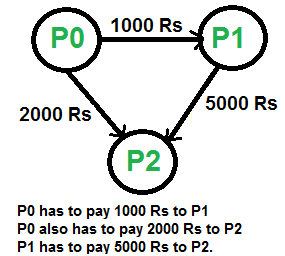
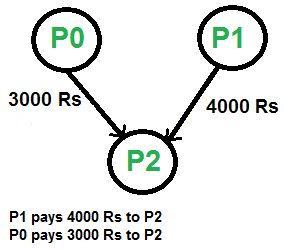
**Input: transaction = [[0, 1000, 2000], [0, 0, 5000], [0, 0, 0]]
**Output: [[0, 0, 3000], [0, 0, 4000], [0, 0, 0]]
**Input: transaction = [[0, 100, 0], [0, 0, 100], [100, 0, 0]]
**Output: [[0, 0, 0], [0, 0, 0], [0, 0, 0]]

**Approach:
The idea is to calculate each person's net balance and then optimizing cash flow between individuals who owe money (debtors) and those who are owed money (creditors), ensuring that money flows directly from the highest debtors to the highest creditors until all debts are settled.
Step by step approach:
- Calculate the net amount for each person by subtracting outgoing money from incoming money
- Separate people into two groups - those who need to pay and those who need to receive
- Sort both groups by amount (highest values first) using priority queues
- Repeatedly match the highest debtor with the highest creditor
- Transfer the minimum of what one needs to pay and what one needs to receive
- Continue until all debts are settled with minimized transactions C++ `
// C++ program to Minimize Cash Flow among a given set // of friends who have borrowed money from each other. #include <bits/stdc++.h> using namespace std;
vector<vector> minCashFlow(vector<vector> &transaction) { int n = transaction.size();
// Priority queues to track people who
// need to give money and receive money
// Vector format: {amount, personIndex}
priority_queue<vector<int>> debtors, creditors;

// Calculate net amount for each person
for (int personId = 0; personId < n; personId++) {
    int netAmount = 0;

    // Add all incoming money
    for (int fromPerson = 0; fromPerson < n; fromPerson++)
        netAmount += transaction[fromPerson][personId];

    // Subtract all outgoing money
    for (int toPerson = 0; toPerson < n; toPerson++)
        netAmount -= transaction[personId][toPerson];

    // If net amount is negative, person needs to give money
    if (netAmount < 0)
        debtors.push({abs(netAmount), personId});

    // If net amount is positive, person needs to receive money
    else if (netAmount > 0)
        creditors.push({netAmount, personId});
}

// Initialize result matrix with zeros
vector<vector<int>> result(n, vector<int>(n, 0));

// Process all transactions until no more debtors left
while (!debtors.empty()) {
    int debtAmount = debtors.top()[0];
    int creditAmount = creditors.top()[0];
    int debtorId = debtors.top()[1];
    int creditorId = creditors.top()[1];

    // Remove top entries from both queues
    debtors.pop();
    creditors.pop();

    // Find minimum of debt and credit amounts
    int transferAmount = min(debtAmount, creditAmount);

    // Record the transaction in result matrix
    result[debtorId][creditorId] = transferAmount;

    // Update remaining amounts
    debtAmount -= transferAmount;
    creditAmount -= transferAmount;

    // If debtor still has debt remaining, put back in queue
    if (debtAmount > 0) {
        debtors.push({debtAmount, debtorId});
    }

    // If creditor still needs to receive more, put back in queue
    else if (creditAmount > 0) {
        creditors.push({creditAmount, creditorId});
    }
}

return result;
}
int main() { int n = 3; vector<vector> transaction = { {0, 1000, 2000}, {0, 0, 5000}, {0, 0, 0}};
vector<vector<int>> result = minCashFlow(transaction);
for (int i = 0; i < n; i++) {
    for (int j = 0; j < n; j++) {
        cout << result[i][j] << " ";
    }
    cout << endl;
}

return 0;
}
Java
// Java program to Minimize Cash Flow among a given set // of friends who have borrowed money from each other. import java.util.*;
class GfG {
// Function to minimize cash flow
static int[][] minCashFlow(int[][] transaction) {
    int n = transaction.length;

    // Priority queues to track people who
    // need to give money and receive money
    // Array format: {amount, personIndex}
    PriorityQueue<int[]> debtors =
    new PriorityQueue<>((a, b) -> b[0] - a[0]);
    PriorityQueue<int[]> creditors =
    new PriorityQueue<>((a, b) -> b[0] - a[0]);

    // Calculate net amount for each person
    for (int personId = 0; personId < n; personId++) {
        int netAmount = 0;

        // Add all incoming money
        for (int fromPerson = 0; fromPerson < n; fromPerson++)
            netAmount += transaction[fromPerson][personId];

        // Subtract all outgoing money
        for (int toPerson = 0; toPerson < n; toPerson++)
            netAmount -= transaction[personId][toPerson];

        // If net amount is negative, person needs to give money
        if (netAmount < 0)
            debtors.add(new int[]{Math.abs(netAmount), personId});

        // If net amount is positive, person needs to receive money
        else if (netAmount > 0)
            creditors.add(new int[]{netAmount, personId});
    }

    // Initialize result matrix with zeros
    int[][] result = new int[n][n];

    // Process all transactions until no more debtors left
    while (!debtors.isEmpty()) {
        int[] debtor = debtors.poll();
        int[] creditor = creditors.poll();
        int debtAmount = debtor[0];
        int creditAmount = creditor[0];
        int debtorId = debtor[1];
        int creditorId = creditor[1];

        // Find minimum of debt and credit amounts
        int transferAmount = Math.min(debtAmount, creditAmount);

        // Record the transaction in result matrix
        result[debtorId][creditorId] = transferAmount;

        // Update remaining amounts
        debtAmount -= transferAmount;
        creditAmount -= transferAmount;

        // If debtor still has debt remaining, put back in queue
        if (debtAmount > 0)
            debtors.add(new int[]{debtAmount, debtorId});

        // If creditor still needs to receive more, put back in queue
        else if (creditAmount > 0)
            creditors.add(new int[]{creditAmount, creditorId});
    }

    return result;
}

public static void main(String[] args) {
    int n = 3;
    int[][] transaction = {
        {0, 1000, 2000},
        {0, 0, 5000},
        {0, 0, 0}};

    int[][] result = minCashFlow(transaction);
    for (int i = 0; i < n; i++) {
        for (int j = 0; j < n; j++) {
            System.out.print(result[i][j] + " ");
        }
        System.out.println();
    }
}
}
Python
Python program to Minimize Cash Flow among a given set
of friends who have borrowed money from each other.
import heapq
def minCashFlow(transaction): n = len(transaction)
# Priority queues to track people who
# need to give money and receive money
# Tuple format: (-amount, personIndex)
debtors = []
creditors = []

# Calculate net amount for each person
for personId in range(n):
    netAmount = 0

    # Add all incoming money
    for fromPerson in range(n):
        netAmount += transaction[fromPerson][personId]

    # Subtract all outgoing money
    for toPerson in range(n):
        netAmount -= transaction[personId][toPerson]

    # If net amount is negative, person needs to give money
    if netAmount < 0:
        heapq.heappush(debtors, (-abs(netAmount), personId))

    # If net amount is positive, person needs to receive money
    elif netAmount > 0:
        heapq.heappush(creditors, (-netAmount, personId))

# Initialize result matrix with zeros
result = [[0 for _ in range(n)] for _ in range(n)]

# Process all transactions until no more debtors left
while debtors:
    debtAmount, debtorId = heapq.heappop(debtors)
    creditAmount, creditorId = heapq.heappop(creditors)

    debtAmount = -debtAmount
    creditAmount = -creditAmount

    # Find minimum of debt and credit amounts
    transferAmount = min(debtAmount, creditAmount)

    # Record the transaction in result matrix
    result[debtorId][creditorId] = transferAmount

    # Update remaining amounts
    debtAmount -= transferAmount
    creditAmount -= transferAmount

    # If debtor still has debt remaining, put back in queue
    if debtAmount > 0:
        heapq.heappush(debtors, (-debtAmount, debtorId))

    # If creditor still needs to receive more, put back in queue
    elif creditAmount > 0:
        heapq.heappush(creditors, (-creditAmount, creditorId))

return result
if name == "main": n = 3 transaction = [ [0, 1000, 2000], [0, 0, 5000], [0, 0, 0] ]
result = minCashFlow(transaction)
for i in range(n):
    for j in range(n):
        print(result[i][j], end=" ")
    print()
C#
// C# program to Minimize Cash Flow among a given set // of friends who have borrowed money from each other. using System; using System.Collections.Generic;
class GfG {
// Function to minimize cash flow
static int[][] minCashFlow(int[][] transaction) {
    int n = transaction.Length;

    PriorityQueue<int[]> debtors =
    new PriorityQueue<int[]>(new Comparer());
    PriorityQueue<int[]> creditors =
    new PriorityQueue<int[]>(new Comparer());

    // Calculate net amount for each person
    for (int personId = 0; personId < n; personId++) {
        int netAmount = 0;

        // Add all incoming money
        for (int fromPerson = 0; fromPerson < n; fromPerson++)
            netAmount += transaction[fromPerson][personId];

        // Subtract all outgoing money
        for (int toPerson = 0; toPerson < n; toPerson++)
            netAmount -= transaction[personId][toPerson];

        // If net amount is negative, person needs to give money
        if (netAmount < 0)
            debtors.Enqueue(new int[] { Math.Abs(netAmount), personId });

        // If net amount is positive, person needs to receive money
        else if (netAmount > 0)
            creditors.Enqueue(new int[] { netAmount, personId });
    }

    // Initialize result matrix with zeros
    int[][] result = new int[n][];
    for (int i = 0; i < n; i++)
        result[i] = new int[n];

    // Process all transactions until no more debtors left
    while (debtors.Count > 0) {
        int[] debtor = debtors.Dequeue();
        int[] creditor = creditors.Dequeue();
        int debtAmount = debtor[0];
        int creditAmount = creditor[0];
        int debtorId = debtor[1];
        int creditorId = creditor[1];

        // Find minimum of debt and credit amounts
        int transferAmount = Math.Min(debtAmount, creditAmount);

        // Record the transaction in result matrix
        result[debtorId][creditorId] = transferAmount;

        // Update remaining amounts
        debtAmount -= transferAmount;
        creditAmount -= transferAmount;

        // If debtor still has debt remaining, put back in queue
        if (debtAmount > 0)
            debtors.Enqueue(new int[] { debtAmount, debtorId });

        // If creditor still needs to receive more, put back in queue
        else if (creditAmount > 0)
            creditors.Enqueue(new int[] { creditAmount, creditorId });
    }

    return result;
}

static void Main() {
    int n = 3;
    int[][] transaction = new int[][] {
        new int[] {0, 1000, 2000},
        new int[] {0, 0, 5000},
        new int[] {0, 0, 0}
    };

    int[][] result = minCashFlow(transaction);
    for (int i = 0; i < n; i++) {
        for (int j = 0; j < n; j++) {
            Console.Write(result[i][j] + " ");
        }
        Console.WriteLine();
    }
}
}
// Custom comparator class for max heap class Comparer : IComparer<int[]> { public int Compare(int[] a, int[] b) { return b[0].CompareTo(a[0]); } }
// Custom Priority queue class PriorityQueue { private List heap; private IComparer comparer;
public PriorityQueue(IComparer<T> comparer = null) {
    this.heap = new List<T>();
    this.comparer = comparer ?? Comparer<T>.Default;
}

public int Count => heap.Count;

// Enqueue operation
public void Enqueue(T item) {
    heap.Add(item);
    int i = heap.Count - 1;
    while (i > 0) {
        int parent = (i - 1) / 2;
        if (comparer.Compare(heap[parent], heap[i]) <= 0)
            break;
        Swap(parent, i);
        i = parent;
    }
}

// Dequeue operation
public T Dequeue() {
    if (heap.Count == 0)
        throw new InvalidOperationException("Priority queue is empty.");
    T result = heap[0];
    int last = heap.Count - 1;
    heap[0] = heap[last];
    heap.RemoveAt(last);
    last--;
    int i = 0;
    while (true) {
        int left = 2 * i + 1;
        if (left > last)
            break;
        int right = left + 1;
        int minChild = left;
        if (right <= last && comparer.Compare(heap[right], heap[left]) < 0)
            minChild = right;
        if (comparer.Compare(heap[i], heap[minChild]) <= 0)
            break;
        Swap(i, minChild);
        i = minChild;
    }
    return result;
}

// Swap two elements in the heap
private void Swap(int i, int j) {
    T temp = heap[i];
    heap[i] = heap[j];
    heap[j] = temp;
}
}
JavaScript
// JavaScript program to Minimize Cash Flow among a given set // of friends who have borrowed money from each other.
function minCashFlow(transaction) { let n = transaction.length; let debtors = new PriorityQueue(Comparator); let creditors = new PriorityQueue(Comparator);
for (let personId = 0; personId < n; personId++) {
    let netAmount = 0;
    for (let fromPerson = 0; fromPerson < n; fromPerson++)
        netAmount += transaction[fromPerson][personId];
    for (let toPerson = 0; toPerson < n; toPerson++)
        netAmount -= transaction[personId][toPerson];

    if (netAmount < 0)
        debtors.enqueue([Math.abs(netAmount), personId]);
    else if (netAmount > 0)
        creditors.enqueue([netAmount, personId]);
}

let result = Array.from({ length: n }, () => Array(n).fill(0));

while (debtors.heap.length > 0) {
    let [debtAmount, debtorId] = debtors.dequeue();
    let [creditAmount, creditorId] = creditors.dequeue();

    let transferAmount = Math.min(debtAmount, creditAmount);
    result[debtorId][creditorId] = transferAmount;

    debtAmount -= transferAmount;
    creditAmount -= transferAmount;

    if (debtAmount > 0)
        debtors.enqueue([debtAmount, debtorId]);
    else if (creditAmount > 0)
        creditors.enqueue([creditAmount, creditorId]);
}

return result;
}
function Comparator(k1, k2) { if (k1[0] > k2[0]) return 1; if (k1[0] < k2[0]) return -1; return 0; }
class PriorityQueue { constructor(compare) { this.heap = []; this.compare = compare; }
enqueue(value) {
    this.heap.push(value);
    this.bubbleUp();
}

bubbleUp() {
    let index = this.heap.length - 1;
    while (index > 0) {
        let element = this.heap[index],
            parentIndex = Math.floor((index - 1) / 2),
            parent = this.heap[parentIndex];
        if (this.compare(element, parent) < 0) break;
        this.heap[index] = parent;
        this.heap[parentIndex] = element;
        index = parentIndex;
    }
}

dequeue() {
    let max = this.heap[0];
    let end = this.heap.pop();
    if (this.heap.length > 0) {
        this.heap[0] = end;
        this.sinkDown(0);
    }
    return max;
}

sinkDown(index) {
    let left = 2 * index + 1,
        right = 2 * index + 2,
        largest = index;

    if (
        left < this.heap.length &&
        this.compare(this.heap[left], this.heap[largest]) > 0
    ) {
        largest = left;
    }

    if (
        right < this.heap.length &&
        this.compare(this.heap[right], this.heap[largest]) > 0
    ) {
        largest = right;
    }

    if (largest !== index) {
        [this.heap[largest], this.heap[index]] = [
                    this.heap[index],
                    this.heap[largest],
                ];
        this.sinkDown(largest);
    }
}

isEmpty() {
    return this.heap.length === 0;
}
}
let transaction = [ [0, 1000, 2000], [0, 0, 5000], [0, 0, 0] ];
let result = minCashFlow(transaction); for (let i = 0; i < result.length; i++) { console.log(result[i].join(" ")); }
`
Output
0 0 3000 0 0 4000 0 0 0
**Time Complexity: O(n^2) due to nested loops (where n is the number of friends).
**Auxiliary Space: O(n^2) to store the result.