Pattern Searching | Set 6 (Efficient Construction of Finite Automata) (original) (raw)
Last Updated : 23 Jul, 2025
In the previous post, we discussed the Finite Automata-based pattern searching algorithm. The FA (Finite Automata) construction method discussed in the previous post takes O((m^3)*NO_OF_CHARS) time. FA can be constructed in O(m*NO_OF_CHARS) time. In this post, we will discuss the O(m*NO_OF_CHARS) algorithm for FA construction. The idea is similar to LPs (longest prefix suffix) array construction discussed in the KMP algorithm. We use previously filled rows to fill a new row.
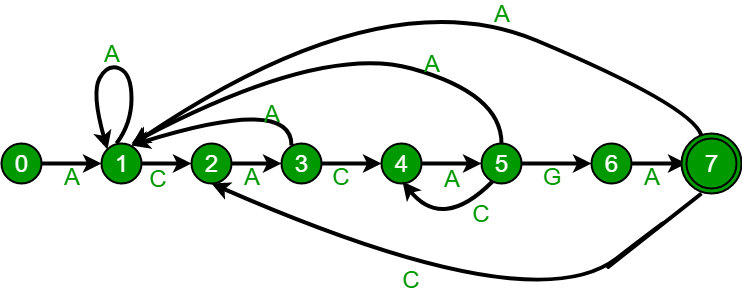
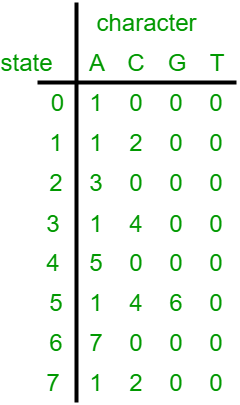
The above diagrams represent graphical and tabular representations of pattern ACACAGA.
Algorithm:
- Fill the first row. All entries in the first row are always 0 except the entry for the pat[0] character. For pat[0] character, we always need to go to state 1.
- Initialize lps as 0. lps for the first index is always 0.
- Do following for rows at index i = 1 to M. (M is the length of the pattern)
.....a) Copy the entries from the row at index equal to lps.
.....b) Update the entry for pat[i] character to i+1.
.....c) Update lps "lps = TF[lps][pat[i]]" where TF is the 2D array which is being constructed.
Following is the implementation for the above algorithm.
Implementation
C++ `
#include <bits/stdc++.h> using namespace std; #define NO_OF_CHARS 256
/* This function builds the TF table which represents Finite Automata for a given pattern / void computeTransFun(char pat, int M, int TF[][NO_OF_CHARS]) { int i, lps = 0, x;
// Fill entries in first row
for (x = 0; x < NO_OF_CHARS; x++)
    TF[0][x] = 0;
TF[0][pat[0]] = 1;

// Fill entries in other rows
for (i = 1; i <= M; i++) {
    // Copy values from row at index lps
    for (x = 0; x < NO_OF_CHARS; x++)
        TF[i][x] = TF[lps][x];

    // Update the entry corresponding to this character
    TF[i][pat[i]] = i + 1;

    // Update lps for next row to be filled
    if (i < M)
        lps = TF[lps][pat[i]];
}
}
/* Prints all occurrences of pat in txt */ void search(char pat[], char txt[]) { int M = strlen(pat); int N = strlen(txt);
int TF[M + 1][NO_OF_CHARS];

computeTransFun(pat, M, TF);

// process text over FA.
int i, j = 0;
for (i = 0; i < N; i++) {
    j = TF[j][txt[i]];
    if (j == M) {
        cout << "pattern found at index " << i - M + 1 << endl;
    }
}
}
/* Driver code */ int main() { char txt[] = "ACACACACAGAAGA ACACAGAACACAGA GEEKS"; char pat[] = "ACACAGA"; search(pat, txt); return 0; }
// This is code is contributed by rathbhupendra
C
#include <stdio.h> #include <string.h> #define NO_OF_CHARS 256
/* This function builds the TF table which represents Finite Automata for a given pattern / void computeTransFun(char pat, int M, int TF[][NO_OF_CHARS]) { int i, lps = 0, x;
// Fill entries in first row
for (x = 0; x < NO_OF_CHARS; x++)
    TF[0][x] = 0;
TF[0][pat[0]] = 1;

// Fill entries in other rows
for (i = 1; i <= M; i++) {
    // Copy values from row at index lps
    for (x = 0; x < NO_OF_CHARS; x++)
        TF[i][x] = TF[lps][x];

    // Update the entry corresponding to this character
    TF[i][pat[i]] = i + 1;

    // Update lps for next row to be filled
    if (i < M)
        lps = TF[lps][pat[i]];
}
}
/* Prints all occurrences of pat in txt / void search(char pat, char* txt) { int M = strlen(pat); int N = strlen(txt);
int TF[M + 1][NO_OF_CHARS];

computeTransFun(pat, M, TF);

// process text over FA.
int i, j = 0;
for (i = 0; i < N; i++) {
    j = TF[j][txt[i]];
    if (j == M) {
        printf("\n pattern found at index %d", i - M + 1);
    }
}
}
/* Driver program to test above function / int main() { char txt = "GEEKS FOR GEEKS"; char* pat = "GEEKS"; search(pat, txt); getchar(); return 0; }
Java
/* A Java program to answer queries to check whether the substrings are palindrome or not efficiently */
class GFG {
static int NO_OF_CHARS = 256;

/* This function builds the TF table
which represents Finite Automata for a
given pattern */
static void computeTransFun(char[] pat,
                            int M, int TF[][])
{
    int i, lps = 0, x;

    // Fill entries in first row
    for (x = 0; x < NO_OF_CHARS; x++)
    {
        TF[0][x] = 0;
    }
    TF[0][pat[0]] = 1;

    // Fill entries in other rows
    for (i = 1; i < M; i++)
    {
        // Copy values from row at index lps
        for (x = 0; x < NO_OF_CHARS; x++)
        {
            TF[i][x] = TF[lps][x];
        }

        // Update the entry corresponding to this character
        TF[i][pat[i]] = i + 1;

        // Update lps for next row to be filled
        if (i < M)
        {
            lps = TF[lps][pat[i]];
        }
    }
}

/* Prints all occurrences of pat in txt */
static void search(char pat[], char txt[])
{
    int M = pat.length;
    int N = txt.length;

    int[][] TF = new int[M + 1][NO_OF_CHARS];

    computeTransFun(pat, M, TF);

    // process text over FA.
    int i, j = 0;
    for (i = 0; i < N; i++)
    {
        j = TF[j][txt[i]];
        if (j == M)
        {
            System.out.println("pattern found at index " +
                                            (i - M + 1));
        }
    }
}

/* Driver code */
public static void main(String[] args)
{
    char txt[] = "GEEKS FOR GEEKS".toCharArray();
    char pat[] = "GEEKS".toCharArray();
    search(pat, txt);
}
}
// This code is contributed by Princi Singh
Python3
""" A Python3 program to answer queries to check whether
the substrings are palindrome or not efficiently """
NO_OF_CHARS = 256
""" This function builds the TF table which represents Finite Automata for a given pattern """
def computeTransFun(pat, M, TF):
lps = 0

# Fill entries in first row
for x in range(NO_OF_CHARS):
    TF[0][x] = 0
TF[0][ord(pat[0])] = 1

# Fill entries in other rows
for i in range(1, M+1):

    # Copy values from row at index lps
    for x in range(NO_OF_CHARS):
        TF[i][x] = TF[lps][x]

    if (i < M):
        # Update the entry corresponding to this character
        TF[i][ord(pat[i])] = i + 1

        # Update lps for next row to be filled

        lps = TF[lps][ord(pat[i])]
Prints all occurrences of pat in txt
def search(pat, txt): M = len(pat) N = len(txt) TF = [[0 for i in range(NO_OF_CHARS)] for j in range(M + 1)] computeTransFun(pat, M, TF)
# process text over FA.
j = 0
for i in range(N):
    j = TF[j][ord(txt[i])]
    if (j == M):
        print("pattern found at index", i - M + 1)
Driver code
txt = "ACACACACAGAAGA ACACAGAACACAGA GEEKS" pat = "ACACAGA" search(pat, txt)
This code is contributed by divyeshrabadiya07
C#
/* A C# program to answer queries to check whether the substrings are palindrome or not efficiently */ using System;
class GFG {
static int NO_OF_CHARS = 256;

/* This function builds the TF table
which represents Finite Automata for a
given pattern */
static void computeTransFun(char[] pat,
                            int M, int [,]TF)
{
    int i, lps = 0, x;

    // Fill entries in first row
    for (x = 0; x < NO_OF_CHARS; x++)
    {
        TF[0,x] = 0;
    }
    TF[0,pat[0]] = 1;

    // Fill entries in other rows
    for (i = 1; i < M; i++)
    {
        // Copy values from row at index lps
        for (x = 0; x < NO_OF_CHARS; x++)
        {
            TF[i,x] = TF[lps,x];
        }

        // Update the entry corresponding to this character
        TF[i,pat[i]] = i + 1;

        // Update lps for next row to be filled
        if (i < M)
        {
            lps = TF[lps,pat[i]];
        }
    }
}

/* Prints all occurrences of pat in txt */
static void search(char []pat, char []txt)
{
    int M = pat.Length;
    int N = txt.Length;

    int[,] TF = new int[M + 1,NO_OF_CHARS];

    computeTransFun(pat, M, TF);

    // process text over FA.
    int i, j = 0;
    for (i = 0; i < N; i++)
    {
        j = TF[j,txt[i]];
        if (j == M)
        {
            Console.WriteLine("pattern found at index " +
                                            (i - M + 1));
        }
    }
}

/* Driver code */
public static void Main(String[] args)
{
    char []txt = "GEEKS FOR GEEKS".ToCharArray();
    char []pat = "GEEKS".ToCharArray();
    search(pat, txt);
}
}
// This code is contributed by Rajput-Ji
JavaScript
`
Output:
pattern found at index 0 pattern found at index 10
Time Complexity for FA construction is O(M*NO_OF_CHARS). The code for search is the same as the previous post and the time complexity for it is O(n).