QuickSort on Singly Linked List (original) (raw)
Last Updated : 3 May, 2026
Given a linked list, apply the Quick sort algorithm to sort the linked list. To sort the Linked list change pointers rather than swapping data.
**Example:
**Input:
**Output :
**Input:
**Output:


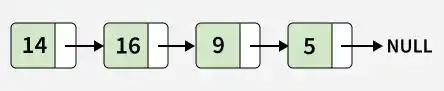
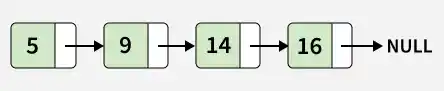

Quick Sort follows these steps.
- Selecting a pivot from the linked list, typically the last node.
- The linked list is then partitioned such that all elements smaller than the pivot are placed on the left, while those greater than the pivot are placed on the right.
- Once the partitioning is complete, the algorithm recursively applies the same process to the left and right linked lists.
- The sorted left list, pivot and right list are combined to get the complete sorted list. C++ `
#include using namespace std;
class Node { public: int data; Node* next; Node(int x) { data = x; next = nullptr; } };
void printList(Node* curr) { while (curr != nullptr) { cout << curr->data << " "; curr = curr->next; } cout << endl; }
// Returns the last node of the list Node* getTail(Node* cur) { while (cur != nullptr && cur->next != nullptr) cur = cur->next; return cur; }
// Partitions the list taking the first element as the pivot Node* partition(Node* head, Node* tail) {
  // Select the first node as the pivot node
Node* pivot = head;

// 'pre' and 'curr' are used to shift all
  // smaller nodes' data to the left side of the pivot node
Node* pre = head;
Node* curr = head;

// Traverse the list until you reach the node after the tail
while (curr != tail->next) {

    if (curr->data < pivot->data) {
        swap(curr->data, pre->next->data);

          // Move 'pre' to the next node
        pre = pre->next;
    }

      // Move 'curr' to the next node
    curr = curr->next;
}

swap(pivot->data, pre->data);

  // Return 'pre' as the new pivot
return pre;
}
// Helper function for quick sort void quickSortHelper(Node* head, Node* tail) {
// Base case: if the list is empty or consists of a single node
if (head == nullptr || head == tail) {
    return;
}

  // Call partition to find the pivot node
Node* pivot = partition(head, tail);

  // Recursive call for the left part of the list (before the pivot)
quickSortHelper(head, pivot);

  // Recursive call for the right part of the list (after the pivot)
quickSortHelper(pivot->next, tail);
}
// The main function for quick sort. This is a wrapper over quickSortHelper Node* quickSort(Node* head) {
Node* tail = getTail(head);

  // Call the helper function to sort the list
quickSortHelper(head, tail);
return head;
}
int main() {
// Creating a linked list: 30 -> 3 -> 4 -> 20 -> 5
Node* head = new Node(30);
head->next = new Node(3);
head->next->next = new Node(4);
head->next->next->next = new Node(20);
head->next->next->next->next = new Node(5);

head = quickSort(head);
printList(head);

return 0;
}
C
#include <stdio.h> #include <stdlib.h>
struct Node { int data; struct Node* next; };
void printList(struct Node* curr) { while (curr != NULL) { printf("%d ", curr->data); curr = curr->next; } printf("\n"); }
// Returns the last node of the list struct Node* getTail(struct Node* cur) { while (cur != NULL && cur->next != NULL) cur = cur->next; return cur; }
// Partitions the list taking the first element as the pivot struct Node* partition(struct Node* head,struct Node* tail) {
  // Select the first node as the pivot node
struct Node* pivot = head;

// 'pre' and 'curr' are used to shift all
// smaller nodes' data to the left side of the pivot node
struct Node* pre = head; struct Node* curr = head;
// Traverse the list until you reach the node after the tail
while (curr != tail->next) {

      // If current node's data is less than the pivot's data
    if (curr->data < pivot->data) {

          // Swap the data between 'curr' and 'pre->next'
        int temp = curr->data;
        curr->data = pre->next->data;
        pre->next->data = temp;

        // Move 'pre' to the next node
        pre = pre->next;
    }
    // Move 'curr' to the next node
    curr = curr->next;
}

// Swap the pivot's data with 'pre' data
int currData = pivot->data;
pivot->data = pre->data;
pre->data = currData;

// Return 'pre' as the new pivot
return pre;
}
// Helper function for quick sort void quickSortHelper(struct Node* head, struct Node* tail) {
// Base case: if the list is empty or consists of a single node
if (head == NULL || head == tail) {
    return;
}

// Call partition to find the pivot node
struct Node* pivot = partition(head, tail);
// Recursive call for the left part
  // of the list (before the pivot)
quickSortHelper(head, pivot);

// Recursive call for the right part
  // of the list (after the pivot)
quickSortHelper(pivot->next, tail);
}
// The main function for quick sort. This is a // wrapper over quickSortHelper struct Node* quickSort(struct Node* head) {
// Find the tail of the list
struct Node* tail = getTail(head);

// Call the helper function to sort the list
quickSortHelper(head, tail);
return head;
}
struct Node* createNode(int x) { struct Node* newNode = (struct Node*)malloc(sizeof(struct Node)); newNode->data = x; newNode->next = NULL; return newNode; }
int main() {
// Creating a linked list: 30 -> 3 -> 4 -> 20 -> 5
struct Node* head = createNode(30);
head->next = createNode(3);
head->next->next = createNode(4);
head->next->next->next = createNode(20);
head->next->next->next->next = createNode(5);

head = quickSort(head);
printList(head);

return 0;
}
Java
class Node { int data; Node next; Node(int x) { data = x; next = null; } }
class GfG {
static void printList(Node curr) {
    while (curr != null) {
        System.out.print(curr.data + " ");
        curr = curr.next;
    }
    System.out.println();
}

// Returns the last node of the list
static Node getTail(Node cur) {
    while (cur != null && cur.next != null)
        cur = cur.next;
    return cur;
}

// Partitions the list taking the first element as the pivot
static Node partition(Node head, Node tail) {

    // Select the first node as the pivot node
    Node pivot = head;

    // 'pre' and 'curr' are used to shift all
    // smaller nodes' data to the left side of the pivot node
    Node pre = head;
    Node curr = head;

    // Traverse the list until you reach the node after the tail
    while (curr != tail.next) {

        // If current node's data is less than the pivot's data
        if (curr.data < pivot.data) {

            int temp = curr.data;
            curr.data = pre.next.data;
            pre.next.data = temp;

            // Move 'pre' to the next node
            pre = pre.next;
        }

        // Move 'curr' to the next node
        curr = curr.next;
    }

    // Swap the pivot's data with 'pre' data
    int currData = pivot.data;
    pivot.data = pre.data;
    pre.data = currData;

    // Return 'pre' as the new pivot
    return pre;
}

// Helper function for quick sort
static void quickSortHelper(Node head, Node tail) {

    // Base case: if the list is empty or consists of a single node
    if (head == null || head == tail) {
        return;
    }

    // Call partition to find the pivot node
    Node pivot = partition(head, tail);

    // Recursive call for the left part of
      // the list (before the pivot)
    quickSortHelper(head, pivot);

    // Recursive call for the right part of
      // the list (after the pivot)
    quickSortHelper(pivot.next, tail);
}

// The main function for quick sort.
  // This is a wrapper over quickSortHelper
static Node quickSort(Node head) {

    // Find the tail of the list
    Node tail = getTail(head);

    // Call the helper function to sort the list
    quickSortHelper(head, tail);
    return head;
}

public static void main(String[] args) {

    // Creating a linked list: 30 -> 3 -> 4 -> 20 -> 5
    Node head = new Node(30);
    head.next = new Node(3);
    head.next.next = new Node(4);
    head.next.next.next = new Node(20);
    head.next.next.next.next = new Node(5);

    head = quickSort(head);
    printList(head);
}
}
Python
class Node: def init(self, x): self.data = x self.next = None
def printList(curr): while curr: print(curr.data, end=" ") curr = curr.next print()
Returns the last node of the list
def getTail(cur): while cur and cur.next: cur = cur.next return cur
Partitions the list taking the first element as the pivot
def partition(head, tail):
# Select the first node as the pivot node
pivot = head

# 'pre' and 'curr' are used to shift all
# smaller nodes' data to the left side of the pivot node
pre = head
curr = head

# Traverse the list until you reach the node after the tail
while curr != tail.next:

    # If current node's data is less than the pivot's data
    if curr.data < pivot.data:

        # Swap the data between 'curr' and 'pre.next'
        curr.data, pre.next.data = pre.next.data, curr.data

        pre = pre.next

    curr = curr.next

# Swap the pivot's data with 'pre' data
pivot.data, pre.data = pre.data, pivot.data

# Return 'pre' as the new pivot
return pre
def quickSortHelper(head, tail):
# Base case: if the list is empty or consists of a single node
if head is None or head == tail:
    return

# Call partition to find the pivot node
pivot = partition(head, tail)

# Recursive call for the left part of the list (before the pivot)
quickSortHelper(head, pivot)

# Recursive call for the right part of the list (after the pivot)
quickSortHelper(pivot.next, tail)
The main function for quick sort.
This is a wrapper over quickSortHelper
def quickSort(head):
# Find the tail of the list
tail = getTail(head)

# Call the helper function to sort the list
quickSortHelper(head, tail)
return head
if name == "main":
# Creating a linked list: 30 -> 3 -> 4 -> 20 -> 5
head = Node(30)
head.next = Node(3)
head.next.next = Node(4)
head.next.next.next = Node(20)
head.next.next.next.next = Node(5)

head = quickSort(head)
printList(head)
C#
using System; class Node { public int Data; public Node next;
public Node(int x) {
    Data = x;
    next = null;
}
}
class GfG {
static void PrintList(Node curr) {
    while (curr != null) {
        Console.Write(curr.Data + " ");
        curr = curr.next;
    }
    Console.WriteLine();
}

// Returns the last node of the list
static Node GetTail(Node cur) {
    while (cur != null && cur.next != null)
        cur = cur.next;
    return cur;
}

// Partitions the list taking the first element as the pivot
static Node Partition(Node head, Node tail) {

    // Select the first node as the pivot node
    Node pivot = head;

    // 'pre' and 'curr' are used to shift all
    // smaller nodes' data to the left side of the pivot node
    Node pre = head;
    Node curr = head;

    // Traverse the list until you reach the node after the tail
    while (curr != tail.next) {

        // If current node's data is less than the pivot's data
        if (curr.Data < pivot.Data) {

            // Swap the data between 'curr' and 'pre->Next'
            int temp = curr.Data;
            curr.Data = pre.next.Data;
            pre.next.Data = temp;

            // Move 'pre' to the next node
            pre = pre.next;
        }

        // Move 'curr' to the next node
        curr = curr.next;
    }

    // Swap the pivot's data with 'pre' data
    int currData = pivot.Data;
    pivot.Data = pre.Data;
    pre.Data = currData;

    // Return 'pre' as the new pivot
    return pre;
}

// Helper function for quick sort
static void QuickSortHelper(Node head, Node tail) {

    // Base case: if the list is empty or consists of a single node
    if (head == null || head == tail) {
        return;
    }

    // Call partition to find the pivot node
    Node pivot = Partition(head, tail);

    // Recursive call for the left
      // part of the list (before the pivot)
    QuickSortHelper(head, pivot);

    // Recursive call for the right part
      // of the list (after the pivot)
    QuickSortHelper(pivot.next, tail);
}

// The main function for quick sort.
  // This is a wrapper over QuickSortHelper
static Node QuickSort(Node head) {

    // Find the tail of the list
    Node tail = GetTail(head);

    // Call the helper function to sort the list
    QuickSortHelper(head, tail);
    return head;
}

static void Main() {

    // Creating a linked list: 30 -> 3 -> 4 -> 20 -> 5
    Node head = new Node(30);
    head.next = new Node(3);
    head.next.next = new Node(4);
    head.next.next.next = new Node(20);
    head.next.next.next.next = new Node(5);

    head = QuickSort(head);
    PrintList(head);
}
}
JavaScript
class Node { constructor(x) { this.data = x; this.next = null; } }
function printList(curr) { while (curr) { console.log(curr.data + " "); curr = curr.next; } console.log(); }
// Returns the last node of the list function getTail(cur) { while (cur && cur.next) { cur = cur.next; } return cur; }
// Partitions the list taking the first element as the pivot function partition(head, tail) {
// Select the first node as the pivot node
let pivot = head;

// 'pre' and 'curr' are used to shift all
// smaller nodes' data to the left side of the pivot node
let pre = head;
let curr = head;

// Traverse the list until you reach the node after the tail
while (curr !== tail.next) {

    // If current node's data is less than the pivot's data
    if (curr.data < pivot.data) {

        // Swap the data between 'curr' and 'pre.next'
        [curr.data, pre.next.data] = [pre.next.data, curr.data];

        // Move 'pre' to the next node
        pre = pre.next;
    }

    // Move 'curr' to the next node
    curr = curr.next;
}

// Swap the pivot's data with 'pre' data
[pivot.data, pre.data] = [pre.data, pivot.data];

// Return 'pre' as the new pivot
return pre;
}
// Helper function for quick sort function quickSortHelper(head, tail) {
// Base case: if the list is empty or
// consists of a single node
if (!head || head === tail) {
    return;
}

// Call partition to find the pivot node
let pivot = partition(head, tail);

// Recursive call for the left part
// of the list (before the pivot)
quickSortHelper(head, pivot);

// Recursive call for the right part
// of the list (after the pivot)
quickSortHelper(pivot.next, tail);
}
// The main function for quick sort. // This is a wrapper over quickSortHelper function quickSort(head) {
// Find the tail of the list
let tail = getTail(head);

// Call the helper function to sort the list
quickSortHelper(head, tail);
return head;
}
// Creating a linked list: 30 -> 3 -> 4 -> 20 -> 5 let head = new Node(30); head.next = new Node(3); head.next.next = new Node(4); head.next.next.next = new Node(20); head.next.next.next.next = new Node(5);
head = quickSort(head); printList(head);
`
- **Time Complexity: O(n * log n), It takes O(n2) time in the worst case and O(n log n) in the average or best case.
- **Auxiliary Space: O(n)