Reverse Morris traversal using Threaded Binary Tree (original) (raw)
Last Updated : 11 Jul, 2025
Given a **binary tree, the task is to perform **reverse in-order traversal using **Morris Traversal.
**Example:
**Input:
**Output: 3 1 5 2 4
**Explanation: Inorder traversal ****(Right->Root->Left)** of the tree is 3 1 5 2 4**Input:
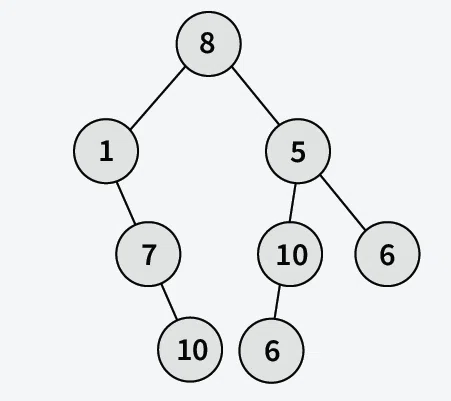
**Output: 6 5 10 6 8 10 7 1
**Explanation: Inorder traversal ****(Right->Root->Left)** of the tree is 6 5 10 6 8 10 7 1

**Morris (In-order) Traversal is a tree traversal algorithm that operates without **recursion or a **stack by creating temporary links in the tree, using them to traverse nodes, and then restoring the tree’s original structure.
**Prerequisites :
- Morris Traversals
- Threaded Binary Trees: In a binary tree with
nnodes****,**n + 1NULL pointers waste memory. Threaded binary trees use these NULL pointers to store useful information.- **Left-threaded: Stores ancestor information in NULL left pointers.
- **Right-threaded: Stores successor information in NULL right pointers.
- **Fully-threaded: Stores both predecessor (NULL left) and successor (NULL right) information.
**Reverse Morris Traversal:
This is the **inverse process of Morris Traversals , where links to the in-order descendants are created, used to traverse in **reverse order, and then removed to restore the original structure.
**Approach:
- Initialize **Current as root.
- While **current is not **NULL :
- If current has **no right child, visit the **current node and move to the **left child of current.
- Else, find the in-order successor of **current node. In-order successor is the **left most node in the right subtree or right child itself.
- If the left child of the in-order successor is **NULL, set **current as the left child of its in-order successor and move current node to its right.
- Else, if the t**hreaded link between the current and it's **in-order successor already exists, set **left pointer of the in-order successor as **NULL, visit Current node and move to its left child node. C++ `
// C++ program to print reverse inorder // traversal using morris traversal. #include <bits/stdc++.h> using namespace std;
class Node { public: int data; Node* left; Node* right; Node(int x) { data = x; left = nullptr; right = nullptr; } };
// Function to perform reverse // morris traversal. vector reverseMorris(Node* root) { vector ans;
Node* curr = root;
while (curr != nullptr) {

    // if right child is null, append
    // curr node and move to left node.
    if (curr->right == nullptr) {
        ans.push_back(curr->data);
        curr = curr->left;
    }
    else {

        // Find the inorder successor of curr
        Node* succ = curr->right;
        while (succ->left != nullptr
               && succ->left != curr)
            succ = succ->left;

        // Make curr as the left child of its
        // inorder successor and move to
        // right node.
        if (succ->left == nullptr) {
            succ->left = curr;
            curr = curr->right;
        }

        // Revert the changes made in the 'if' part to
        // restore the original tree i.e., fix the left
        // child of successor and move to left node.
        else {
            succ->left = nullptr;
            ans.push_back(curr->data);
            curr = curr->left;
        }
    }
}

return ans;
}
int main() {
// Constructed binary tree is
//           1
//         /   \
//        2     3
//      /  \   / \
//     4    5  6  7
Node *root = new Node(1);
root->left = new Node(2);
root->right = new Node(3);
root->left->left = new Node(4);
root->left->right = new Node(5);
root->right->left = new Node(6);
root->right->right = new Node(7);

vector<int> res = reverseMorris(root);
for (auto num: res) cout << num << " ";
cout << endl;
return 0;
}
Java
// Java program to print reverse inorder // traversal using morris traversal.
import java.util.ArrayList; import java.util.List;
class Node { int data; Node left, right;
Node(int x) {
    data = x;
    left = null;
    right = null;
}
}
class GfG {
// Function to perform reverse
// morris traversal.
static List<Integer> reverseMorris(Node root) {
    List<Integer> ans = new ArrayList<>();
    Node curr = root;
    while (curr != null) {

        // if right child is null, add
        // curr node and move to left node.
        if (curr.right == null) {
            ans.add(curr.data);
            curr = curr.left;
        } else {

            // Find the inorder successor of curr
            Node succ = curr.right;
            while (succ.left != null && succ.left != curr) {
                succ = succ.left;
            }

            // Make curr as the left child of its
            // inorder successor and move to
            // right node.
            if (succ.left == null) {
                succ.left = curr;
                curr = curr.right;
            }

            // Revert the changes made in the 'if' part to
            // restore the original tree i.e., fix the left
            // child of successor and move to left node.
            else {
                succ.left = null;
                ans.add(curr.data);
                curr = curr.left;
            }
        }
    }

    return ans;
}

public static void main(String[] args) {

    // Constructed binary tree is
    //           1
    //         /   \
    //        2     3
    //      /  \   / \
    //     4    5  6  7
    Node root = new Node(1);
    root.left = new Node(2);
    root.right = new Node(3);
    root.left.left = new Node(4);
    root.left.right = new Node(5);
    root.right.left = new Node(6);
    root.right.right = new Node(7);

    List<Integer> res = reverseMorris(root);
    for (int num : res) {
        System.out.print(num + " ");
    }
    System.out.println();
}
}
Python
Python program to print reverse inorder
traversal using morris traversal.
class Node: def init(self, x): self.data = x self.left = None self.right = None
Function to perform reverse
morris traversal.
def reverseMorris(root): ans = [] curr = root while curr is not None:
    # if right child is null, append
    # curr node and move to left node.
    if curr.right is None:
        ans.append(curr.data)
        curr = curr.left
    else:

        # Find the inorder successor of curr
        succ = curr.right
        while succ.left is not None and \
                        succ.left != curr:
            succ = succ.left

        # Make curr as the left child of its
        # inorder successor and move to
        # right node.
        if succ.left is None:
            succ.left = curr
            curr = curr.right

        # Revert the changes made in the 'if' part to
        # restore the original tree i.e., fix the left
        # child of successor and move to left node.
        else:
            succ.left = None
            ans.append(curr.data)
            curr = curr.left

return ans
if name == "main":
# Constructed binary tree is
#           1
#         /   \
#        2     3
#      /  \   / \
#     4    5  6  7
root = Node(1)
root.left = Node(2)
root.right = Node(3)
root.left.left = Node(4)
root.left.right = Node(5)
root.right.left = Node(6)
root.right.right = Node(7)

res = reverseMorris(root)
print(" ".join(map(str, res)))
C#
// C# program to print reverse inorder // traversal using morris traversal.
using System; using System.Collections.Generic;
class Node { public int data; public Node left, right;
public Node(int x) {
    data = x;
    left = null;
    right = null;
}
}
class GfG {
// Function to perform reverse
// morris traversal.
static List<int> reverseMorris(Node root) {
    List<int> ans = new List<int>();
    Node curr = root;
    while (curr != null) {

        // if right child is null, add
        // curr node and move to left node.
        if (curr.right == null) {
            ans.Add(curr.data);
            curr = curr.left;
        } else {

            // Find the inorder successor of curr
            Node succ = curr.right;
            while (succ.left != null && succ.left != curr) {
                succ = succ.left;
            }

            // Make curr as the left child of its
            // inorder successor and move to
            // right node.
            if (succ.left == null) {
                succ.left = curr;
                curr = curr.right;
            }

            // Revert the changes made in the 'if' part to
            // restore the original tree i.e., fix the left
            // child of successor and move to left node.
            else {
                succ.left = null;
                ans.Add(curr.data);
                curr = curr.left;
            }
        }
    }

    return ans;
}

static void Main(string[] args) {

    // Constructed binary tree is
    //           1
    //         /   \
    //        2     3
    //      /  \   / \
    //     4    5  6  7
    Node root = new Node(1);
    root.left = new Node(2);
    root.right = new Node(3);
    root.left.left = new Node(4);
    root.left.right = new Node(5);
    root.right.left = new Node(6);
    root.right.right = new Node(7);

    List<int> res = reverseMorris(root);
    Console.WriteLine(string.Join(" ", res));
}
}
JavaScript
// JavaScript program to print reverse inorder // traversal using morris traversal.
class Node { constructor(x) { this.data = x; this.left = null; this.right = null; } }
// Function to perform reverse // morris traversal. function reverseMorris(root) { const ans = []; let curr = root; while (curr !== null) {
    // if right child is null, add
    // curr node and move to left node.
    if (curr.right === null) {
        ans.push(curr.data);
        curr = curr.left;
    } else {

        // Find the inorder successor of curr
        let succ = curr.right;
        while (succ.left !== null && succ.left !== curr) {
            succ = succ.left;
        }

        // Make curr as the left child of its
        // inorder successor and move to
        // right node.
        if (succ.left === null) {
            succ.left = curr;
            curr = curr.right;
        }

        // Revert the changes made in the 'if' part to
        // restore the original tree i.e., fix the left
        // child of successor and move to left node.
        else {
            succ.left = null;
            ans.push(curr.data);
            curr = curr.left;
        }
    }
}
return ans;
}
// Constructed binary tree is
// 1
// /
// 2 3
// / \ /
// 4 5 6 7
const root = new Node(1);
root.left = new Node(2);
root.right = new Node(3);
root.left.left = new Node(4);
root.left.right = new Node(5);
root.right.left = new Node(6);
root.right.right = new Node(7);
const res = reverseMorris(root); console.log(res.join(" "));
`
**Time Complexity : O(n),where n is the number of nodes in the tree. Each node will be traversed at most 3 times.
**Auxiliary Space : O(1)