Expectancy Theory of Motivation: Advantages, Disadvantages and Implications (original) (raw)
Last Updated : 23 Jul, 2025
The Expectancy Theory of Motivation was developed by Victor Vroom. This theory proposes that individuals are motivated to perform a specific behaviour or task based on their belief that the effort they put in will lead to a certain level of performance, and that the performance will lead to a specific outcome or reward that they value. As per this theory, motivation is determined by three key factors: **Expectancy, Instrumentality, and Valence.
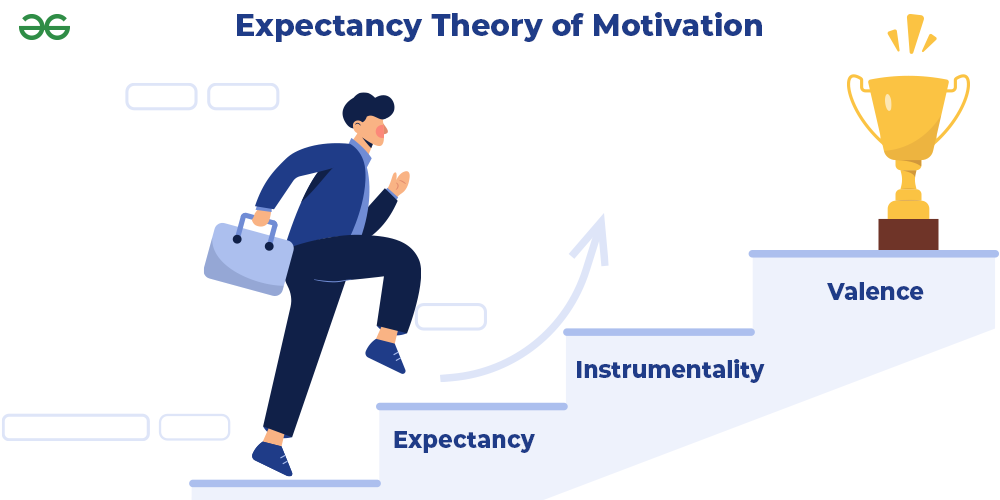
_Expectancy is the belief that putting in the effort will result in improved performance. If an individual believes that their efforts will not lead to improved performance, they are unlikely to be motivated to try. _Instrumentality is the belief that improved performance will lead to desired outcomes or rewards. If an individual believes that their improved performance will not lead to desirable outcomes, they are unlikely to be motivated to try. And _valence is the value an individual places on the outcomes or rewards they will receive. If an individual does not value the outcomes or rewards, they are unlikely to be motivated to try.
**Motivation (Force)= Valence x Expectancy x Instrumentality
So, the Expectancy Theory of Motivation proposes that individuals will be motivated to perform a behaviour or task if they believe their efforts will result in improved performance, leading to desired outcomes or rewards they value.
Advantages of Expectancy Theory of Motivation
The Expectancy Theory of Motivation has the following advantages:
- **Flexibility: This means that the theory can be applied to a wide range of settings and contexts. It can be used to explain motivation in work, education, sports, and other areas of life giving out some positive outcomes.
- **Personalization: The theory recognizes that individuals have unique beliefs, values, and preferences that influence their motivation. It allows for a personalized approach to motivating individuals, based on their specific expectations, instrumentalities, and valences.
- **Clarity: This theory provides a clear framework for understanding the factors that influence motivation. It helps managers and leaders to identify and address specific obstacles to motivation, such as a lack of belief in the connection between effort and performance or a lack of valued rewards that would be provided.
- **Practicality: The theory offers practical strategies for improving motivation, such as providing clear goals, feedback, andrewards that are valued by individuals.
- **Research support: The theory has been extensively researched and is a reliable predictor of motivation in various contexts.
- **Encourages goal setting: The theory emphasizes the importance of setting clear and challenging goals for individuals. This set of goals can help to increase motivation by providing a clear direction for their efforts.
- **Focuses on individual motivation: The theory recognizes that motivation is influenced by individual beliefs, values, and preferences. It encourages managers to focus on understanding and addressing the specific needs and motivations of each employee.
Limitations of Expectancy Theory of Motivation
The Expectancy Theory of Motivation, like any theory, has some limitations that need to be considered. These limitations include:
- **Simplistic view of motivation: The theory takes a relatively simplistic view of motivation, focusing on the relationship between effort, performance, and rewards. This does not account for other factors that may influence motivation, such as personality, emotions, or social context.
- Assumes rational **decision-making: The theory assumes that individuals are rational decision-makers who weigh the costs and benefits of their actions before making a decision. However, individuals may not always make decisions in a completely rational manner.
- **Limited scope of rewards: The theory assumes that rewards are the primary motivator for individuals. However, research suggests that other factors, such as job satisfaction, autonomy, and social connection, can also influence motivation.
- **Ignores the role of feedback: The theory does not fully account for the role of feedback in motivation. Feedback can be a powerful motivator, but it is not explicitly addressed in the theory.
- **Difficult to measure: The theory can be difficult to measure in practice, particularly when it comes to measuring an individual's valence for a particular reward. It can also be difficult to determine the level of expectancy or instrumentality that an individual
- Ignores the role of **emotions: The theory assumes that individuals are motivated solely by the desire to receive rewards, and does not fully account for the role of emotions in motivation. Emotions such as fear, anxiety, or excitement can influence an individual's motivation but are not addressed by the theory.
- **Individualistic focus: The theory has a strong focus on individual motivation and may not fully account for the influence of group dynamics or social context on motivation. In some cases, motivation may be influenced more by social factors such as peer pressure or group norms than by individual beliefs and values.
Implications of Expectancy Theory of Motivation
The Expectancy Theory of Motivation has several implications for individuals, managers, and organizations. Some of these implications include:
- **Importance of goal-setting: The theory emphasizes the importance of setting clear and challenging goals for individuals. Managers should work with employees to establish specific, measurable, and attainable goals that align with the organization's overall objectives.
- **Need for feedback: The theory recognizes the importance of feedback in motivating individuals. Managers should provide regular feedback to employees regarding their performance and progress towards their goals, in order to help them improve and stay motivated.
- **Customizing rewards: The theory emphasizes the need to customize rewards to meet individual needs and preferences. Managers should work to understand what motivates each employee and design reward systems that are tailored to their unique needs.
- **Linking rewards to performance: The theory suggests that rewards should be linked to performance in order to motivate individuals. Managers should ensure that reward systems are transparent and that employees understand the connection between their efforts, their performance, and the rewards they receive.
- **Emphasizing skill development: The theory encourages individuals to continuously improve their skills and abilities in order to improve their performance and increase their chances of achieving desired outcomes or rewards. Managers should provide opportunities for skill development and encourage employees to pursue training and development opportunities.
- Creating a positive work environment: The theory recognizes the importance of creating a positive work environment in motivating individuals. Managers should work to create a supportive, collaborative, and respectful workplace culture that encourages individuals to work towards their goals.
**Also, read other articles on Motivation:
- Types of Motivation
- Process of Motivation
- Difference between Motivation and Morale
- Difference between Intrinsic and Extrinsic Motivation
- Herzberg’s Two-Factor Theory of Motivation
- McClelland’s Achievement Motivation Model
- Carrot and Stick Approach of Motivation: Implication and Examples
- Features and Importance of Motivation