hostnamectl command in Linux with Examples (original) (raw)
Last Updated : 7 Nov, 2019
hostnamectl command provides a proper API used to control Linux system hostname and change its related settings. The command also helps to change the hostname without actually locating and editing the /etc/hostname file on a given system. Syntax:
hostnamectl [OPTIONS...] COMMAND ....
Where COMMAND can be any of the following:
- status: Used to check current hostname settings.
- set-hostname NAME: Used to set system hostname.
- set-icon-name NAME: Used to set icon name for host.
- set-chassis NAME: Set chassis type for host.
Types of hostname:
- Static: Assigned by system admin and it is used to initialize the kernel hostname during boot time.
- Dynamic or Transient: Assigned by mDNS server or DHCP server during run time.
- Pretty: It's a high-level hostname assigned by system admin or end-user.
Example 1: Running hostnamectl command to check the current host names. We can either execute hostnamectl or hostnamectl status, the result will be same as status option is automatically assumed if no option is given.
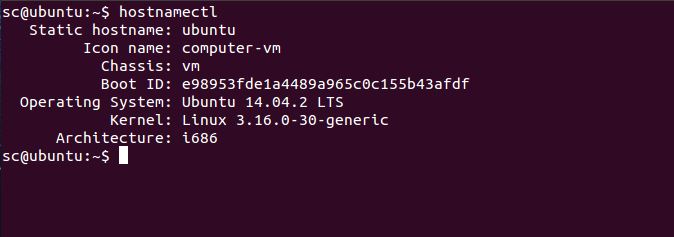 Example 2: To change static host name to geeksforgeeks. It may require root permission.
hostnamectl set-hostname geeksforgeeks --static
 Now, let us verify the changed hostnames using the hostnamectl command.
 As you see that the static hostname has been updated to geeksforgeeks.Options: