Text Processing and Formatting Commands in Linux (original) (raw)
Last Updated : 7 Jan, 2026
Text processing and formatting commands in Linux are used to search, filter, format, compare, and manipulate text data efficiently. These commands are widely used while working with text files, logs, configuration files, and command output, making them essential for both users and system administrators.
- Search and filter text based on patterns
- Format and align text output
- Modify text content and structure
- Compare files and convert text formats
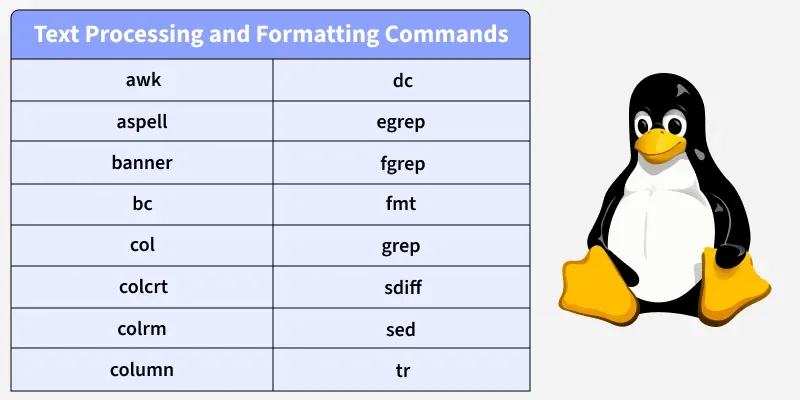
Below is a list of commonly used Text Processing and Formatting Commands in Linux
1. awk
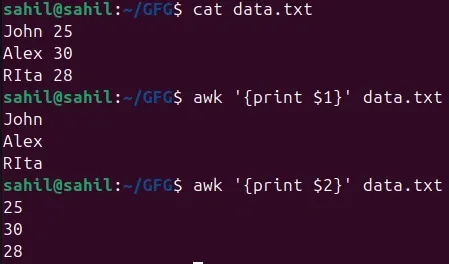
The awk command is a powerful text-processing language used for pattern scanning and data extraction.
- Processes text line by line
- Extracts and formats columns
- Commonly used for reports
**Syntax:
awk 'pattern {action}' file_name
**Example:
awk '{print $1}' data.txt
2. aspell
The aspell command is used as a spell checker in Linux.
- Checks spelling errors
- Supports multiple languages
- Useful for text documents
**Syntax:
aspell check file_name
**Example:
aspell -c sample.txt
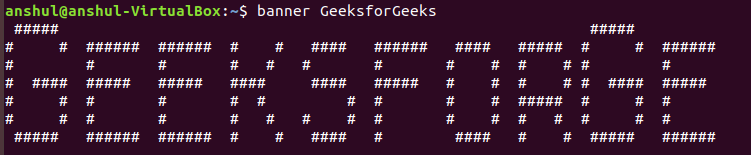
The banner command prints text in large ASCII characters.
- Displays large formatted text
- Useful for terminal messages
**Syntax:
banner TEXT
**Example:
banner GeeksforGeeks
4. bc
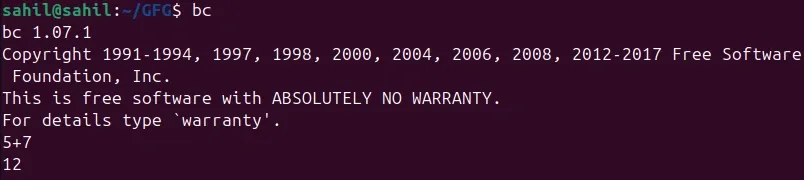
The bc command is a command-line calculator.
- Performs arithmetic operations
- Supports floating-point math
**Syntax:
bc
**Example:
bc
5. col
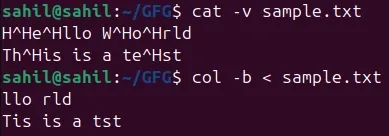
The col command filters reverse line feeds from text.
- Cleans formatted text output
- Improves readability
**Syntax:
col
**Example:
col -b < sample.txt
6. colcrt
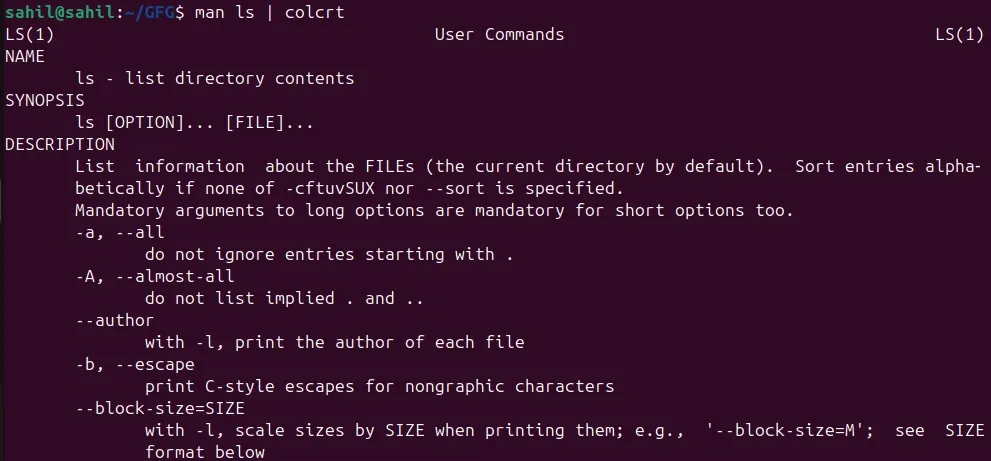
The colcrt command formats text output for display.
- Removes backspaces
- Used with formatted text
**Syntax:
colcrt
**Example:
man ls | colcrt
7. colrm
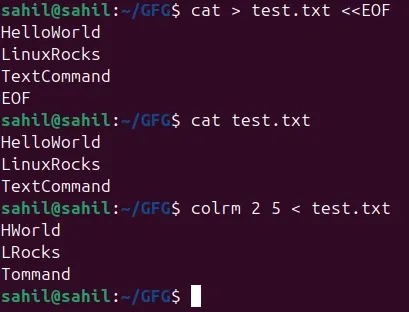
The colrm command removes selected columns from text.
- Deletes column ranges
- Useful for fixed-width files
**Syntax:
colrm start end
8. column
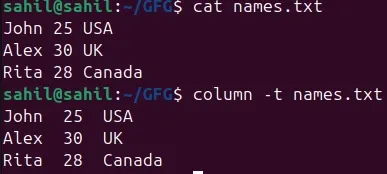
The column command formats output into aligned columns.
- Improves text alignment
- Used for tabular output
**Syntax:
column file_name
**Example:
column -t names.txt
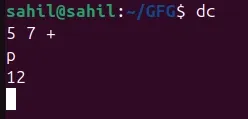
9. dc
The dc command is a reverse-polish notation calculator.
- Performs advanced calculations
- Used for scripting math operations
**Syntax:
dc
**Example:
dc
10. egrep
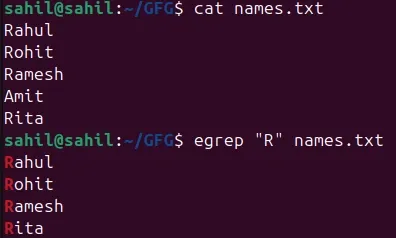
The egrep command searches text using extended regular expressions.
- Supports advanced patterns
- Faster pattern matching
**Syntax:
egrep "pattern" file_name
**Example:
egrep "R" names.txt
11. fgrep
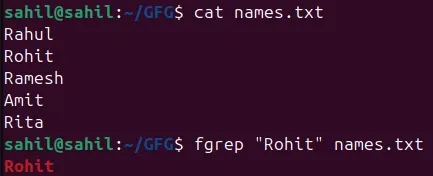
The fgrep command searches fixed strings in files.
- Does not use regular expressions
- Faster for simple searches
**Syntax:
fgrep "string" file_name
**Example:
fgrep "Rohit" names.txt
12. fmt
The fmt command formats and wraps text files.
- Adjusts line width
- Improves text readability
**Syntax:
fmt file_name
**Example:
fmt para.txt

13. grep
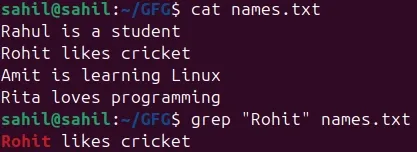
The grep command searches for patterns in text files.
- Finds matching lines
- Widely used for filtering output
**Syntax:
grep "pattern" file_name
**Example:
grep "Rohit" names.txt
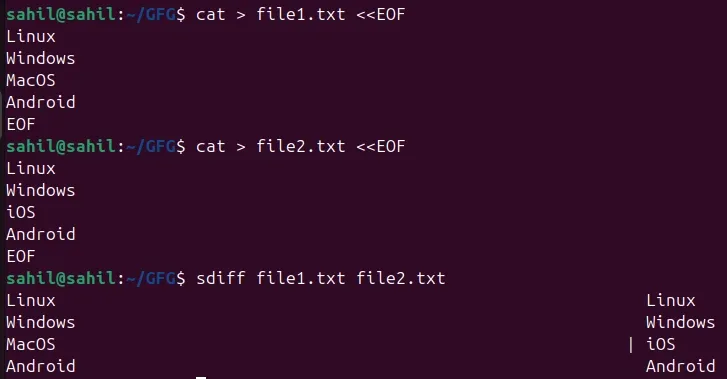
14. sdiff
The sdiff command compares two files side by side.
- Shows differences clearly
- Useful for file comparison
**Syntax:
sdiff file1 file2
**Example:
sdiff file1.txt file2.txt
15. sed
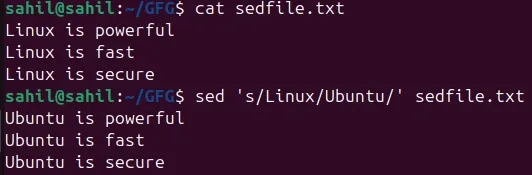
The sed command is a stream editor for text manipulation.
- Performs search and replace
- Edits text without opening files
**Syntax:
sed 'command' file_name
**Example:
sed 's/Linux/Ubuntu/g' sedfile.txt
16. tr
The tr command translates or deletes characters.
- Converts character sets
- Useful for text transformation
**Syntax:
tr set1 set2
**Example:
echo "linux command" | tr 'a-z' 'A-Z'

17. unix2dos
The unix2dos command converts Unix text files to DOS format.
- Changes line endings
- Improves cross-platform compatibility
**Syntax:
unix2dos file_name
**Example:
unix2dos sample.txt
