Class 8 NCERT Mathematics Solutions Chapter 7 Cubes and Cube Roots Exercise 7.1 (original) (raw)
Last Updated : 23 Jul, 2025
Chapter 7 "**Cubes and Cube Roots" of the Class 8 NCERT Mathematics focuses on understanding cubes and cube roots of numbers. This chapter helps students grasp how to compute the cube of a number, find cube roots, and apply these concepts in solving problems. Exercise 7.1 involves practicing these calculations and understanding their properties.
This section provides detailed solutions for Exercise 7.1 from Chapter 7 of the Class 8 NCERT Mathematics textbook. The solutions cover the computation of cubes and cube roots, including the methods and steps required to solve the problems.
Class 8 NCERT Solutions: Cubes and Cube Roots - Exercise 7.1
**Question 1: Which of the following numbers are not perfect cubes?
(i) 216 (ii) 128 (iii) 1000 (iv) 100 (v) 46656
**Solution:
****(i) 216**
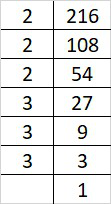
Prime factorisation of 216 is:
216 = 2×2×2×3×3×3
By forming groups in triplet of equal factors we get, 216 = (2×2×2)×(3×3×3)
Since, 216 can be grouped into triplets of equal factors i.e (2×3) = 6
Therefore, 216 is perfect cube of 6.
****(ii) 128**
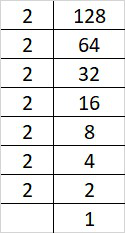
Prime factorization of 128 is:
128 = 2×2×2×2×2×2×2
By forming groups in triplet of equal factors we get, 128 = (2×2×2)×(2×2×2)×2
Since, 128 cannot be grouped into triplets of equal factors.
Therefore, 128 is not a perfect cube.
****(iii) 1000**
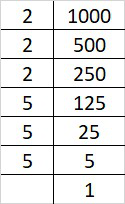
Prime factorization of 1000 is:
1000 = 2×2×2×5×5×5
By forming groups in triplet of equal factors we get, 1000 = (2×2×2)×(5×5×5)
Since, 1000 can be grouped into triplets of equal factors i.e (2×5) = 10
Therefore, 1000 is perfect cube of 10.
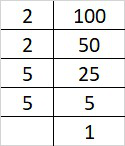
****(iv) 100**
Prime factorization of 100 is:
100 = 2×2×5×5
Since, 100 cannot be grouped into triplets of equal factors.
Therefore, 100 is not a perfect cube.
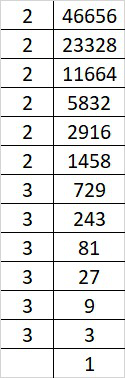
****(v) 46656**
Prime factorization of 46656 is:
46656 = 2×2×2×2×2×2×3×3×3×3×3×3
By forming groups in triplet of equal factors we get, 46656 = (2×2×2)×(2×2×2)×(3×3×3)×(3×3×3)
Since, 46656 can be grouped into triplets of equal factors i.e (2×2×3×3) = 36
Therefore, 46656 is perfect cube of 36.
**Question 2: Find the smallest number by which each of the following numbers must be multiplied to obtain a perfect cube.
(i) 243 (ii) 256 (iii) 72 (iv) 675 (v) 100
**Solution:
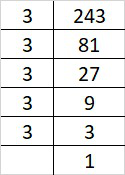
****(i) 243**
Prime factorization of 243 is:
243 = 3×3×3×3×3
By forming groups in triplet of equal factors we get, 243 = (3×3×3)×3×3
Since, 3 cannot form a triplets of equal factors.
Therefore, 243 must be multiplied with 3 to get a perfect cube.
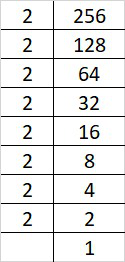
****(ii) 256**
Prime factorization of 256 is:
256 = 2×2×2×2×2×2×2×2
By forming groups in triplet of equal factors we get, 256 = (2×2×2)×(2×2×2)×2×2
Since, 2 cannot form a triplet of equal factors.
Therefore, 256 must be multiplied with 2 to get a perfect cube.
****(iii) 72**
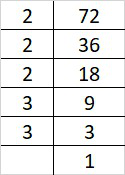
Prime factorization of 72 is:
72 = 2×2×2×3×3
By forming groups in triplet of equal factors we get, 72 = (2×2×2)×3×3
Since, 3 cannot form a triplet of equal factors.
Therefore, 72 must be multiplied with 3 to get perfect cube.
****(iv) 675**
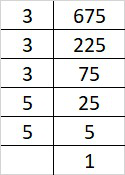
Prime factorization of 675 is:
675 = 3×3×3×5×5
By forming groups in triplet of equal factors we get, 675 = (3×3×3)×5×5
Since, 5 cannot form a triplet of equal factors.
Therefore, 675 must be multiplied with 5 to get perfect cube.
****(v) 100**
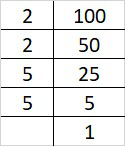
Prime factorization of 100 is:
100 = 2×2×5×5
By forming groups in triplet of equal factors we get, 100 = 2×2×5×5
Since, 2 and 5 both cannot form a triplets of equal factors.
Therefore, 100 must be multiplied with 10 i.e 2×5 to get perfect cube.
**Question 3: Find the smallest number by which each of the following numbers must be divided to obtain a perfect cube.
(i) 81 (ii) 128 (iii) 135 (iv) 192 (v) 704
**Solution:
****(i) 81**
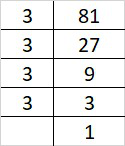
Prime factorization of 81 is:
81 = 3×3×3×3
By forming groups in triplet of equal factors we get, 81 = (3×3×3)×3
Since, 3 cannot form a triplets of equal factors.
Therefore, 81 must be divided by 3 to get perfect cube.
****(ii) 128**
Prime factorization of 128 is:
128 = 2×2×2×2×2×2×2
By forming groups in triplet of equal factors we get, 128 = (2×2×2)×(2×2×2)×2
Since, 2 cannot form a triplet of equal factors.
Therefore, 128 must be divided by 2 to get perfect cube.
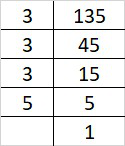
****(iii) 135**
Prime factorization of 135 is:
135 = 3×3×3×5
By forming groups in triplet of equal factors we get, 135 = (3×3×3)×5
Since, 5 cannot form a triplet of equal factors.
Therefore, 135 must be divided by 5 to get perfect cube.
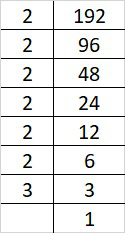
****(iv) 192**
Prime factorization of 192 is:
192 = 2×2×2×2×2×2×3
By forming groups in triplet of equal factors we get, 192 = (2×2×2)×(2×2×2)×3
Since, 3 cannot form a triplet of equal factors.
Therefore, 192 must be divided by 3 to get perfect cube.
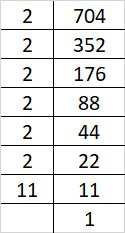
****(v) 704**
Prime factorization of 704 is:
704 = 2×2×2×2×2×2×11
By forming groups in triplet of equal factors we get, 704 = (2×2×2)×(2×2×2)×11
Since, 11 cannot form a triplet of equal factors.
Therefore, 704 must be divided by 11 to get perfect cube.
**Question 4: Parikshit makes a cuboid of Plasticine of sides 5 cm, 2 cm, 5 cm. How many such cuboids will he need to form a cube?
**Solution:
Given: Side of cube are 5 cm, 2 cm and 5 cm.
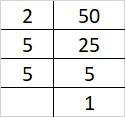
Therefore, the volume of the cube = 5×2×5 = 50
We know that prime factorization of 50 is: 2×5×5
Since, 2 and 5 cannot form a triplet of equal factors.
Therefore, 50 must be multiplied with 20 i.e 2×2×5 to get perfect cube.
Hence, 20 cuboid is needed to make a perfect cube.