How to Use a Protractor (original) (raw)
Last Updated : 23 Jul, 2025
A protractor is a simple yet essential tool used to measure angles. Whether you're a student learning geometry or someone working on a DIY project, knowing **how to use a protractor correctly is crucial. In this guide, we will walk you through the steps of using a protractor to measure and draw angles accurately, making your tasks easier and more precise.
Table of Content
- What is a Protractor?
- How to Use a Protractor
- Examples of Using a Protector
- Applications of a Protractor
- FAQs
What is a Protractor?
In geometry, a protractor is a measuring tool used to draw and measure angles. It is typically a flat, semi-circular or circular instrument marked with degrees from 0° to 180° (for semi-circular protractors) or 0° to 360° (for circular protractors).
The protractor helps in measuring angles in both directions, allowing for accurate construction of geometrical shapes and the determination of angles in various applications like surveying, engineering, and architecture.
Parts of a Protractor
- **Baseline: The straight edge at the bottom.
- **Degree Scale: The curved edge with numbers, showing degrees.
- **Center Point: The small hole or point in the middle where you align your angle.
How to Use a Protractor
To use protractor we can use the following steps:
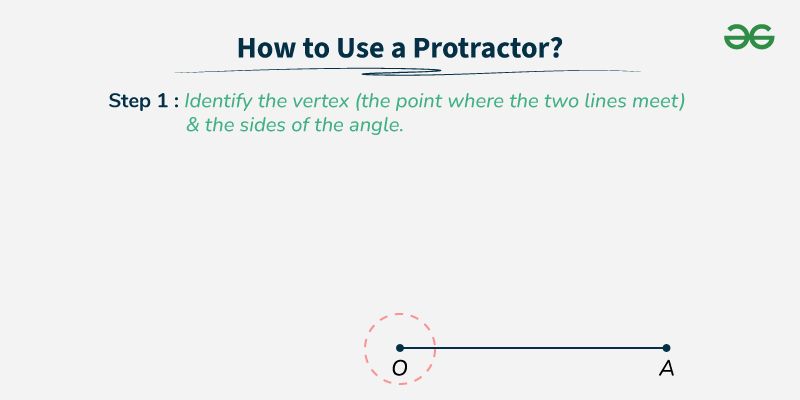
**Step 1: Identify the vertex (the point where the two lines meet) and the sides of the angle.
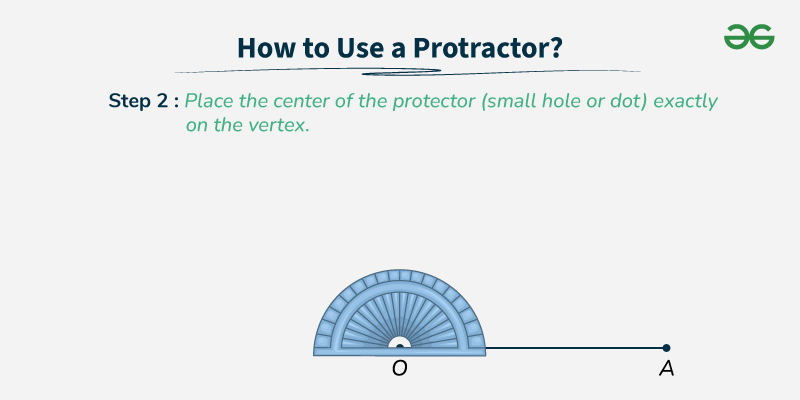
**Step 2: Place the center of the protractor (small hole or dot) exactly on the vertex.
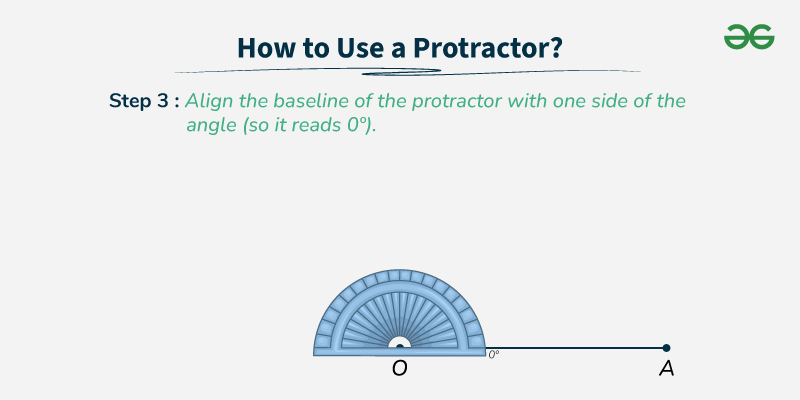
**Step 3: Align the baseline of the protractor with one side of the angle (so it reads 0°).
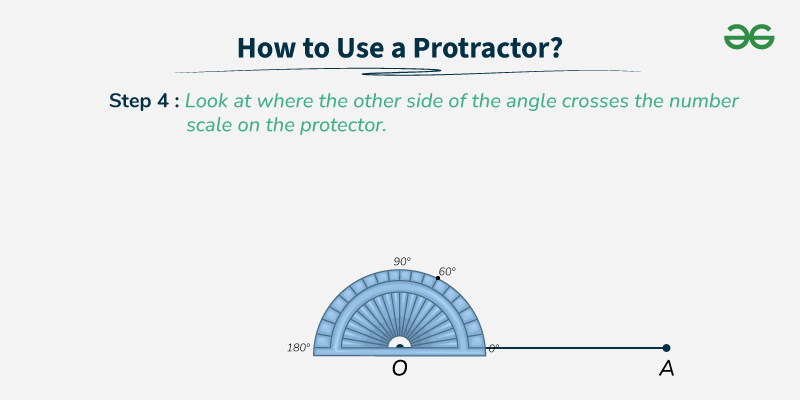
**Step 4: Look at where the other side of the angle crosses the number scale on the protractor.
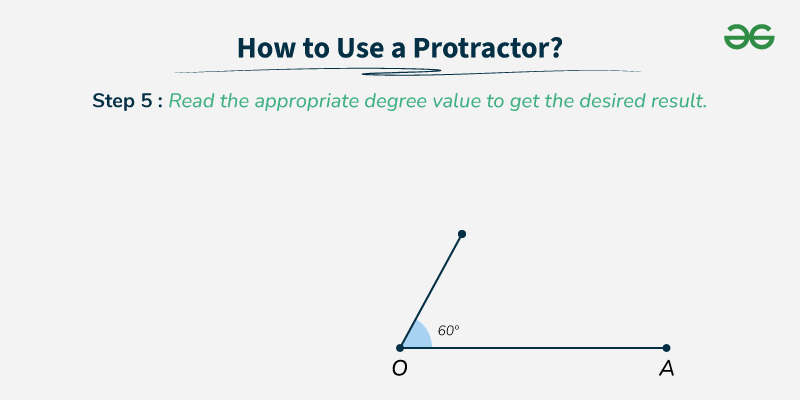
**Step 5: Read the appropriate degree value to get the desired result.
Examples of Using a Protector
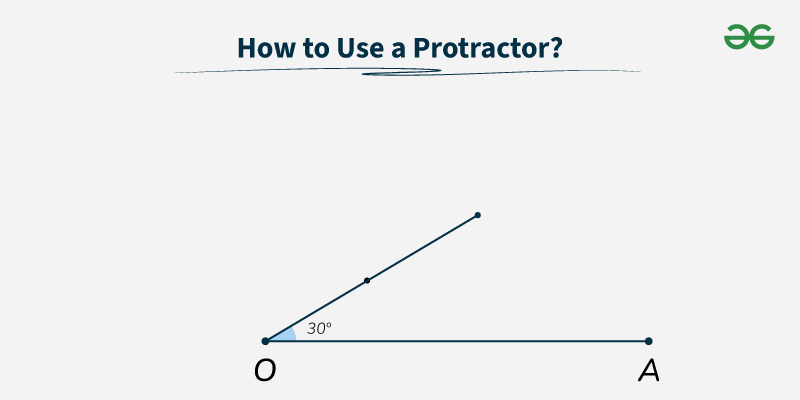
**Measuring a 30-Degree Angle
- Place the straight edge of the protractor on one side of the angle.
- Find the 30-degree mark on the protractor.
- Mark this point and draw a line from the center through the mark to create a 30-degree angle.
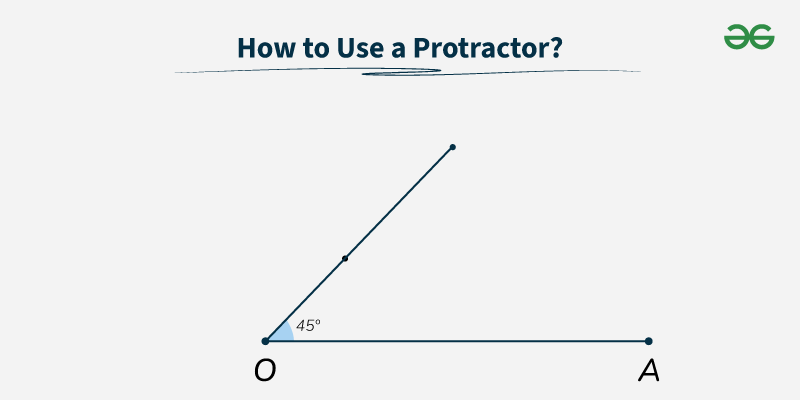
**Measuring a 45-Degree Angle
- Place your protractor so that the baseline aligns with one side of the angle.
- Find the 45-degree mark on the protractor's scale.
- Mark this point and draw a line from the center point through the mark to create a 45-degree angle.
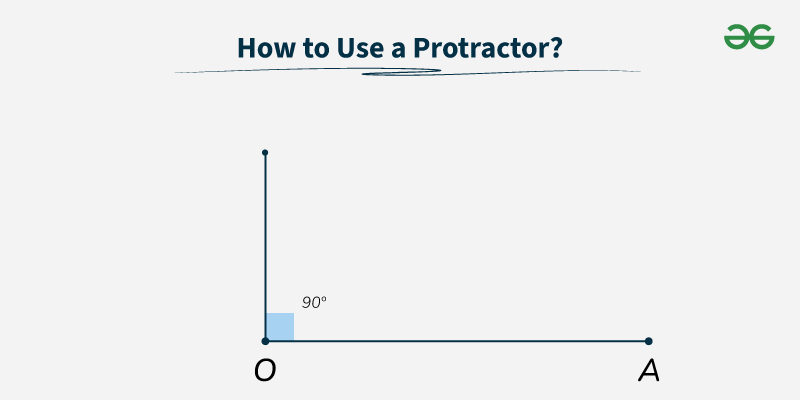
**Drawing a 90-Degree Angle
- Align your protractor so the baseline matches one side of where you want your angle.
- Find the 90-degree mark on the protractor and draw a line from the center point through this mark.
Applications of a Protractor
Protractors are widely used in various fields:
- **Geometry****:** For measuring and drawing precise angles.
- **Art and Design: To create and measure specific angles in drawings and designs.
- **Construction: To ensure accurate angles in building plans.
- **Navigation: In some navigation tools to measure angles on maps.
Conclusion
In conclusion, a protractor is an essential tool for measuring and drawing angles accurately. Whether in classrooms or professional fields like engineering and architecture, this simple instrument helps us understand and work with angles easily.
**Read More,