Power BI DAX Date Functions (original) (raw)
Last Updated : 19 Jan, 2026
DAX Date Functions are built-in tools in Power BI that help you analyze and manage date and time data effectively. They allow you to create calculated columns and measures, find differences between dates, extract specific date components such as day, month or year and perform time-based analysis for better reporting insights.
Below dataset includes a Date column which will be used to illustrate each DAX date function with practical examples.
You can download dataset from here

Dataset
1. Functions for Generating Dates
**DAX Calendar
The CALENDAR Function generates a continuous range of dates between a specified start date and end date. This is helpful when you want to create a date table for time-based analysis.
**Syntax: CALENDAR(<start_date>, <end_date>)

calender Function
**DAX Date
The DATE Function returns a date based on the year, month and day you specify. It's useful for creating a date from individual year, month and day values.
**Syntax: DATE(, , )

Date function
**2. Functions for Date Manipulation
DAX Datevalue Function
The DATEVALUE Function converts a date in text format into a date value and allow Power BI to work with dates in text form.
**Syntax: DATEVALUE(date_text)

Datevalue Function
**DAX Edate
The EDATE Function returns a date that is a specific number of months before or after a given start date. It’s useful for calculating future or past dates such as due dates.
**Syntax: EDATE(<start_date>, )
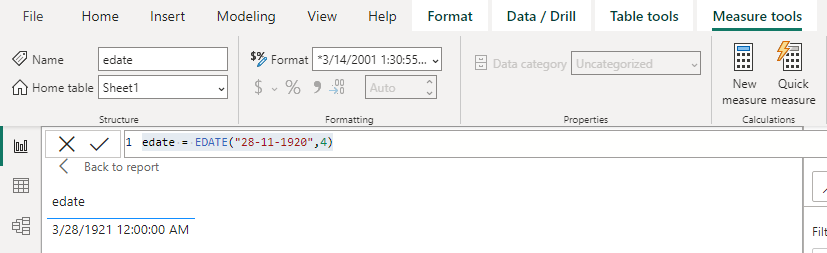
edate function
**DAX Eomonth
The EOMONTH Function returns the last day of the month before or after a specified number of months. It’s useful for calculating end-of-month dates.
**Syntax: EOMONTH(<start_date>, )
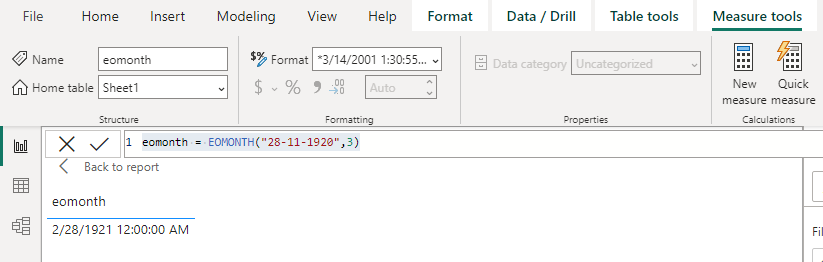
eomonth function
**3. Functions for Date Calculations
**DAX Datediff Function
The DATEDIFF Function calculates the difference between two dates in a specified time unit like days, months, years.
**Syntax: DATEDIFF(, , )
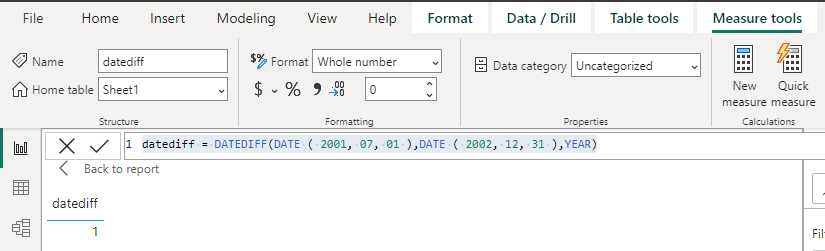
Datediff Function
DAX Day Function
The DAY function extracts the day of the month from a given date. It returns a number between 1 and 31.
**Syntax: DAY()
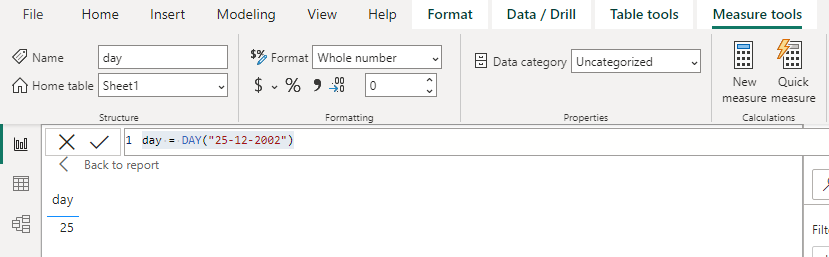
Day Function
DAX Month Function
The MONTH Function extracts the month from a given date and return a number between 1 (January) and 12 (December).
**Syntax: MONTH()

Month Function
**DAX Year Function
The YEAR Function extracts the year from a given date and return a 4-digit integer between 1900 and 9999.
**Syntax: YEAR()
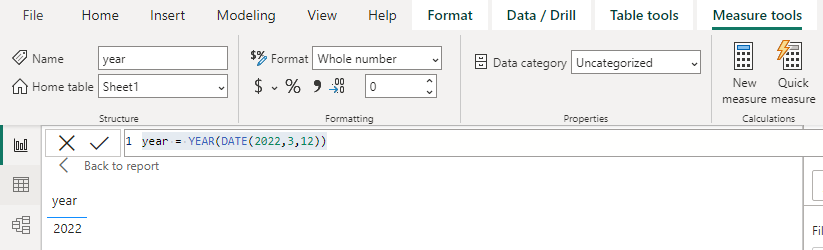
Year Function
4. Functions for Working with Time
DAX Now Function
Returns the current date and time. It’s used for calculating real-time information or dynamically update time-sensitive reports.
**Syntax: NOW()
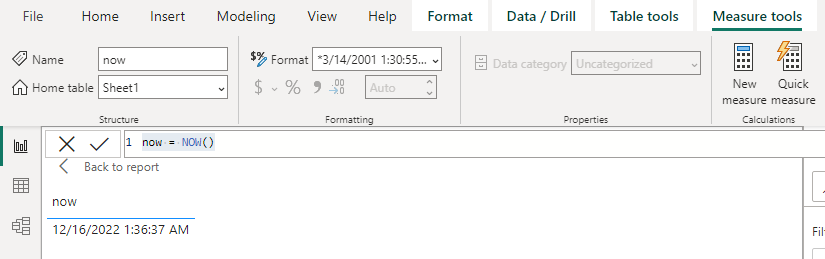
Now Function
**DAX Today Function
The TODAY Function gives the current date and updates automatically every time the workbook is opened. It can also be used to calculate intervals by subtracting dates.
**Syntax: TODAY()
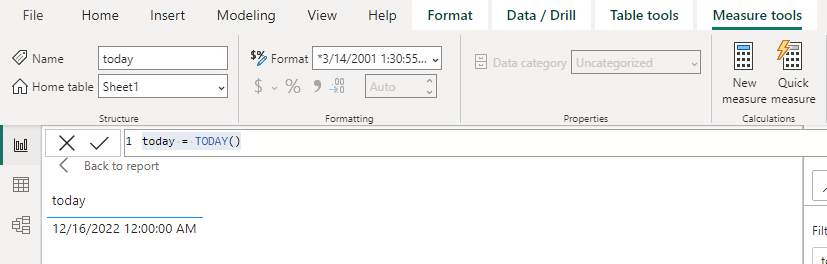
Today function
**5. Functions for Working with Weeks
**DAX Weekday Function
The WEEKDAY Function returns a number between 1 and 7 that represents the day of the week. By default 1 is Sunday and 7 is Saturday.
**Syntax: WEEKDAY(, <return_type>)
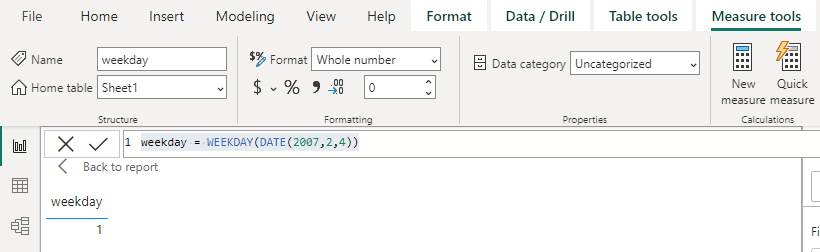
Weekday Function
**DAX Weeknum Function
DAX WEEKNUM returns the week number for a given date based on two systems:
- **System 1: Week 1 is the first week of the year starting on January 1.
- **System 2: Week 1 is the week containing the first Thursday of the year based on the ISO 8601 standard (European week numbering).
You can choose which system to use by specifying a return type value.
**Syntax: WEEKNUM([, <return_type>])
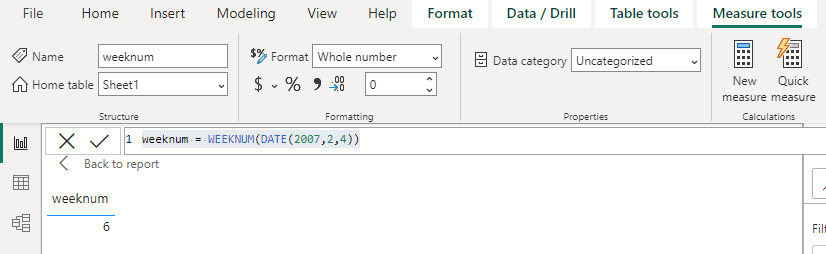
Weeknum Function
6. Functions for Handling Time Zones
DAX Utcnow Function
Gives the current date and time in UTC. The Utcnow Function output only varies when the formula is updated. It isn't always being updated.
**Syntax: UTCNOW()
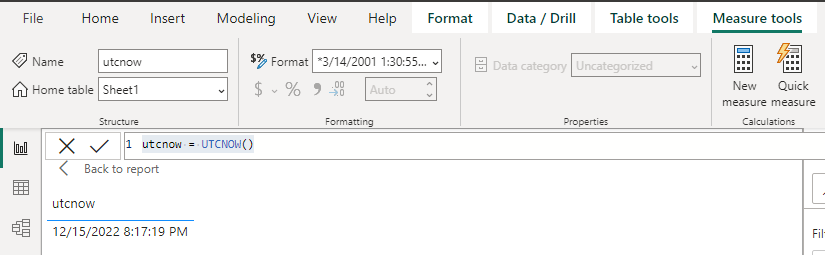
Utcnow Function
DAX UtcToday Function
Gives the current date in UTC.
**Syntax: UTCTODAY()

utc Today Function
With these methods we can easily work and manipulate date datatype in Power BI.