Understanding the Kano Model (original) (raw)
Last Updated : 10 Apr, 2026
The Kano Model is a framework used to analyze and prioritize customer needs based on their impact on satisfaction. It helps product teams make informed decisions by comparing the customer value of a feature against its implementation cost.
This model enables product teams to:
- Make customer-centric decisions
- Identify high-impact features
- Balance innovation with essential functionality
Working of Kano Model
The Kano Model is typically represented as a two-dimensional graph:
- **X-axis: Degree of feature implementation (how well a feature is executed)
- **Y-axis: Customer satisfaction
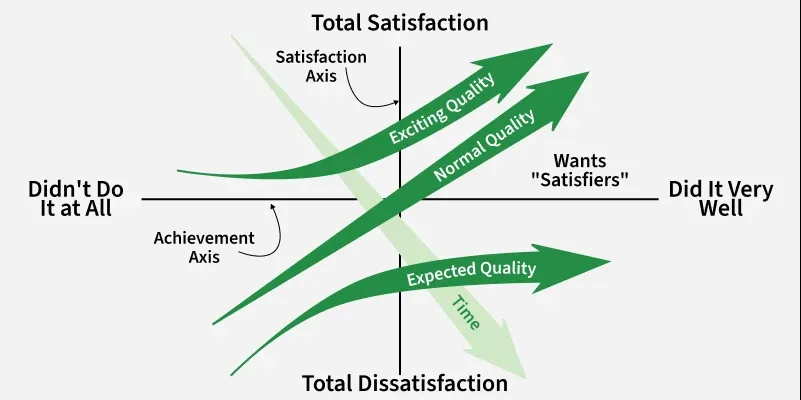
Kano model
This visualization helps teams understand how different features influence satisfaction as their performance improves.
**5 Categories of Kano Model
1. Basic Needs (Must-Have)
**Description: Essential features that customers expect by default.
**Impact on Satisfaction:
- Presence → Neutral
- Absence → Strong dissatisfaction
**Example: In a smartphone:
Calling and messaging functionality
These features don’t impress users but their absence immediately frustrates them.
2. Performance Needs (More is Better)
**Description: Features with a direct relationship to customer satisfaction.
**Impact on Satisfaction: Better performance → Higher satisfaction
**Example:
- Battery life
- Processing speed
- Camera quality
The better these features perform, the happier customers become.
3. Excitement Needs (Delighters)
**Description: Unexpected features that delight customers.
**Impact on Satisfaction:
- Presence → High satisfaction
- Absence → No dissatisfaction
**Example:
- Voice assistants (e.g., Siri, Google Assistant)
- Innovative AI features
These features create wow moments and differentiate products.
4. Indifferent Needs (Take It or Leave It)
**Description: Features that have little or no impact on customer satisfaction.
**Impact on Satisfaction: Presence or absence → No significant effect
**Example: Minor customization options (e.g., color variants for some users)
5. Reverse Needs (Dissatisfaction When Present)
**Description: Features that can negatively impact user experience.
**Impact on Satisfaction:
- Presence → Dissatisfaction
- Absence → Neutral
**Example:
- Pre-installed bloatware
- Intrusive ads
**Practical Example
Consider a smartphone product:
- **Must-Have: Ability to make calls
- **Performance: Battery life, speed
- **Delighter: AI assistant or advanced camera features
- **Indifferent: Minor UI themes
- **Reverse: Unwanted apps or ads
This illustrates how different features influence satisfaction differently, even within the same product.
Benefits of the Kano Model
The Kano Model offers numerous blessings to corporations:
- **Better Feature Prioritization: Focuses development efforts on features that truly impact customer satisfaction.
- **Competitive Differentiation: Helps identify delighters that set products apart in the market.
- **Improved Customer Satisfaction: Ensures both:
- Basic expectations are met
- Delightful experiences are delivered
- **Smarter Resource Allocation: Prevents over-investing in low-impact features.
- **Customer-Centric Decision Making: Aligns product strategy with real user needs, not assumptions.