Loading Data in Pytorch (original) (raw)
In this article, we will discuss how to load different kinds of data in PyTorch.
For demonstration purposes, Pytorch comes with 3 divisions of datasets namely torchaudio, torchvision, and torchtext. We can leverage these demo datasets to understand how to load Sound, Image, and text data using Pytorch.
Torchaudio Dataset
Loading demo yes_no audio dataset in torchaudio using Pytorch.
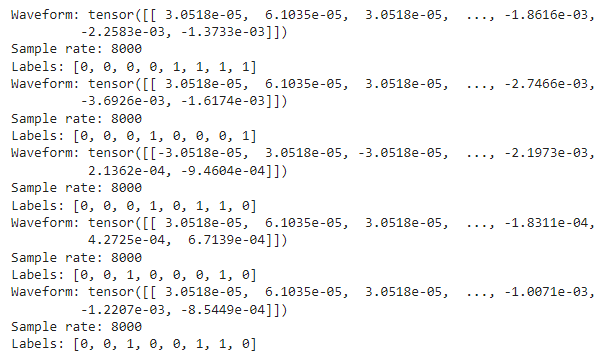
Yes_No dataset is an audio waveform dataset, which has values stored in form of tuples of 3 values namely waveform, sample_rate, labels, where waveform represents the audio signal, sample_rate represents the frequency and label represent whether Yes or No.
- Import the torch and torchaudio packages. (Install using pip install torchaudio, if necessary)
- Use the torchaudio function with the datasets accessor, followed by the dataset name.
- Now, pass the path in which the dataset has to be stored and specify download = True to download the dataset. Here, './' specifies the root directory.
- Now, iterate over the loaded dataset using a for loop, and access the 3 values stored in a tuple to see the sample of the dataset.
To load your custom data:
Syntax: torch.utils.data.DataLoader(data, batch_size, shuffle)
Parameters:
- data - audio dataset or the path to the audio dataset
- batch_size - for large dataset, batch_size specifies how much data to load at once
- shuffle - a bool type. Setting it to True will shuffle the data.
Python3 `
import the torch and torchaudio dataset packages.
import torch import torchaudio
access the dataset in torchaudio package using
datasets followed by dataset name.
'./' makes sure that the dataset is stored
in a root directory.
download = True ensures that the
data gets downloaded
yesno_data = torchaudio.datasets.YESNO('./', download=True)
loading the first 5 data from yesno_data
for i in range(5): waveform, sample_rate, labels = yesno_data[i] print("Waveform: {}\nSample rate: {}\nLabels: {}".format( waveform, sample_rate, labels))
`
Output:
Torchvision Dataset
Loading demo ImageNet vision dataset in torchvision using Pytorch. Click here to download the dataset by signing up.
Python3 `
import the torch and
torchvision dataset packages.
import torch import torchvision
access the dataset in torchvision package using
.datasets followed by dataset name.
imagenet_data = torchvision.datasets.ImageNet('path/to/imagenet_root/')
`
Code Explanation:
- The procedure is almost the same as loading the audio data.
- Here, instead of torchaudio, torchvision has to be imported.
- Use the torchvision function with the datasets accessor, followed by the dataset name.
- Now, pass the path in which the dataset is present. Since the ImageNet dataset is no longer publicly accessible, download the root data in your local system and pass the path to this function. This will comfortably load the vision data.
To load your custom image data, use torch.utils.data.DataLoader(data, batch_size, shuffle) as mentioned above.
Python3 `
import necessary function
from torchvision package
from torchvision import transforms, datasets import matplotlib.pyplot as plt
specify the image dataset folder
data_dir = r'path to dataset\train'
perform some transformations like resizing,
centering and tensorconversion
using transforms function
transform = transforms.Compose( [transforms.Resize(255), transforms.CenterCrop(224), transforms.ToTensor()])
pass the image data folder and
transform function to the datasets
.imagefolder function
dataset = datasets.ImageFolder(data_dir, transform=transform)
now use dataloder function load the
dataset in the specified transformation.
dataloader = torch.utils.data.DataLoader(dataset, batch_size=32, shuffle=True)
iter function iterates through all the
images and labels and stores in two variables
images, labels = next(iter(dataloader))
print the total no of samples
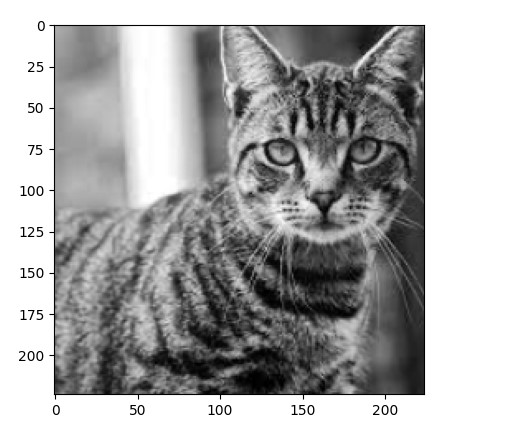
print('Number of samples: ', len(images)) image = images[2][0] # load 3rd sample
visualize the image
plt.imshow(image, cmap='gray')
print the size of image
print("Image Size: ", image.size())
print the label
print(label)
`
Output:
Image size: torch.Size([224,224]) tensor([0, 0, 0, 1, 1, 1])
Torchtext Dataset
Loading demo IMDB text dataset in torchtext using Pytorch. To load your custom text data we use torch.utils.data.DataLoader() method.
Syntax: torch.utils.data.DataLoader('path to/imdb_data', batch_size, shuffle=True)
Code Explanation:
- The procedure is almost the same as loading the image and audio data.
- Here, instead of torchvision, torchtext has to be imported.
- Use the torchtext function with the datasets accessor, followed by dataset name (IMDB).
- Now, pass the split function to the torchtext function to split the dataset to train and test data.
- Now define a function to split each line in the corpus to separate tokens by iterating each line in the corpus as shown. In this way, we can easily load text data using Pytorch. Python3 `
import the torch and torchtext dataset packages.
import torch import torchtext
access the dataset in torchtext package
using .datasets followed by dataset name.
text_data = torchtext.datasets.IMDB(split='train')
define a function to tokenize
the words in the corpus
def tokenize(label, line): return line.split()
define a empty list to store
the tokenized words
tokens = []
iterate over the text_data and
tokenize each line and store
it in the list tokens
for label, line in text_data: tokens += tokenize(label, line)
print('The total no. of tokens in imdb dataset is', len(tokens))
`